The call of a female tawny owl, recorded from my mum’s house in Yorkley, Forest of Dean, 31st July 2026. Recorded using the Merlin Bird ID app.
Watered down and weary
This is probably going to seem like a trumpet-blowy, tiny violin-whining kind of a post. And I am allowing myself this with the hope that to get it out there might be the next step to doing something differently.
I have recognised for a long time something that it difficult to admit to others:
I am pretty good at a lot of things.
Most things I try, I seem to be able to just do to some decent standard. Programme facilitation, for example. Feedback of ‘you’re already far ahead of where you should be at this stage and where I was when I was one’, is common, and this for someone socially/generally anxious who believed she could never have a job that involved leading/facilitating/group work in any way.
Poetry is another. Apparently I have ‘a poet’s instinct’.
That has all been pretty great. It has meant that I’ve felt somewhat good about myself, with self-worth being based of course on how well one performs something. And it has meant I have felt fairly confident to use my privileged position to give a variety of things a go. All fun and life-affirming and lovely.
But excelling at anything?
I don’t believe I’ve ever excelled at anything.
And I think I would like to.
I think I could have a good crack at many things, and how nice to have the privilege to be able to dabble. And I am genuinely interested in having a variety of experiences, even things that scare me.
But I worry that, with time and energy being limiting factors, I am watering myself down a bit trying to have a bit of so many things.
For a while I have been pendulum swinging between two states:
1. Healthy, outdoorsy, routine and scheduled, exercising regularly, healthy diet and amply sleepy Fee, clean and trimmed, and ready for the day (but very little writing or painting going on), reinforced by feeling good and comments of ‘you’re looking SO well!;
2. Some kind creative goblin mode, where exercising, showering, eating well all get in the way of that creative flow state. Getting to work? Sure, but I’ll just scrape my hair up and get to it.
I suppose I imagine getting to the idyllic place of sitting neatly and brightly by a window, writing away, before having a walk and healthy lunch, then taking myself off to work for the afternoon and an evening session of group facilitation, all the while feeling clean and tidy and healthy and ready.
The reality for my creative mode: Sitting on the sofa, in clothes washed goodness-knows how long ago, hair unkempt and hunched posture, alarm set to remind myself when it’s time to scrape my hair up for work. In that mode I am often getting somewhere, I recognise that. The flow is there and writing is happening. I don’t want to break the flow by using time to go for some exercise and prep/eat a healthy lunch! If I focus my before-work time on exercise, I feel great! But I don’t have time to write.
Everything becomes a bit stop-start; a week of mode 1 followed by a week of mode 2. Perhaps this can be ok? But if I split like this, am I just keeping myself watered down? What about all the excelling I want to do?
Something else I’m afraid might be creeping in: perimenopause. What’s with the needing 10 hours sleep and still feeling tired? Is this to make up for all the sleep I lost raising all the kids I didn’t have?
Oh, and there’s that problem of dying one day, of my parents whom I love beyond anything, dying one day and wanting to spend as much time with them as possible; being a good friend and wife and aunt.
In short, I am recognising I need to get more intentional with my time as doors are only going to keep closing, and one day I’m afraid I will find myself in a cupboard with lots of equipment and nothing to do with it. No more double-fronted desires and doubts. Right now I’m seeing blinds slanting the light and strips of light I can still choose from, which is good as I can still see, still make a start. I can move the blinds myself to block out truly unneccesary drains on my energy, like worrying about what others think of me and feeling responsible for how they are, keeping myself leashed even if I’m not ok, just so THEY are ok. (Oh shit, something I HAVE excelled at!). And social media.
But those strips of light are only going to get narrower until it’s completely dark.
I’m very aware that my predicament is a very natural one, and a nice one in a world where there are people trapped under rubble following an earthquake.
I’m just trying to have it all. And I can keep trying to, or make a decision and close a few doors.
Or am I just scared and not wanting to put all my eggs in one basket?
Crap … after writing all this, that’s the thing that seems to click and make most sense…
So now I have to make a decision and be brave about it?
Well, I’m glad we did this.
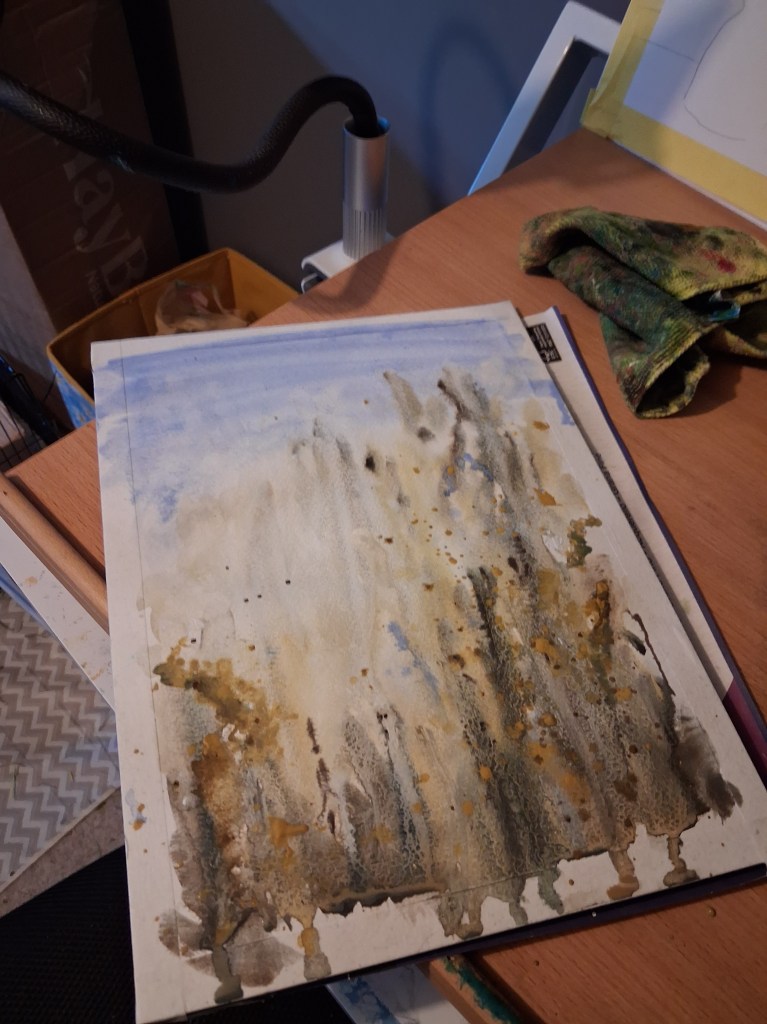
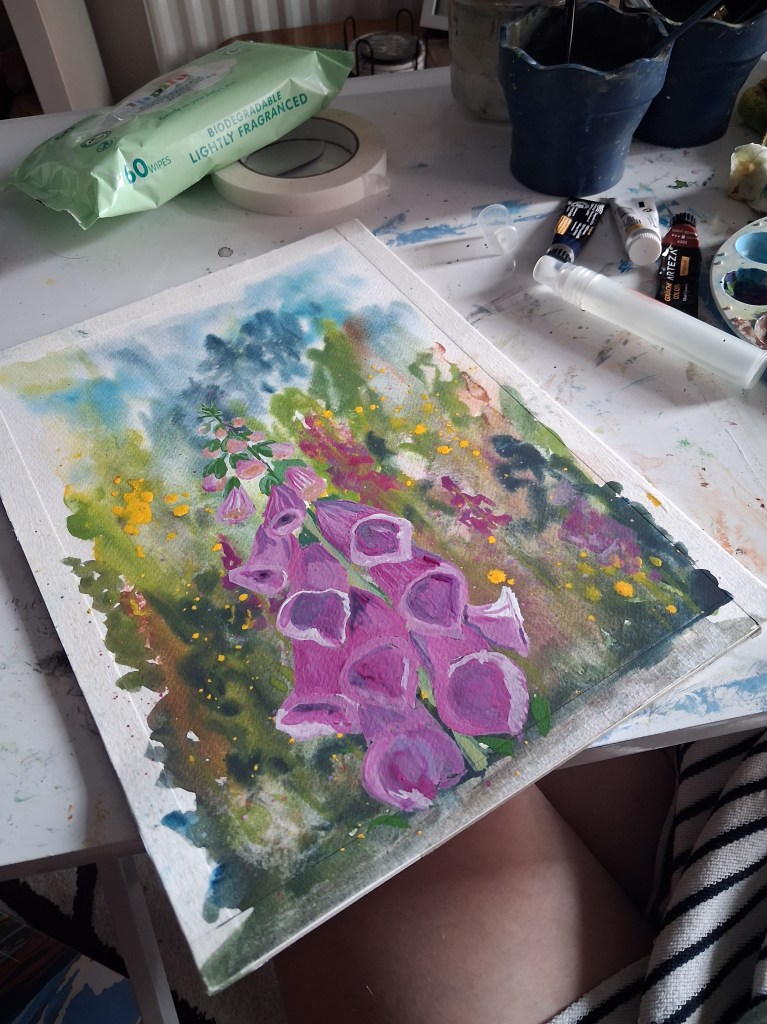
I’m enjoying painting at the moment. I have a couple of gouache paintings on the go and I feel excited about them. Gouache is good to me, forgiving and patient, flexible.
Time for a nap.
A sign of the times
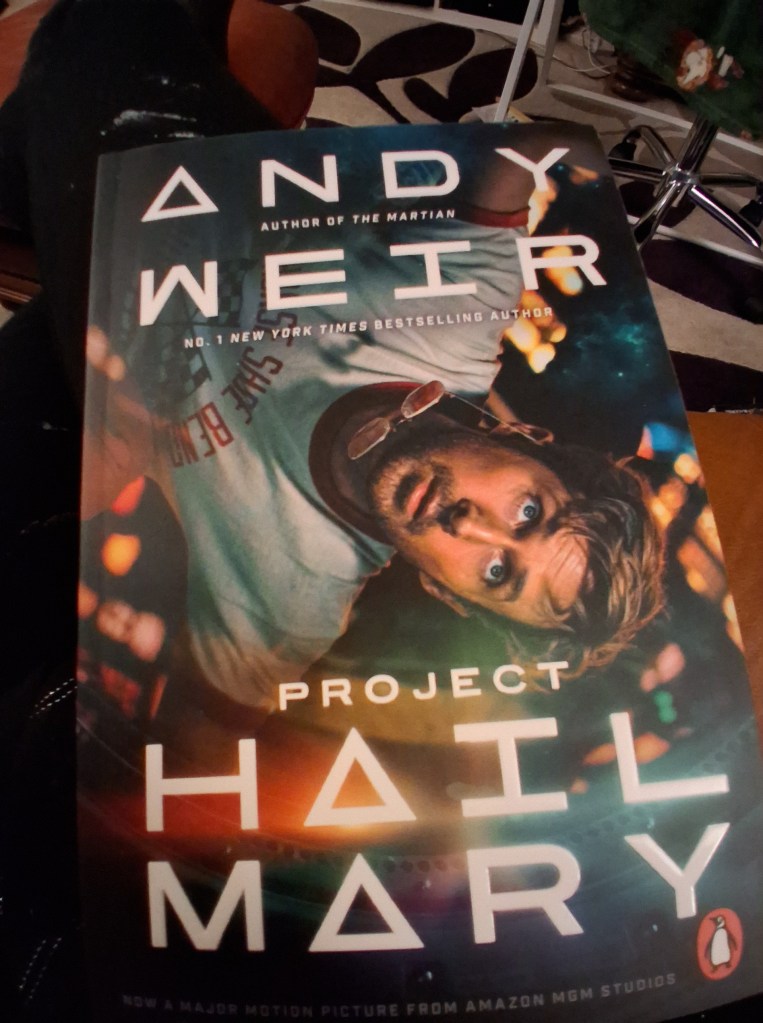
I miss my family. Work is challenging. The world is scary. Old wounds are at active and my dreams leave me emotionally wrung-out. So it felt like a blessing to see Project Hail Mary at the cinema yesterday. I loved everything about it, but the relationship at the heart of it I loved the absolute most. Rocky amaze ❤️ Ryan Gosling perfectly cast. Sets, lighting, effects, a full package of a much needed diversion.
Read for your life!
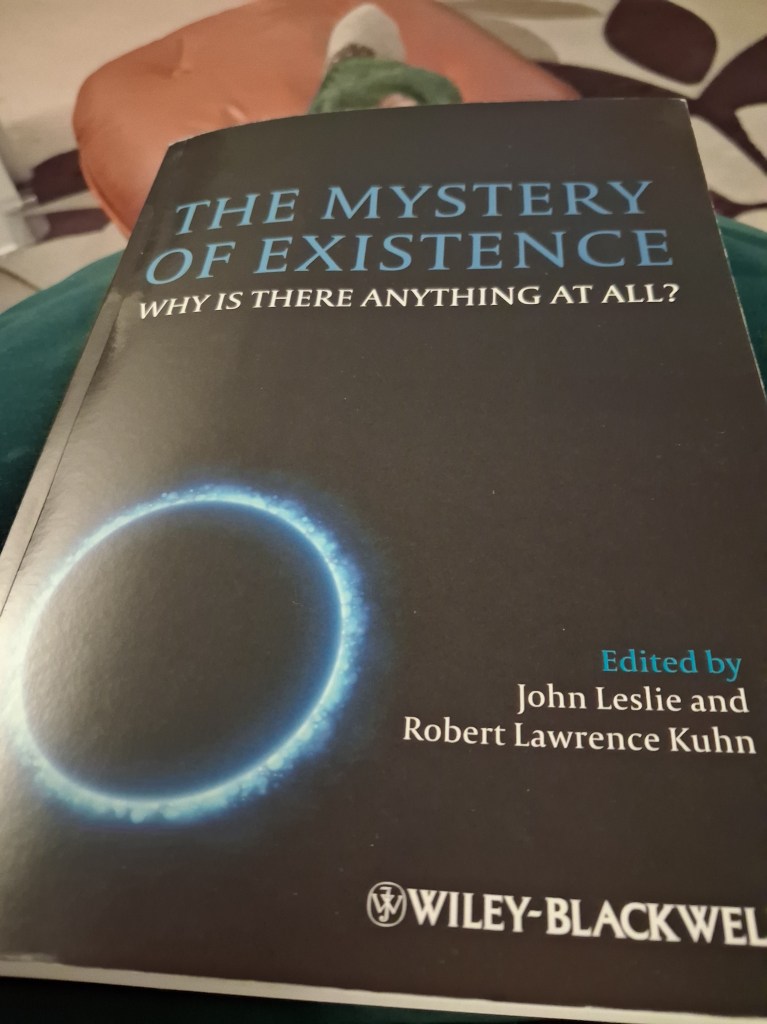
When life gives you an internal sludge swamp of emotions, read. Preferably about BIG MYSTERIOUS THINGS, and convince yourself you’re interested (and interesting?) for a while.
February according to Baudelaire
Let me one day paint such a vivid picture of my February feelings in words!
Spleen, by Charles Baudelaire (1821-1867)
From https://poets.org/poem/spleen
(I)
February, peeved at Paris, pours
a gloomy torrent on the pale lessees
of the graveyard next door and a mortal chill
on tenants of the foggy suburbs too.
The tiles afford no comfort to my cat
that cannot keep its mangy body still;
the soul of some old poets haunt the drains
and howls as if a ghost could hate the cold.
A churchbell grieves, a log in the fireplace smokes
and hums falsetto to the clock’s catarrh,
while in a filthy reeking deck of cards
inherited from a dropsical old maid,
the dapper Knave of Hearts and the Queen of Spades
grimly disinter their love affairs.
(II)
Souvenirs?
More than if I had lived a thousand years!
No chest of drawers crammed with documents,
love-letters, wedding-invitations, wills,
a lock of someone’s hair rolled up in a deed,
hides so many secrets as my brain.
This branching catacombs, this pyramid
contains more corpses than the potter’s field:
I am a graveyard that the moon abhors,
where long worms like regrets come out to feed
most ravenously on my dearest dead.
I am an old boudoir where a rack of gowns,
perfumed by withered roses, rots to dust;
where only faint pastels and pale Bouchers
inhale the scent of long-unstoppered flasks.
Nothing is slower than the limping days
when under the heavy weather of the years
Boredom, the fruit of glum indifference,
gains the dimension of eternity . . .
Hereafter, mortal clay, you are no more
than a rock encircled by a nameless dread,
an ancient sphinx omitted from the map,
forgotten by the world, and whose fierce moods
sing only to the rays of setting suns.
(III)
I’m like the king of a rainy country, rich
but helpless, decrepit though still a young man
who scorns his fawning tutors, wastes his time
on dogs and other animals, and has no fun;
nothing distracts him, neither hawk nor hound
nor subjects starving at the palace gate.
His favorite fool’s obscenities fall flat
—the royal invalid is not amused—
and ladies in waiting for a princely nod
no longer dress indecently enough
to win a smile from this young skeleton.
The bed of state becomes a stately tomb.
The alchemist who brews him gold has failed
to purge the impure substance from his soul,
and baths of blood, Rome’s legacy recalled
by certain barons in their failing days,
are useless to revive this sickly flesh
through which no blood but brackish Lethe seeps.
(IV)
When skies are low and heavy as a lid
over the mind tormented by disgust,
and hidden in the gloom the sun pours down
on us a daylight dingier than the dark;
when earth becomes a trickling dungeon where
Trust like a bat keeps lunging through the air,
beating tentative wings along the walls
and bumping its head against the rotten beams;
when rain falls straight from unrelenting clouds,
forging the bars of some enormous jail,
and silent hordes of obscene spiders spin
their webs across the basements of our brains;
then all at once the raging bells break loose,
hurling to heaven their awful caterwaul,
like homeless ghosts with no one left to haunt
whimpering their endless grievances.
—And giant hearses, without dirge or drums,
parade at half-step in my soul, where Hope,
defeated, weeps, and the oppressor Dread
plants his black flag on my assenting skull.
The Flowers of Evil, by Charles Baudelaire: some personal reflections.
I’ve finished reading The Flowers of Evil by Charles Baudelaire. I thought I’d write a summary of the themes and some personal reflections on this collection; what I think the poet is trying to convey through his use of imagery, the recurring themes, and my own responses to him.
A bit about the book and the poet:
Charles Baudelaire (1821-1867) was a poet and essayist in Paris.
Thanks for reading Fee’s Substack! Subscribe for free to receive new posts and support my work.
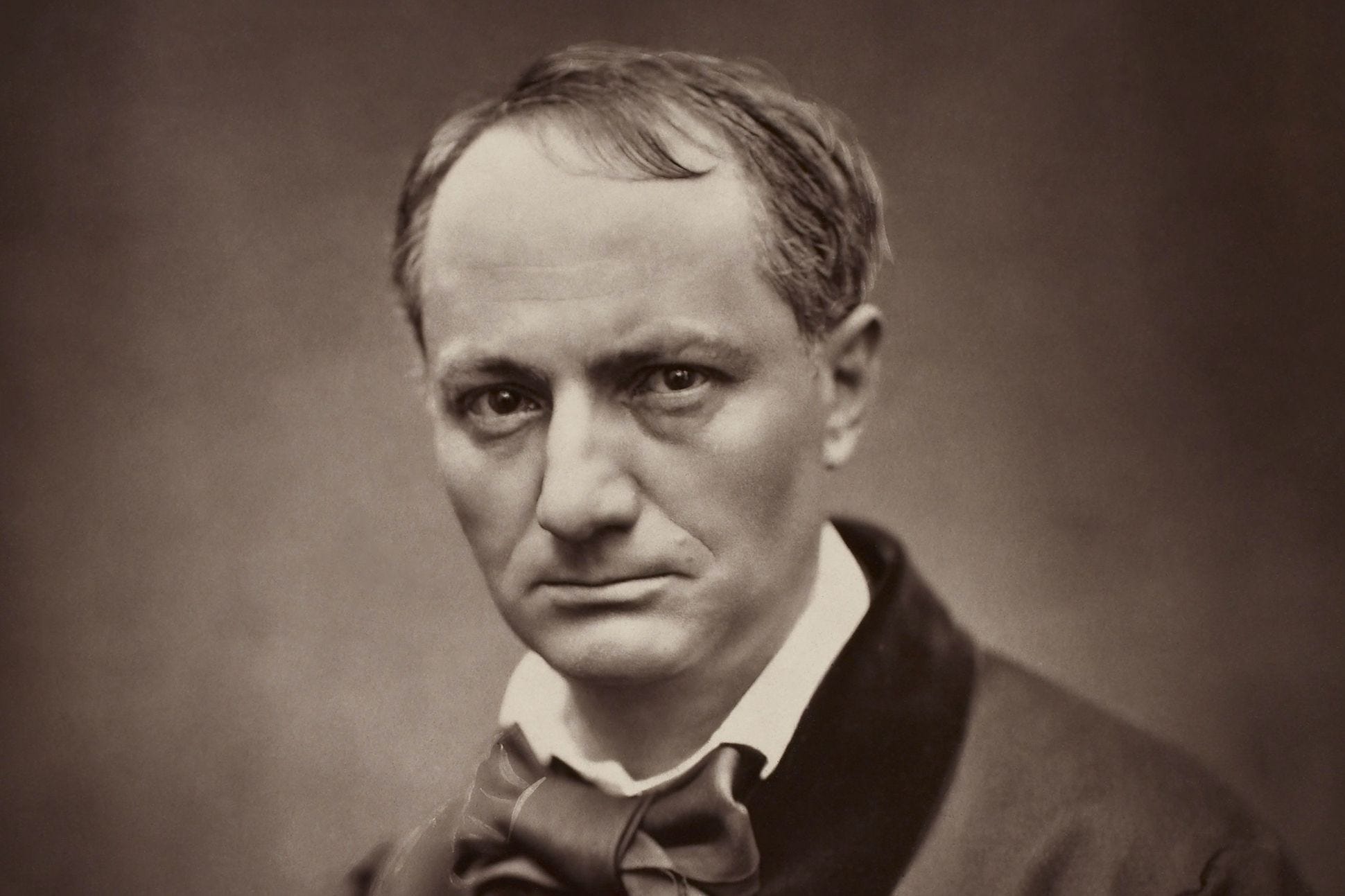
Woodburytype of a portrait of Charles Baudelaire by Étienne Carjat. Charles Baudelaire | The Poetry Foundation
The Flowers of Evil was published in 1857. The poems within were written in the 1840s and 1850s. This collection was controversial at the time, with a trial and fine for the poet, and the banning of 6 poems.
The Flowers of Evil
This collection is filled with ambivalence – moral, sexual, emotional, spiritual. From the title we see this – something beautiful as a flower can come from something considered evil or sinful. I found it infuriating and fascinating, and never was I more aware of my own responses as a reader as when reading this collection.
Spleen and ideal
The first section is titled Spleen and ideal. Spleen refers to a melange of feelings – intense boredom, disgust, helplessness, melancholy, and futility. Here the scene is set for a poet searching for an ideal as a counter to spleen, and experiencing intense ambivalence towards the means of achieving his escape (creating flowers, but sinful ones).
What do we know of Baudelaire’s spleenful feelings?
Boredom
Nothing is slower than the limping days
when under the heavy weather of the years
Boredom, the fruit of glum indifference,
gains the dimension of eternity …
- Spleen (II)
Helplessness
I’m like the king of a rainy country, rich
but helpless, decrepit though still a young man
- Spleen (III)
Disgust
When skies are low and heavy as a lid
over the mind tormented by disgust,
and hidden in the gloom the sun pours down
on us a daylight dingier than the dark;
- Spleen (IV)
Death
The sense of spleen is also emphasised through death imagery such as carrion, corpses, graves, soil, worms.
And heaven watched the splendid corpse
like a flower open wide –
you nearly fainted dead away
at the perfume it gave off.
[…]
-Yet you will come to this offence,
this horrible decay
you , the light of my life, the sun
and moon and stars of my love!
- Carrion
Time
Flesh is willing, but the Soul requires
Sisyphean patience for its song.
Time, Hippocrates remarked, is short,
and Art is long.
- Artist unknown
The poet is afraid of the loss of vitality over time, before his work can be done; of being forgotten. Further shown in the poem [ ] he describes battle-weariness.
Once you were hot for battle, weary mind!
Now Hope, whose spur awakened all your zeal,
no longer even mounts. […]
- Craving for Oblivion
Time as the enemy, and grief over time wasted:
My youth was nothing but a lowering storm
occasionally lanced by sudden suns;
torrential rains have done their work so well
that no fruit ripens in my garden now.
Already the autumn of ideas has come
and I must dig and rake and dig again
If I am to reclaim the flooded soil
collapsing into holes the size of graves.
I dream of new flowers, but who can tell
If this eroded swamp of mine affords
the mystic nourishment on which they thrive …
Time consumes existence pain by pain.
[…]
- The Enemy
Futility
Futility is a strong theme through the collection. The comparison of the poet to a rock when in his ‘moods’, where not even dropping into the sea (usually a source of that escape into emptiness) cannot help him:
“You’re like some rock the sea is swallowing –
what is it that brings on these moods of yours?”
Nothing mysterious: the ordinary pain
of being alive. You wouldn’t understand,
[…]
- Semper Eadem (always the same)
The futility of difficult feelings is demonstrated through the use of the Greek myth of the Danaides, the fifty daughters of King Danaus, forty nine of whom murdered their husbands and were condemned to labor in Hades, trying to fill a leaking vessel with water. The poet uses the image of the cask as synonymous with trying to his hate and the futility of this, the futility of such feelings:
Hate is the Cask of the Danaides
even Vengeance, frenzied and red-armed,
cannot replenish those depths fast enough
with bucketfulls of blood and dead men’s tears –
Hell thirsts on, mysterious holes appear
and through them seep a thousand years of toil […]
happy is the man who drinks to meet his fate,
but Hate is fettered to a fiercer doom
and cannot even drink himself to death.
- The Cask of Hate
He’s describing a man in conflict with himself, seeming to be resisting what he believes to be his nature or his fate (these moods he experiences and the battle-weariness), and seeing this as futile, wasted time and energy running out through holes.
Baudelaire capitalises feelings throughout this collection as if they are proper nouns, giving them more weight and substance, and therefore showing us the powerful force they have on him.
So how does the poet deal with these spleenful feelings?
Our poet seeks oblivion and forgetting as an escape from spleen, and he seeks this in a number of ways. Early in the collection things start off hopeful with the poem ‘Elevation’:
Ascend beyond the sickly atmosphere
to a higher plan, and purify yourself
by drinking as if it were ambrosia
the fire that fills and fuels Emptiness.
Free from the futile strivings and the cares
which dim existence to a realm of mist,
happy is he who wings an upward way
on mighty pinions to the fields of light;
- Elevation
This striving for oblivion has a more hopeful and exalted tone than many of the others poems, an embracing as opposed to a desperate cleaving from the self. He’s an artist endeavouring to find his place above the rest of society where his soul can ‘wander at ease’ with ‘an unutterable male delight’. He wants oblivion from the confines of his sex, societal status, as well as his inner ‘cares’; out of himself, and out of the streets of Paris and their sick air.
The Classics were another way that Baudelaire attempted to escape from reality, and references to Greek mythology occur throughout the collection. In the poem The Sick Muse, he’s imploring his muse to be ‘as steadfast as the copious Classical vein…’,
Indeed, the classics appear to be the only thing in the collection that is steadfast for Baudelaire. Even his cat, usually insouciant, is upset by the February rains of Spleen (I) (one of my favourite poems from the collection):
The tiles afford no comfort to my cat
that cannot keep its mangy body still;
the soul of some old poet haunts the drains
and howls as if a ghost could hate the cold.
- Spleen (I)
A bit about cats: the poet seems to love, even revere them. I think identifying something of himself in them; perhaps their ability to also slip in anywhere in Paris society where he himself feels alienated or envious (as in Gamblers); They are nonchalant, free of worry or concern, unlike our writer. He writes that the cat cannot be comforted in Spleen (I), giving cause for concern for our poet in February’s drizzle if even the cat is perturbed.
One of the most striking poems in the collection in which we can really examine Baudelaire’s relationship to spleen, is the poem Mists and Rains, which occurs in the ‘Parisian Scenes’ section of the collection:
Waning autumn, winter, mud-bound spring-
I thank these somnolent seasons that I love
for offering to both my heart and mind
so vaporous a shroud, so vague a tomb.
- Mists and rain
There is so much to unpack in this one stanza. First, the irony being that these seasons that he loves are clearly not the ones he loves, for his encounter with them, particularly in the Spleen poems, indicates the weather as a focal point for these feelings. Also, what is offered is associated with death (shroud and tomb) yet these are vaporous and vague. The poet is describing something akin to the peace of death, which is also referred to in the collection (death as the ultimate oblivion) but being granted in a vague way to as give some peace without the ultimate oblivion. How restful it is for him, how wanted and rejuvenating in the end, is so wonderfully ambiguous here. Perhaps he is seeing this vague death-like state as being like a sleep, the sleep he wishes for in the poem Lethe (“I want to sleep – not live, but sleep!”) He wants this state as an escape from spleen.
Why is he experiencing such feelings? Something about the artist’s openness to experience, encountering the full spectrum of feelings and of society. We see through the collection that he is seeing what others turn away from.
In Obsession, nature is no longer a pleasant escape but seems to invigorate his unwanted emotions:
Forest, I fear you! in my ruined heart
your roaring wakens the same agony
as in cathedrals when the organ moans
and from the depths I hear that I am damned.
- Obsession
We see other means of escape, including opium and gambling. He refers to the people here as ‘stubborn’. He is seeking something stubborn and steadfast in himself, some reprieve, and envying those that seem to have it in abundance and seemingly without trial:
Horrible, that I should envy these
who rush so recklessly into the pit,
each in his frenzy ravenous to prefer
pain to death, and hell to nothingness.
- Gamblers
A clue in this title is that to seek out these feelings that will either awaken or sicken the muse, is a gamble. The writer’s feelings of alienation are acute in this poem; alienated in place as well as within the progress of his own creative journey.
So here we have the imagery that sets the tone for the poet’s internal state. Spleen is a melange of boredom, futility, disgust, melancholy and helplessness, using imagery of death, dreary weather, dinginess, and gloominess, to convey these feelings to the reader. We see a poet attempting to rise above this as a good artist should. He is clear to the reader about the power and feelings of futility of spleen – even the cat is perturbed!. Despite the painful spleen, there’s ambiguity around the poet’s relationship with it, a suggestion perhaps of the welcoming of the very conditions that bring these feelings forth. This becomes more evident as we look at Baudelaire’s relationship to women.
Women
Women are a subject towards whom Baudelaire is ambivalent, a source of both desire and disgust for him. He had a long-term partner with whom he had a long-term, on-off and tumultuous relationship, so I interpret many of the more intimate poems as being about that relationship.
His poems convey at times an intense erotic desire for a woman as distraction against spleen:
For nothing silences my sobs
like the abyss that is your bed:
oblivion occupies your mouth
and Lethe runs between your lips …
- Lethe
Lethe (in Greek mythology, one of the rivers running through Hades that can grant the drinker forgetfulness of their earthly lives) is mentioned numerous times. Here it is linked to an erotic encounter with a woman as a way to forget.
He writes of nature, especially water, as something rejuvenating, a dive into that same emptiness of sky in Elevation, and later links this to the physical attributes of his lover, comparing his lover’s hair to “a harbor where my soul can slake its thirst”.
For example, here is the power of nature for Baudelaire:
Into this image of himself he dives
his arms and eyes wide open and his heart
sometimes diverted from its own dead march
His heart being diverted from its own dead march! The poet transcends the corporeal through his encounter with the sea.
And now to his lover’s hair:
For color, sound and smell – where ships that glide
among the seas of golden silk throw side
their yardarms to embrace a glorious sky
palpitating in eternal heat’
- The Head of Hair
Exalted again, he is throwing his arms out to the sky, into that brilliant emptiness from the poem ‘Elevation’, from the sea of his lover’s hair. Transcending through his erotic encounters.
And how delicious is this other stanza from ‘The Head of Hair’:
Take me, tousled current, to where men
as mighty as the trees they live among
submit like them to the sun’s long tyranny;
The sun gives life to trees yet here it is tyrannous. Women to Baudelaire are as the sun described here for trees.
Here we are getting an idea of the conflicting feelings towards the lover, and this carries on unabashedly throughout the collection.
No only are erotic encounters escape, they are also considered sinful:
Come from Satan, come from God – who cares,
Angel or Siren, rhythm, fragrance, light,
provided you transform- O my one queen!
this hideous universe, this heavy hour?
- Hymn to beauty
and a source of destruction:
In love I’ve sought an hour’s oblivion-
but love to me is a pallet stuffed with pins
that drains away my blood for whores to drink!
- The Fountain of Blood
and distraction from his creative ambitions and the artists’ path, where even the most diligent hands are powerless:
Sometimes (for he* knows my love of Art
he visits in a seductive woman’s form
and with the specious alibis of despair
inures my lips to squalid appetites.
Thereby he leads me out of God’s regard,
spent and gasping – out to where the vast
barrens of Boredom stretch infinitely.
Destruction
*referred to earlier in the poem as a demon.
The question becomes: how much is our poet restored by these encounters? We already have the tyrannical life-giving sun. Is there some balance to be achieved?
What is the impact of these encounters on the creative muse?
Good morning, Muse – what’s wrong? Something you saw
last night is left in your hollow eyes;
your colours bad, your cheek are cold
with horror, with madness! – and you don’t say a word.
Are you silenced by the love and fear dispensed
by greenish vampires, rosy ghouls?
[…]
Not like this … I want you safe and sound,
[…]
and steadfast as the copious Classical vein ..
- The Sick Muse
The evening’s encounter brought both love and fear, and both upset the muse. The very feelings that could be a source for writing but the words don’t come! For a poet that sees beyond life’s grime, this is infuriating. How desperately he wants to transform this pain into poetry! He sees himself as diligent (indeed, recognises that he among men can see others as their whole and not their outer circumstances), further emphasising the power of his inner feelings.
There’s a distinction between the “fruitful lethargy” described in ‘The Head of Hair’ and the spleenful, battle-weary lethargy, yes as a reader I suspect that the poet is appreciating both (though the appreciation likely comes much after the fact).
Baudelaire sometimes feels powerless against the erotic pull:
My destiny is my desire
which I obey as if foredoomed:
innocent martyr, eager prey
whose fervor hones his agony
[…]
I’ll suck enough to drown my spite
at those entrancing pointed breasts
which never have confined a heart
-Lethe
“whose fervor hones his agony” – another indication perhaps that the poet is seeking out such feelings so as to exploit them as is his calling, like the diligent monk who in this case is bad:
He is aware of his calling and responsibility as a poet to transform his feelings into art:
‘[…] when shall I make
the living pageant of my misery
into the work of my hands and the love of my eyes?
- The Bad Monk
Encounters with the erotic become as a drug – more required but leaving the user requiring more.
From the poem Sed non satiata (“yet not satisfied”):
[…] And yet
to wine, to opium even, I prefer
the elixir of your lips on which love flaunts
itself; and in the wasteland of desire
your eyes afford the wells to slake my thirst.
The irony of course is that his love of women, or one woman in particular, is bringing these poems forth. I am not sure he would have considered women as muses, however. He speaks of the muse as something internal (The Sick Muse) that he must protect at all costs; something that can be distracted and destroyed by life.
So here we have the poet’s highly ambivalent feelings about his erotic encounters with women. To him, they are pleasant escapes and a way to forget spleenful feelings. They can be fruitful, but can also be draining. At times enamoured by his love and revelling in the encounters, at other times despairing to find his words drained and his hands still. Like the sun that can be tyrannous to the trees, we see a man wanting to reach an equilibrium with himself and his surroundings. This is difficult for a poet who sees deeply across the spectrum of Parisian society, envying the steadfastness of others and never quite achieving it (and one suspects, doesn’t really want to).
Paris scenes
When it comes to the Paris Scenes section, the view of women is rather more tender. As a true poet he is seeing the whole of them, their past, present and future selves, their struggles and treatment by society. He views himself among the few artists capable of seeing them fully:
But I who at distance follow you
and anxiously attend your failing steps
as if I had become your father – mine
are secret pleasures you cannot suspect!
I see first love in bloom upon your flesh,
dark or luminous I see your vanished days –
- The Little Old Women
It’s as if coming out of thoughts of his lover(s) and into the wider world of the streets of Paris, his view is softening in the context of the city. Against change, poverty, revolution, a widening view and increased sensitivity to the trials of others.
Ambivalence also enables him to see and acknowledge the spectrum of society. In The Red-Haired Beggar Girl he refers to himself as being “reduced” as she is. He is identifying something of himself in her, though their existences are worlds apart, just as he sees something of himself in the old women:
and all beguile me, but especially
those who, honeying their pain, implore
addiction that had once lent them its wings:
“Mighty Hippogriff, let me fly again!”
- The Little Old Women
With the old women, he is perhaps considering his own struggle with the march of time.
He’s seeing beneath their shells and circumstances. With the red-haired beggar girl we can see that were it not for her circumstances, just for the want of a brocaded dress, he understands that she would have men under her control. With the old women, he sees their lost eroticism and figure, and were it not for the ravages of time they would still be noticed by the world.
Gaping tatters in each garment prove
your calling is not only beggary
but beauty as well,
[…]
Queens in velvet buskins take the stage
less regally than you wade through the mud
on your wooden clogs.
- To a Red-Haired Beggar Girl
Summary of reflections and how the collection made me feel
I think I have responded to this in such a way as to write a reflection because there’s a stark honesty and realism from Baudelaire. Haughty, yes, seeing himself as one of the few that can see beyond the surface. He recognised an equal in his contemporary Victor Hugo, and the poems to him from the Paris scenes sections are among the most gathered and least emotionally fraught, in part perhaps to impress such a writer, but I think also because Baudelaire is looking outside himself. There is a difference between the poems of the inner turmoil and those about Paris in their directness of the people described. He does for people as van Gogh did with his portraits; he brings them to us and makes them painfully real. I believe that there was a red-haired beggar woman and a specific group of old ladies, and these poems reflect them and not an amalgamation.
When writing about himself, he is painfully real, and it’s no wonder artists have been so drawn to his work given the inevitable conflicts and pains that come with an openness to experience. With this openness comes a sense of isolation and alienation, seeing a place for himself everywhere and nowhere, envious of people seemingly knowing and happily accepting their place. Such feelings, even the cat is disturbed, and cats can go anywhere!
Never have I felt closer to the Parisian 19th century streets than through these poems. For all the grime and danger and dank, social upheaval and revolutions, I would love to visit them. Baudelaire brings me so close to his reality with his words.
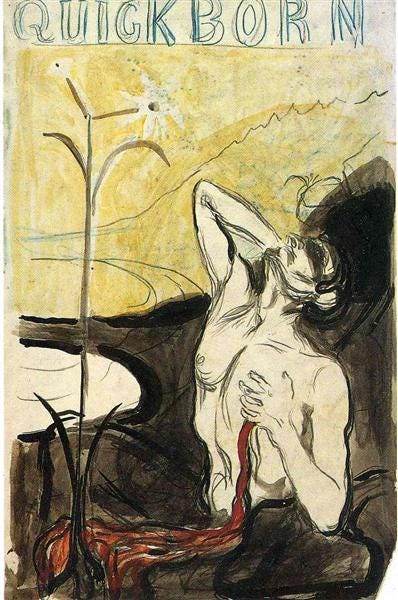
The Flower of Pain, 1897 – Edvard Munch – WikiArt.org
An artist of great intensity of feeling, observing the full spectrum of society, battling with the weight of existence and freedom, with great ambivalence towards himself and others. It has taken multiple readings of many of the poems to really pick up on the poet’s wanting spleenful feelings; an active seeking out of the very conditions that bring him feelings of weariness, futility, melancholy, and disgust; the clever ways he delivers this and then leaves the reader in a spin. The description of women ‘honeying’ their pain – making it sweeter or as bees creating it, to bring the causes of their addictions that would help them escape. Next I would like to consider how this is conveyed through his poems in more detail, considering the poetical devices used.
As a reader I was discomfited by the unreliability of nature to soothe his soul; at one point exaltation and escape from the corporeal, at others mirroring his internal pain. One one time he can embrace the ‘somnolent seasons’ as a time for his soul to take flight, at others even his beloved cat finds no rest. As a reader perhaps my response is from wanting the comfort of some reliable sources of solace, some steadfastness of my own (though I often fear that, with too much inner calm, my words would dry up, and I definitely bring these feelings to my reading of this collection).
References
All excepts from the Kobo ebook:
Baudelaire, Charles. The Flowers of Evil. R. Howard (trans). Verba Mundi, 2025.
Less kinaesthetic, more anaesthetic
At my computer in the office, I locked the screen to go and get my second coffee of the morning.
This beautiful locked-screen image met my eyes and distracted me (temporarily) from thoughts of my next coffee (only my second one of the morning. By 09:09, I know!)
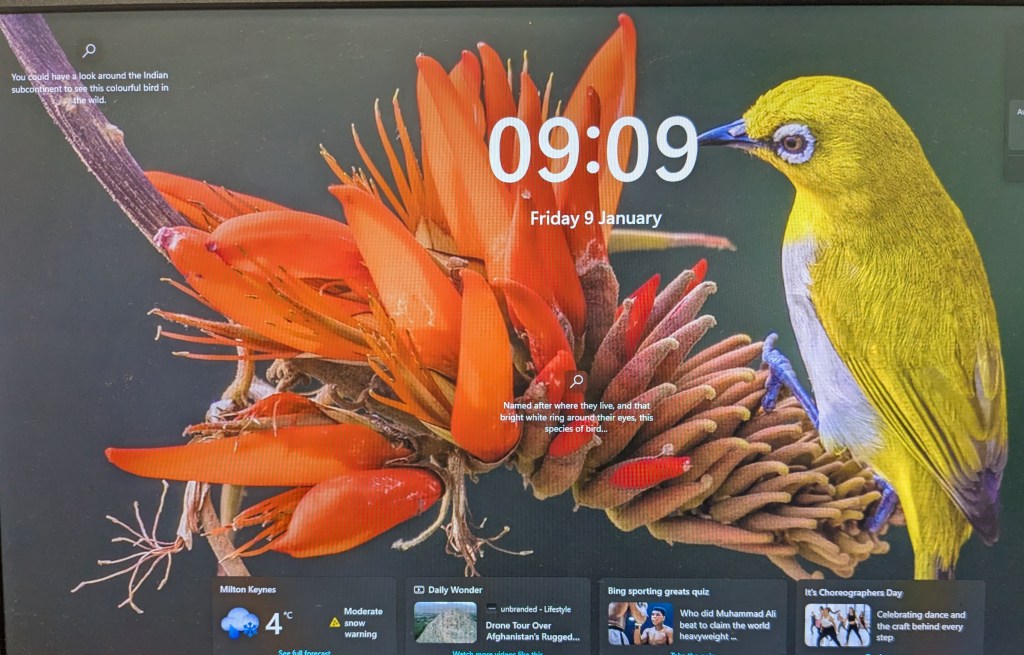
It’s a picture of an Indian white-eye bird.
I was so struck by the image that I thought, I would like to know more about this white bespectacled birdy.
It occured to me how fortunate we are that we can access so much knowledge; that I didn’t need to go anywhere to find out more; that I might never have seen this little bird in my life without the internet. I appreciated for a while this digital window to the world.
But then another thought: days of needing to get up and go searching for information. This meant more resources going into finding something out. It meant more focus and concentration on one thing at a time.
I began reflecting on how widespread my attention is these days. How diluted it might be becoming.
Something about learning in that way – of moving to find something, a sense of mission and adventure, the sensory input associated with it, a more embodied and holistic learning.
How much goes it when it’s so easy and quick to find, and the stakes are low? Nothing can be lost, it’s always there, on the internet cloud somewhere. We don’t even need to remember to click ‘save’ anymore.
How much information sticks when everything is so easy?
In my work as a programme facilitator we use the VARK model of learning for planning sessions. My interest in this has been piqued further. But even if not directly related to kinaesthetic preference for learning, just the additional investment that was needed to go and find information, being selective with energy and attention. Everything is so easily there, I’m afraid our understanding muscles aren’t being worked out, and the system of knowing is becoming fragmented. This is something that has been a concern in society for decades, I know. But with AI summaries being increasinly shoved in our faces, it feels even more so.
I’m afraid of becoming less kinaesthetic, more anaesthetic!
Sigh.
This post is really apropos nothing, except to share a picture of a pretty birdy. Hopefully I’ll at least remember what it’s called.
And it’s described as gregarious, hyperactive, prefers more open forest areas rather than dense, and makes a faint “zwee!” call.
I’d like to meet this bird.
Do it while you can (or, why is there any quantum to fluctuate?)
Something has to change.
There are some small relational things that shrink my world to fit them. My perception is distorted and suddenly these minor things become the most urgent and important things in my world.
Considering that this often involves colleagues/acquaintances, let’s just say that these relationships are certainly not the be and end all of my existence.
Yet somehow, in those moments, it can feel like they are. And those moments happen on a weekly basis. Far too much time and energy to be taken up by nothing.
Now I have just turned 40 (did I mention that I’ve just turned 40?) (how long can I continue to say I have just turned 40?) and feeling really good, I do not want these minor relational things to continue to perturb me as I come to the end of my Christmas break.
A helpful move will likely be away from the over-focus on the reasons for turbulence in my inner world, instead to focus on the surface waves of overthinking. Overthinking is a protective mechanism, and goodness knows I’ve explored enough what I am protecting against. Overthinking continues to propogate whatever has come from below and spills out into everthing. Time to focus on the spill and how to keep it contained/ignore it altogether.
So, what to do?
Continue the basics of good diet, regular exercise, and sleep of course, as well as small things like stopping nail biting and skin picking – all things that continue to signal to my brain that I am not worthy of care and there is something wrong. (Must read the book Atomic Habits by James Clear.)
Marcus Aurelius wrote: “Get busy with life’s purpose, toss aside empty hopes, get active in your own rescue – if you care for yourself at all – and do it while you can”. (Meditations, 3.14).
Being up and about early and engaging in this writing is my getting busy with purpose and being active in my own rescue. My aim for the year is to spend more time creating, even if I can only manage 30 mins in a day. This is better than nothing and will give me those good feelings of accomplishment that keep my mind outside.
Given that I have ‘just’ turned 40, the DO IT WHILE YOU CAN has more urgency. I am very fortunate to be of generally good health, but I know this shouldn’t be taken for granted. Work, marriage, frienships, families, home, hobbies, work-life balance – these are all in good health also, so there will likely be no better time to do it.
DO IT WHILE YOU CAN is going to be my mantra for this year.
It seems to me that a way to counteract the sweating of the small stuff requires a move to BIG topics, to keep my thoughts OUT THERE, and not IN HERE (IN HERE being the overthinking – have I upset them? What if they hate me? Why didn’t they say good morning, blah blah). Being OUT THERE is a letting go of control and stepping out of my comfort zone.
A BIG TOPIC that I’ve always wondered about is – why is there something rather than nothing? I’ve made a GIANT LEAP out of my comfort zone and began with this topic. I’ll record what I’ve learned here so far, to test whether I have understood anything at all.
I went straight in with the book ‘A Universe from Nothing’ by Laurence M. Krauss – which is both a blessing and a curse, a sentiment with which the book itself and the afterword by Richard Dawkins agree. It’s fortuitous we are here now, when the universe is ‘close enough’ and ‘young enough’ to observe and give a full picture of its origins, but beyond this there is little comfort about the book if one is looking for a sense of meaning (the answer to the WHY rather than the HOW). Fascinating, but bleak. And perhaps now I have dived straight into the physics of the whole thing, I am wondering whether I can step aside, as was the intention, to a more philosophical look at things. Some kind of deflating feeling, a ‘what’s the point? There is no why!’
Ok, that’s a bit dramatic. I concede I can find plenty of solace in science. A lot of the physics in this book is either completely unfamiliar to me, or I have encountered before but understood so little that it feels like encountereing for the first time!
A Universe from Nothing – Laurence M. Krauss
Here’s what I have learned from this book:
From nothing, there is energy from quantum fluctuations and negative pressure acting on empty space as the universe expands, means that a small area of space can grow very large and with a lot of stuff in it. And everything we have observed (flat universe, Newtonian gravitational energy of galaxies being zero etc) is consistent with a universe that arose out of nothing.
It took my hours to come up with that summary.
You’re welcome.
Quantum fluctuations in empty space involving virtual particles and phase transitions providing energy, led to gravitational collapse into the galaxies, stars, planets and people that we see today. This could provide a mechanism for us and everything we see to originate from empty space.
When the universe was about half its present size, it would have been decelerating, due to matter being dominant over empty space at that point. A gravitational force would have been acting against expansion. In classical mechanics, a “jerk” is the point when a system changes its acceleration.
As the universe cooled with expansion, areas of it would have undergone a kind of phase transition, during which energy can be released because the lowest energy state in one phase can have lower energy than the lowest energy state in the other phase (latent heat). If this happened in the expanding universe this could have affected the rate of expansion of the unverse. Energy stored before the phase transition completed (the latent heat) would have acted like energy in empty space. This could have caused faster expansion than expected. This inflationary period could have allowed quantum fluctuations to occur.
Quantum fluctuations are the occurence of virtual particlea and fields, which can lead to small regions of space ending their period of expansion while others are still expanding. As differtent regions stop inflating at different rates on microscopic scales, the density of matter and radiation that results would have varied. This helps explain why there are hot and cold spots in the cosmic microwave background. Quantum processes may have led to a small asymmetry, witha slight excess of matter over antimatter, after which not all matter can be annihilated as there is not enough antimatter to do so. This equals left matter, which means us!
We may come from a momentary and accidental moment of asymmetry.
The implication is that it is quantum fluctuations are responsible for everything we see. With the scale of the universe, it eventually would happen that there would be something.
Or something like that.
The above can arrive from empty space (with that space not being truly ‘nothing’ as it’s got radiation and quantum stuff going on). I THINK (my understanding gets a bit fuzzy here) that the book implies that this can explain how something can arise from nothing (no space-time, no container as such. This latter kind of nothing is considered an unstable physical state devoid of matter and radiation, with only potential energy and the physical laws applicable.
Who came up with the laws? Why is there any quantum to fluctuate? One of my questions coming into this book was – why is there space at all? Why is there a container at all? I realised when reading this book that I should be asking ‘how’ rather than ‘why’ as this is the focus on Krauss’ book. I can’t quite let go of the ‘why’.
There is a chapter towards the end that goes a bit more into philosophical and theological arguments for a First Cause of creation, who came up with the rules that governed the universe?I found myself surprised at the strength of my feelings that there must be a something to start everything off. This is in part due to my limited understanding, but also the many questions that remain in quantum physics stuff.
This is probably as good a summary as I can make, aware as I am that I have very limited understanding quantum mechanics ‘n’ stuff.
The book goes into A LOT about the universe – the history of our observations that validate the Big Bang (Hubble expansion, Cosmic Microwave Background (CMBG), and the observed agreement bwtween the abudnance of light elements measured in the universe with the amounts predicted to have been produced in the first few minutes in the history of the universe). It explains how the mass of the universe is calculated, what we know (and don’t know) about dark matter and dark energy.
What I’ve come away with is that there are some verifiable processes in which nothing can produce something. The book has advanced my understanding a lot.
Perhaps I can think of my mind as creating quantum fluctuations that produce the thoughts that bother me. I can remind myself to be an observer of such galaxies of thought and perhaps try and see them with a bit more wonder, and solace in the meaninglessness of it all. Perhaps I can consider everything as potential and my brain just happens to be creating the conditions that create ME, and that doesn’t have to have any more meaning than that, just something to work with.
“Dream or nightmare, we have to live our experience as it is, and we have to live it awake. We live in a world which is penetrated through and through by science and which is both whole and real. We cannot turn it into a game simply by taking sides.” – Jacob Bronowski.
Taking sides is definitely something I’ve been doing, in many ways!

2025 – a summary
I’ve decided to write a summary of the year. So much time just passes and I’ve not been making time to reflect on moments, big and small, that mean so much. Life can so easily become just keeping up with things without enough thought.
(Having said that, there’s no a whole lot of thought here either! But is has been enjoyable to take a moment to review Google Photos and reflect on how much I’ve done and how it has been a pretty good one).
January
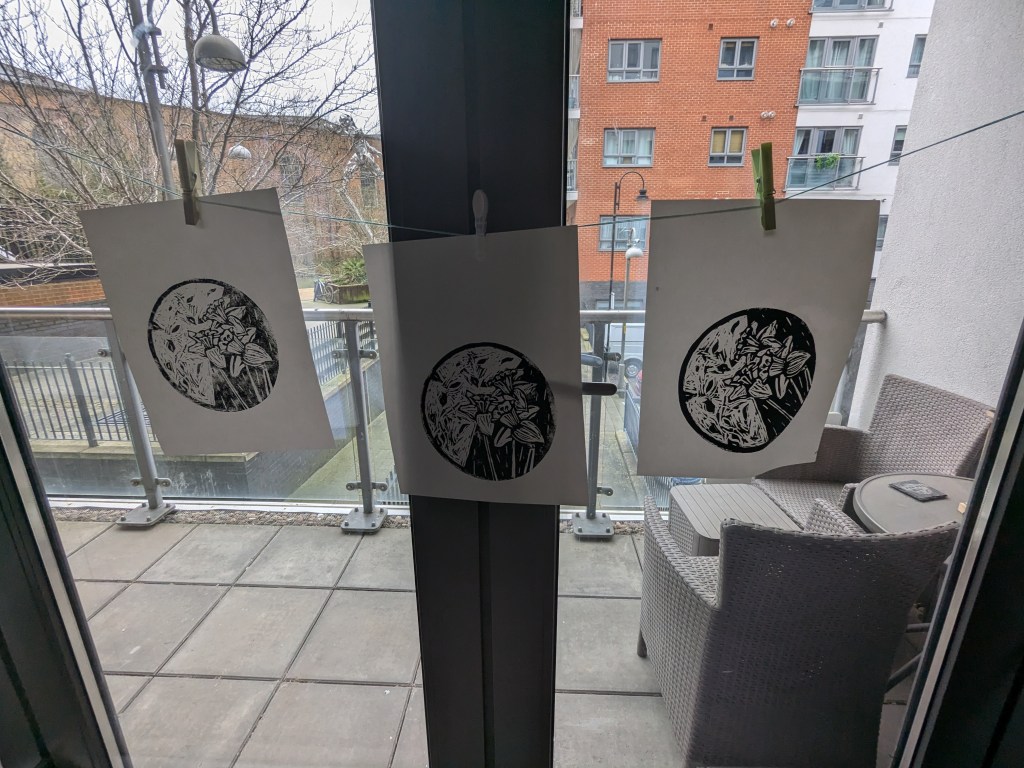
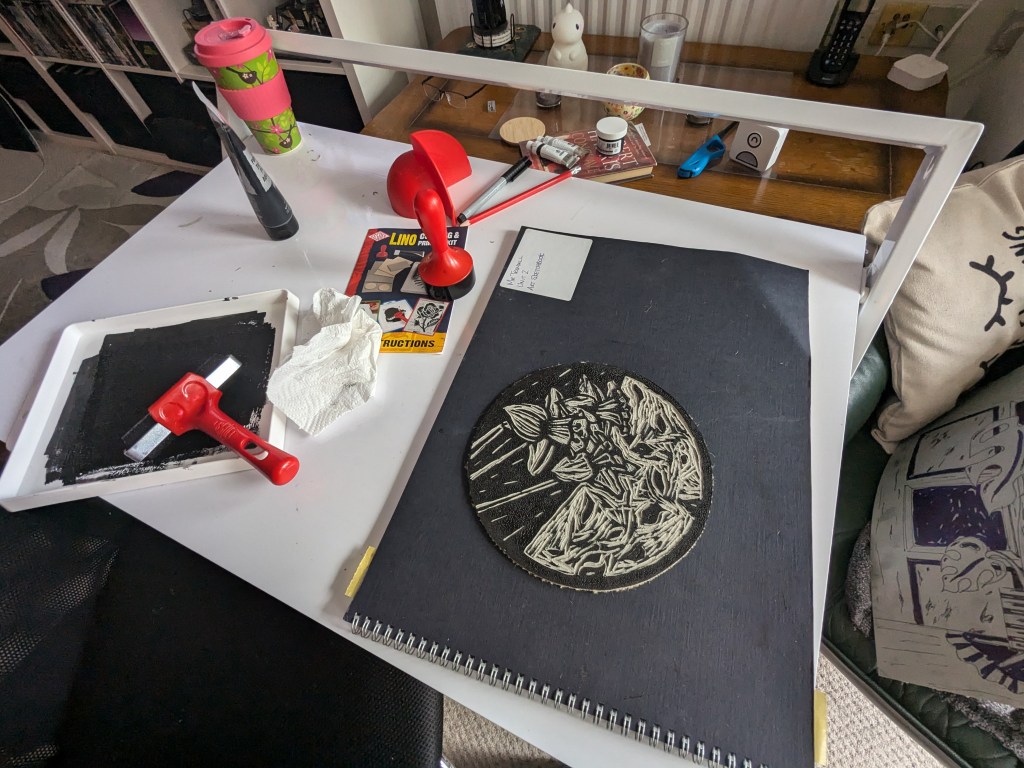
I tried some lino printing. I did not injure myself this time. I was admiring some prints at Westbury Arts Centre in MK and was inspired to have a go.
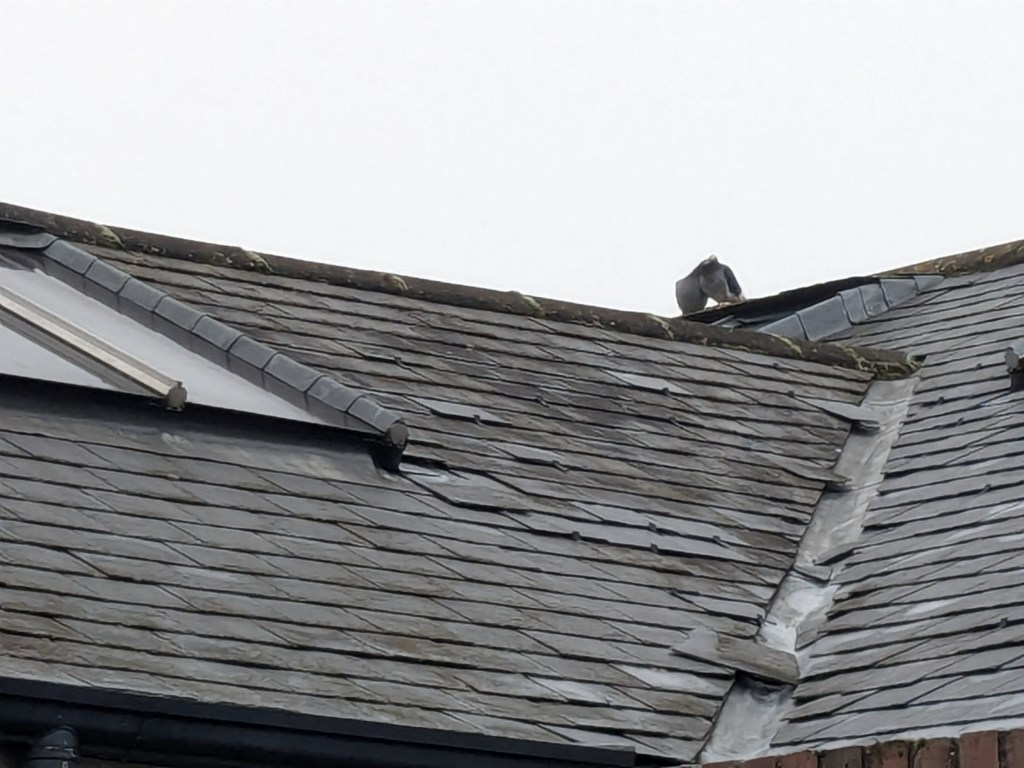
I saw two pigeons canoodling on a roof. Not only did it warm my heart, but it brought the word ‘canoodle’ back to mind. It is such a great word!
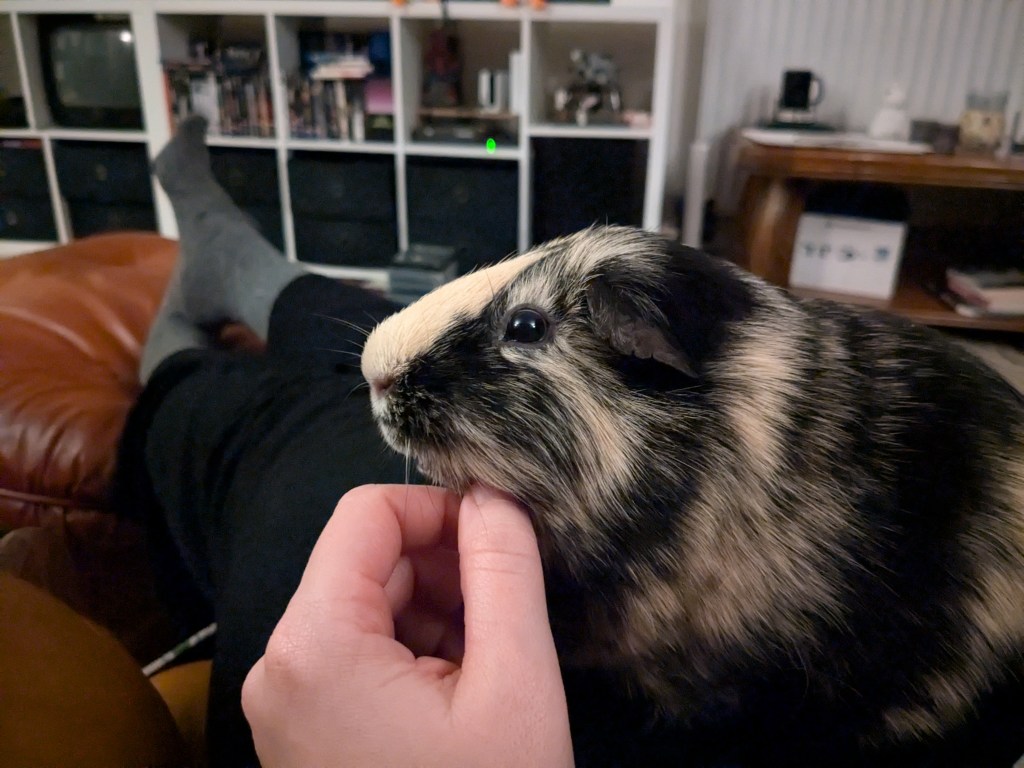
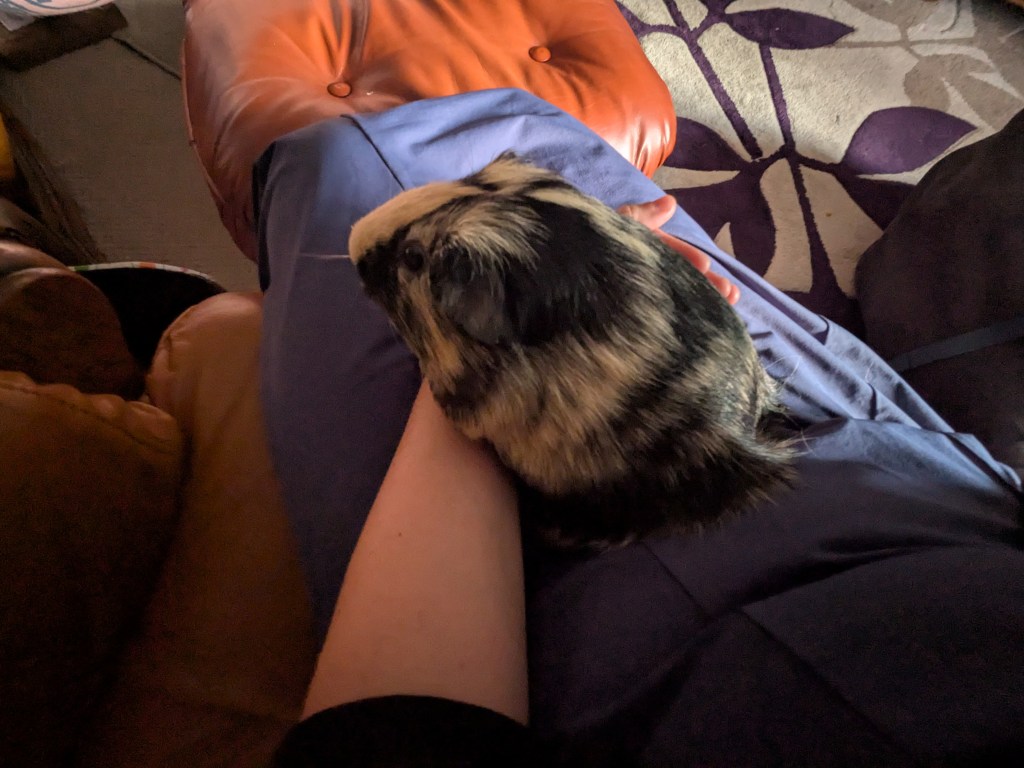
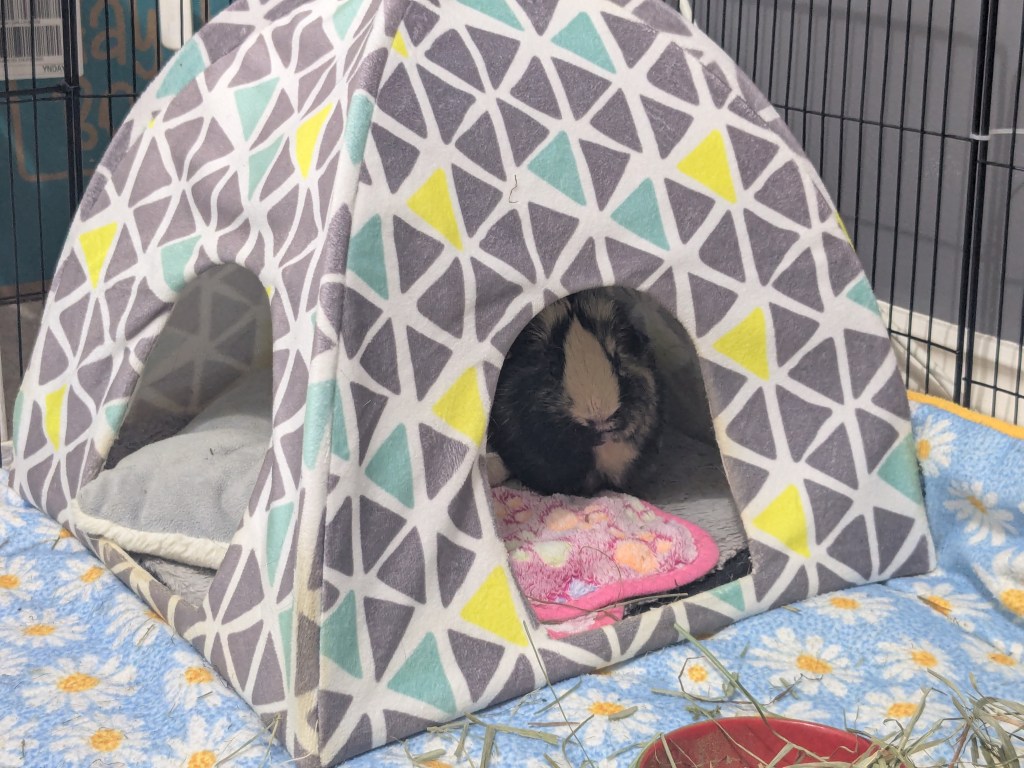
Lots of time with duPiggy. I call them collectively ‘duPiggy’, undoubtedly inspired by the wonderful ring of ‘Olga da Polga’, the fictional guinea pig character created by Michael Bond.
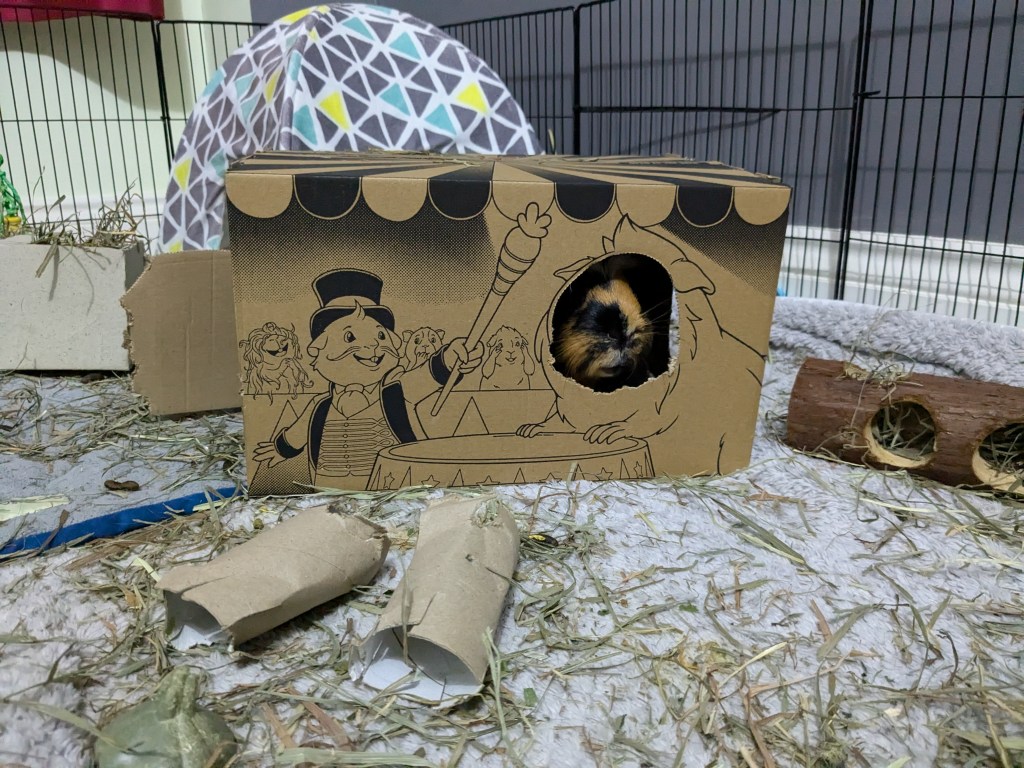
February
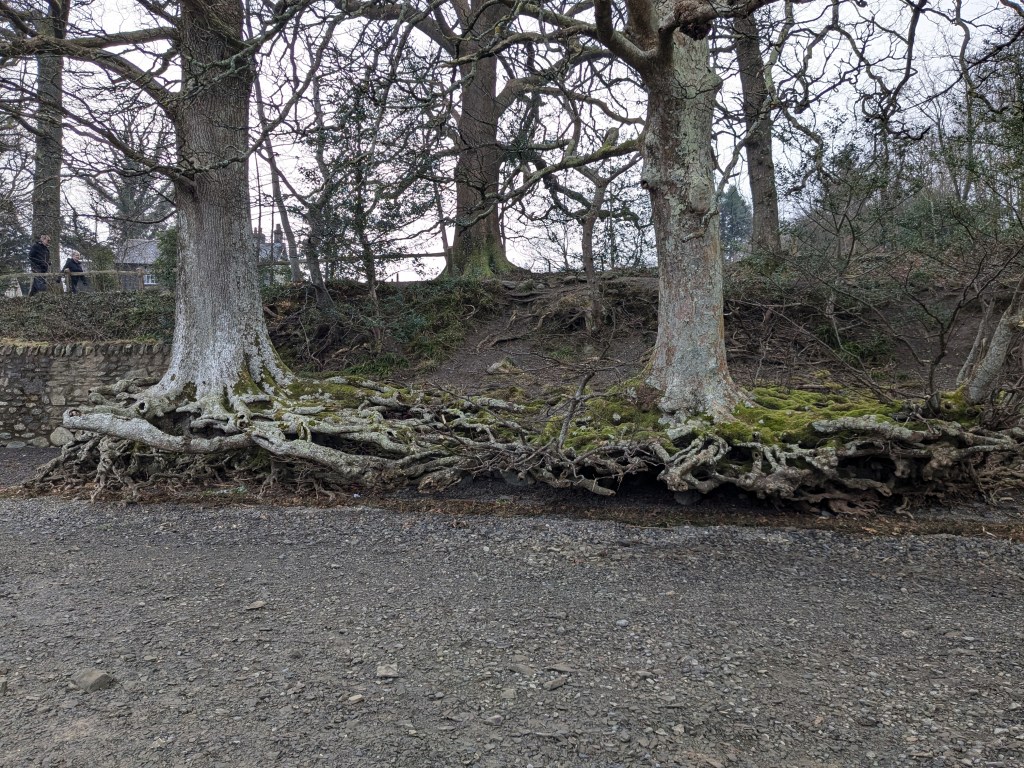
February was a struggle, as February tends to be. A half term trip to Keswick and I barely took any photos. I did capture these exposed tree roots by Ullswater that look pretty cool. And I remember trying to skip stones and utterly failing (ended up throwing one stone behind me somehow). It was a very Feb Feb.

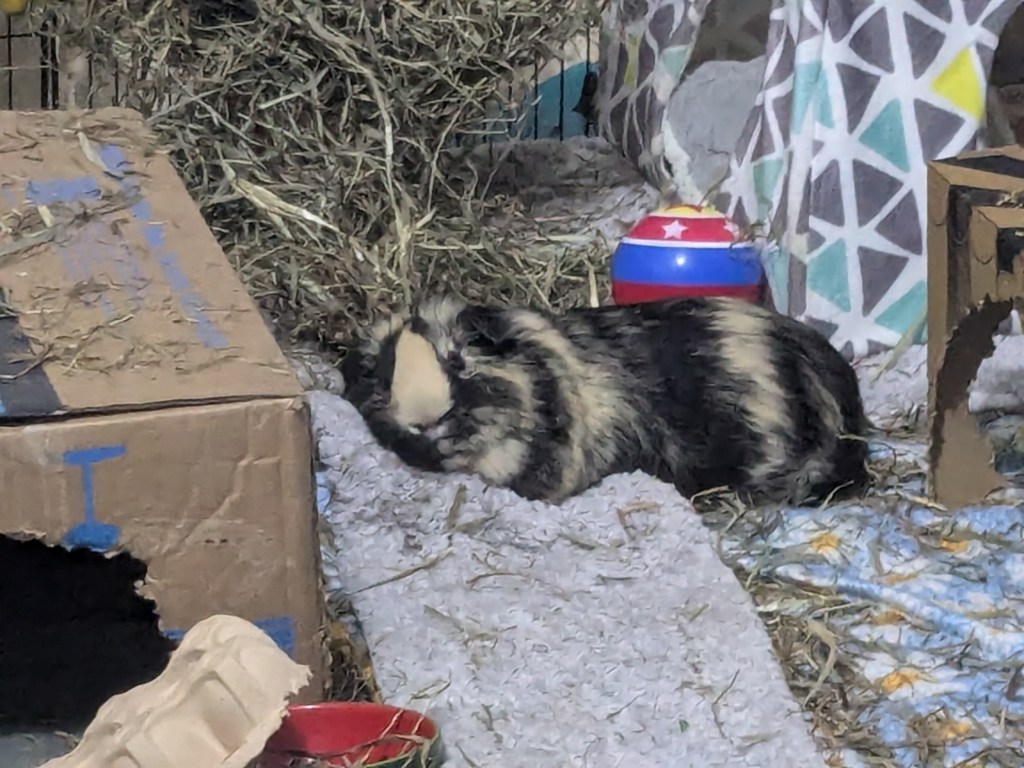
duPiggy were low on energy, just like me.
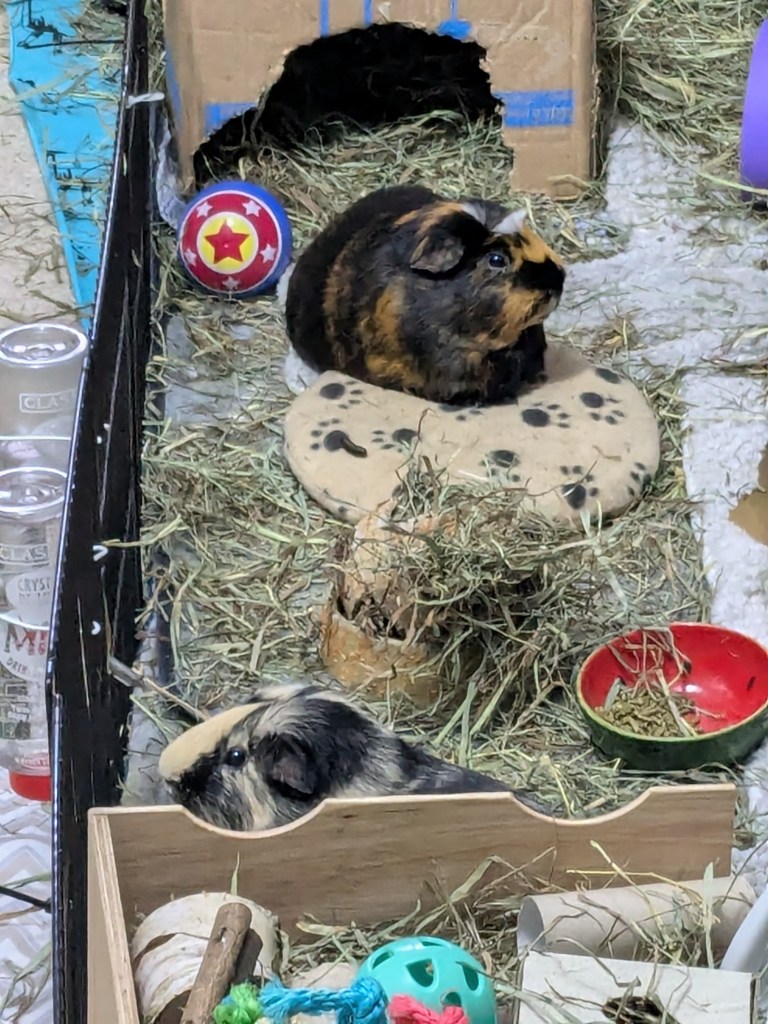
and they were cold, so we got out the heat pads for their little feet.
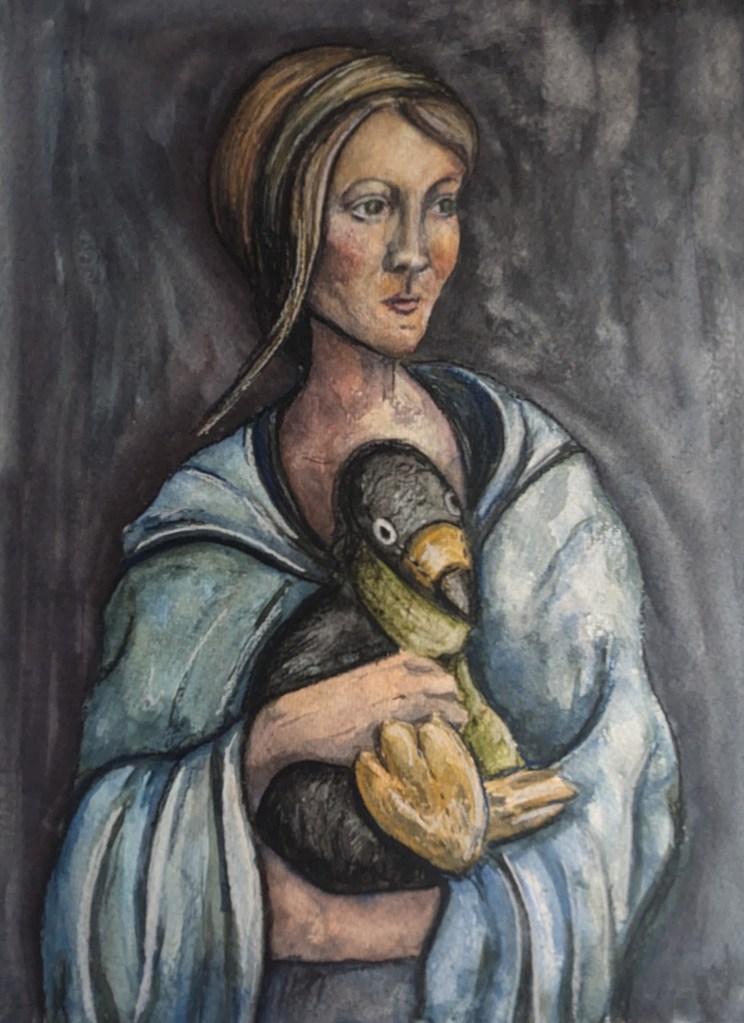
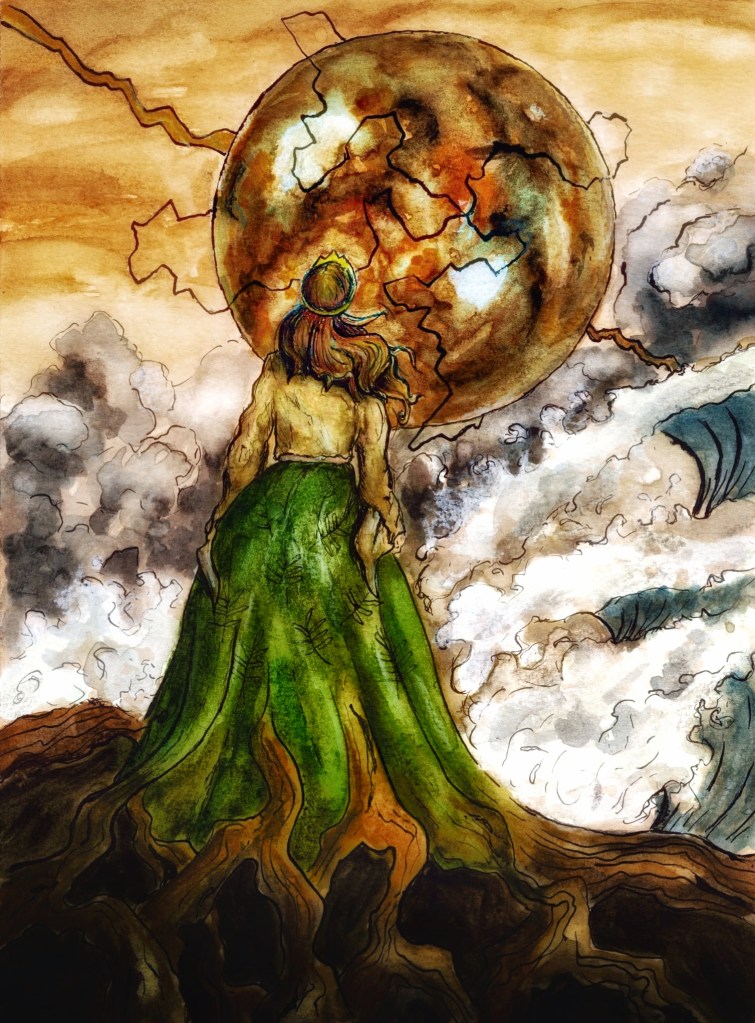
I was determined to get back into painting. I completed my ‘Lady with a (toy) penguin’ watercolour (started months before), and a painting for the cover of a book! The book is ‘Telling Tales of Wellbeing’, a collection of short stories to raise funds for Arts for Health Milton Keynes. It was good to have a challenge and a project but I remember really struggling at this point – low energy and motivation, was not feeling it. But I got through it.
March
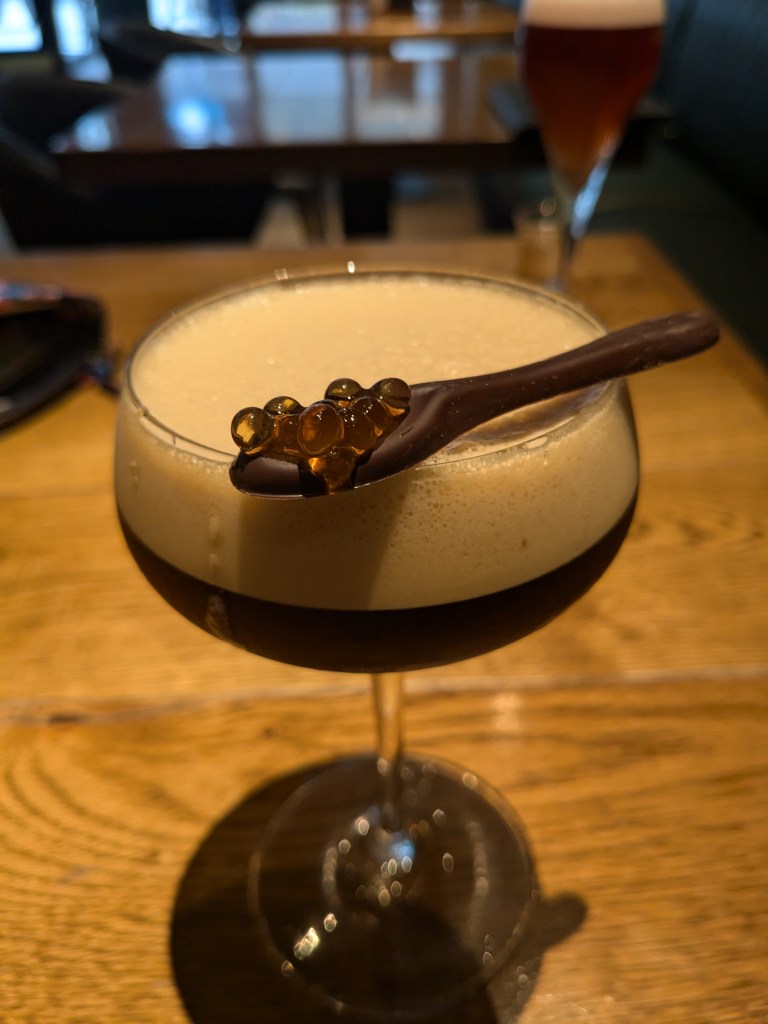
A day out in Cheltenham with Beth. Our first visit to The Alchemist.
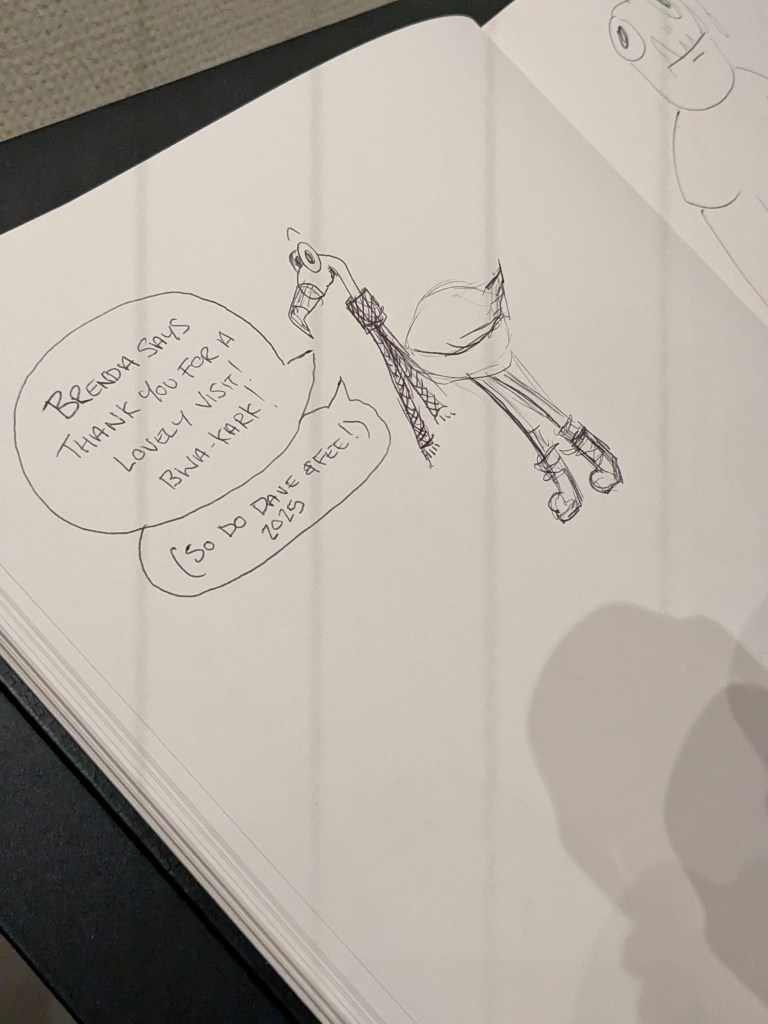
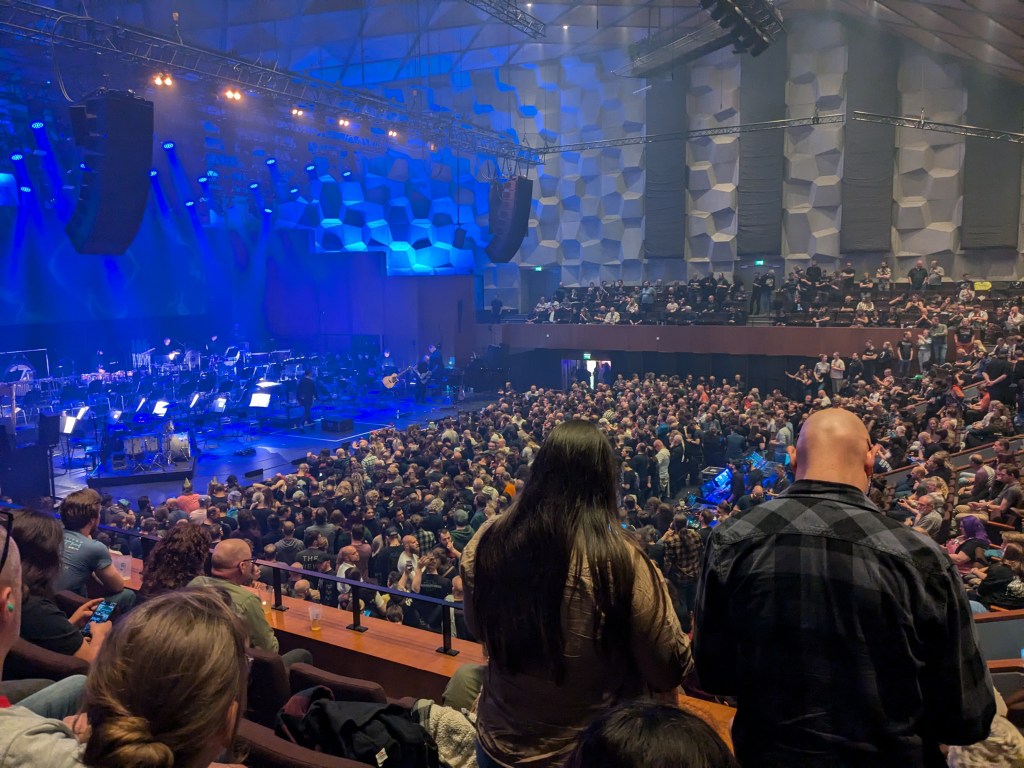
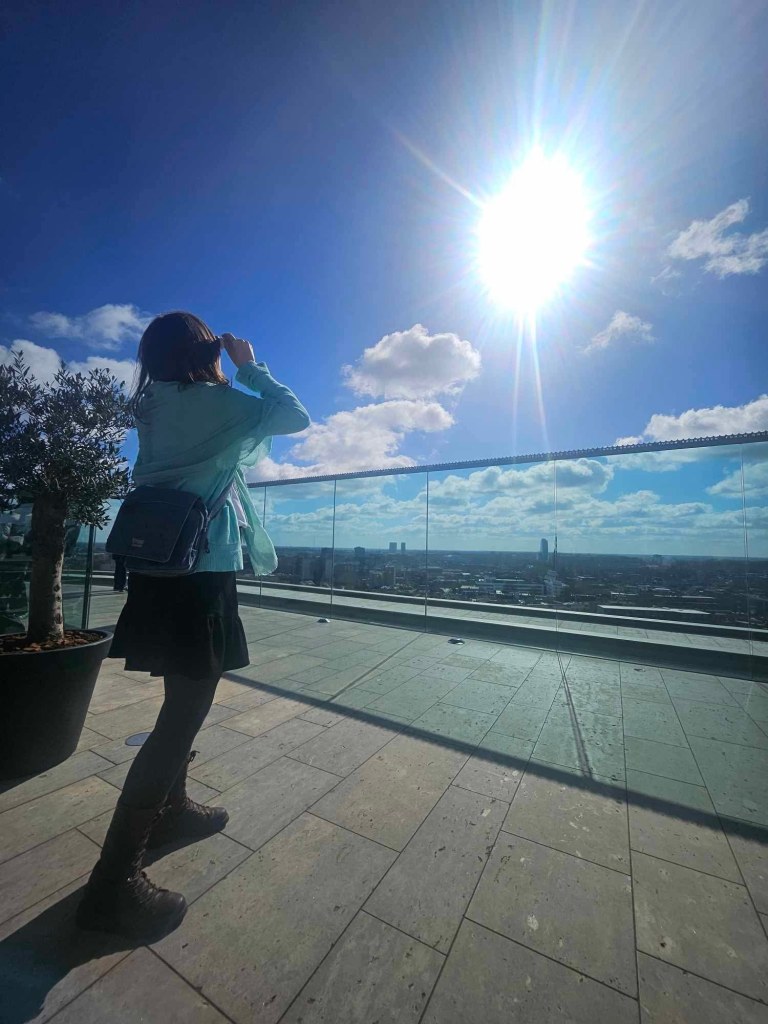
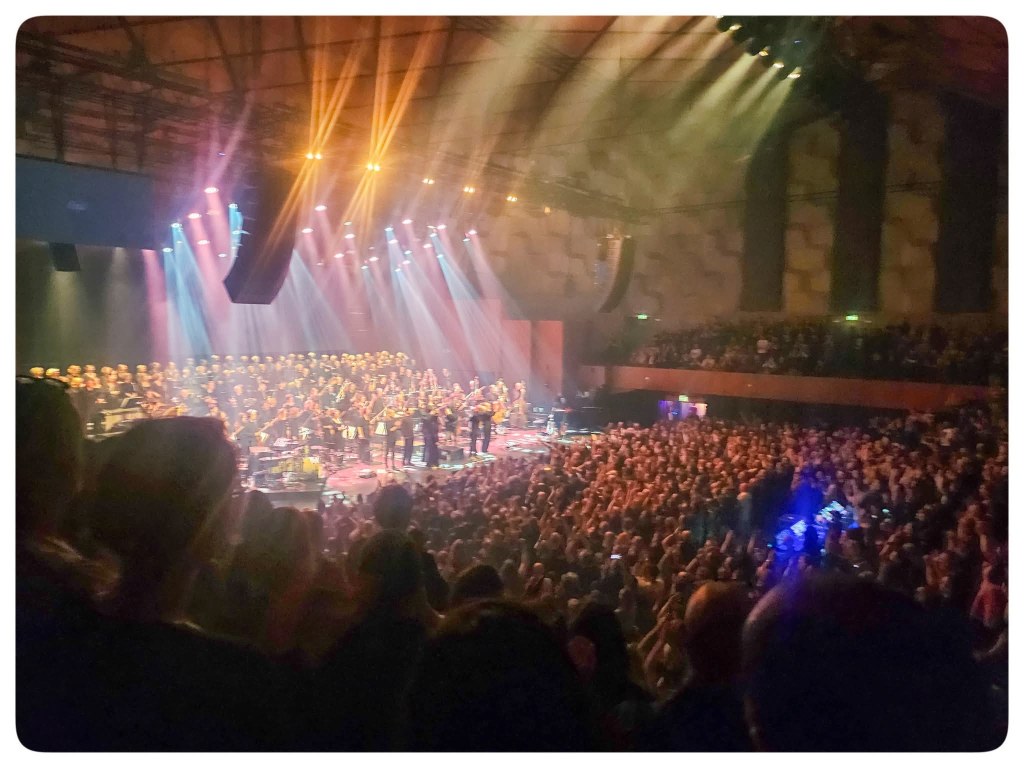
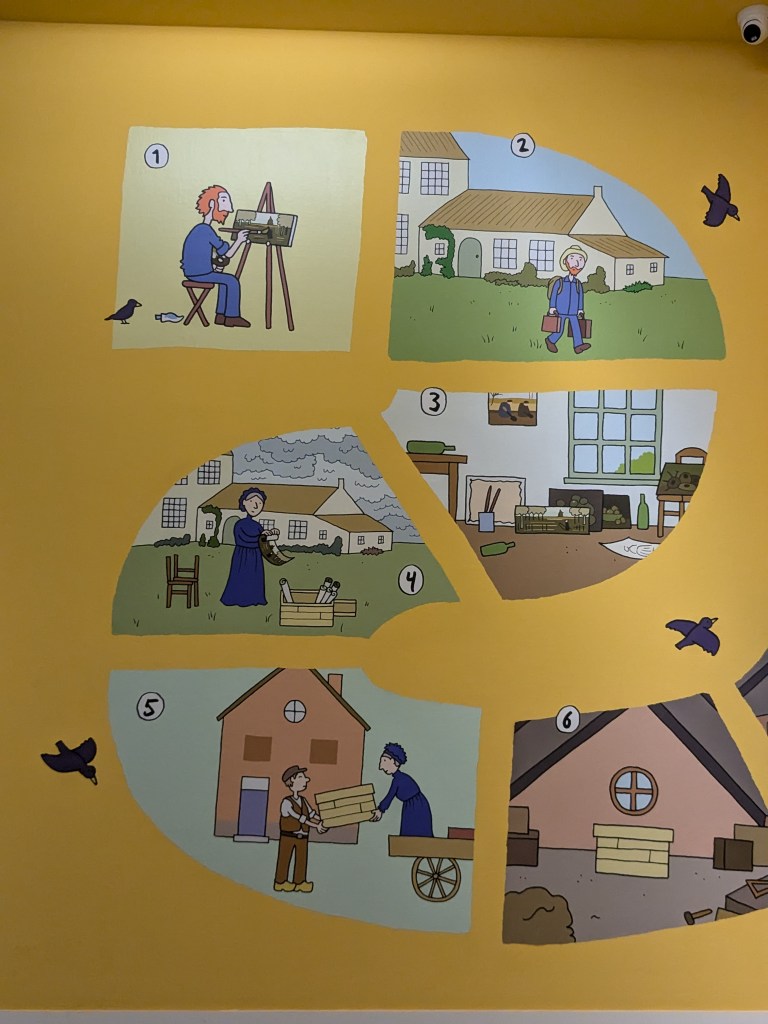
For Dave’s birthday I treated him to a long weekend in Groningen, Netherlands. This is a place we’d visited before for only one night and we really liked it. So when we found out that Devin Townsend was performing his world exclusive rock opera ‘The Moth’ there, well we had to go. Groningen trip highlights were:
- sitting out in the town square for food and drinks at night, under cosy heaters
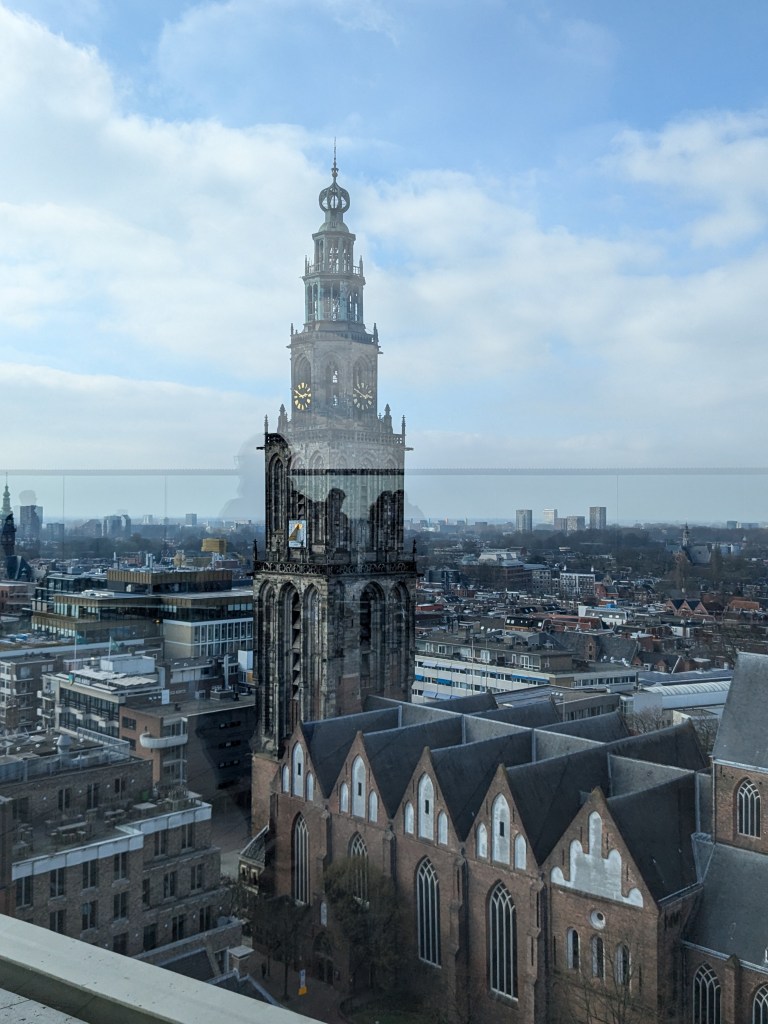
- The Forum, and the view from the top (If I lived in Groningen I would just hang out at The Forum every weekend)
- Seeing the solar eclipse from the top of The Forum
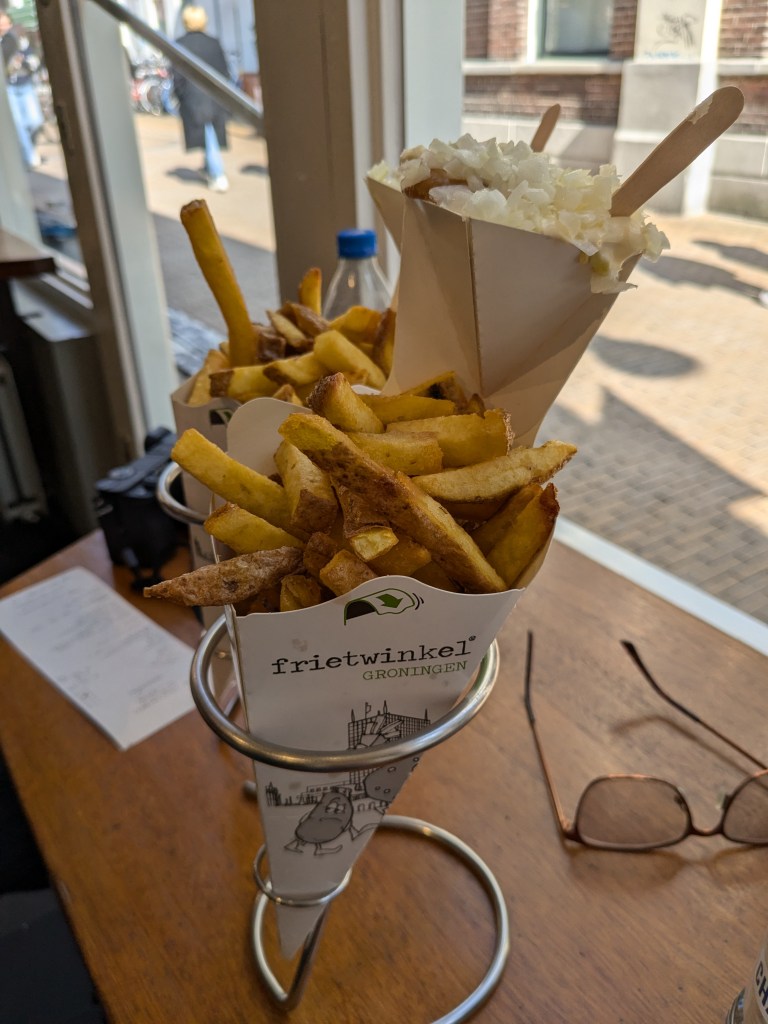
- Frietwinkel (get in my mouth)
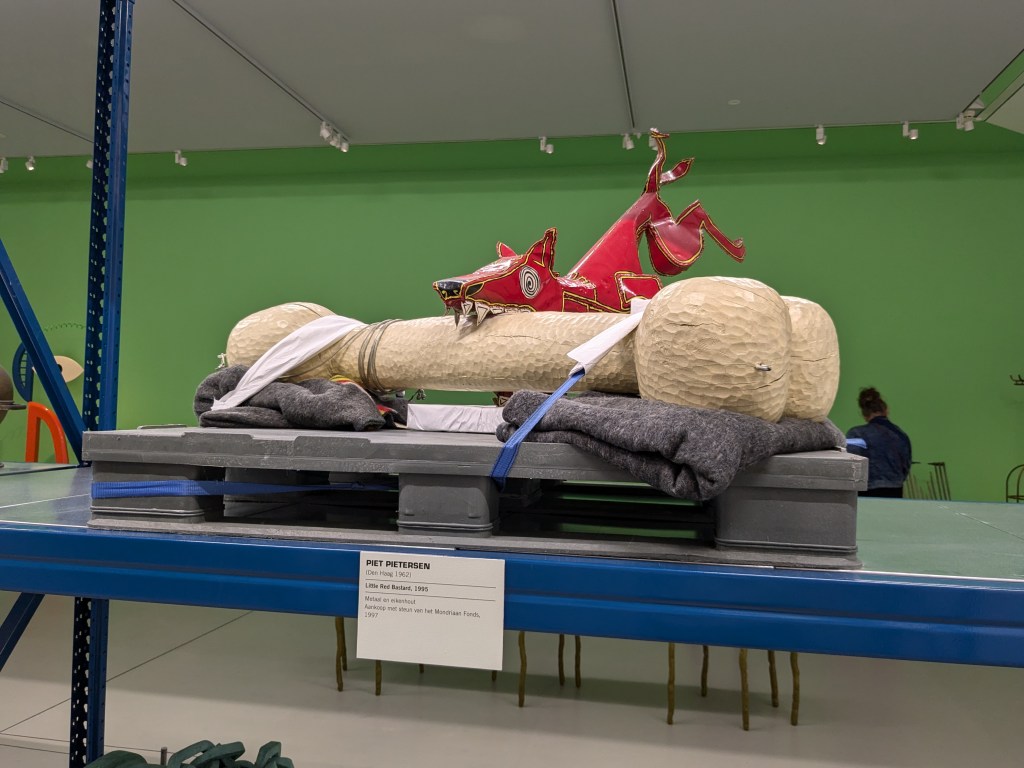
- Groningen Museum (fabulous!)
- Canal boat tour with wine (and needing to literally duck to avoid decapitation by bridges)
- Devin Townsend (obvs. What a voice)
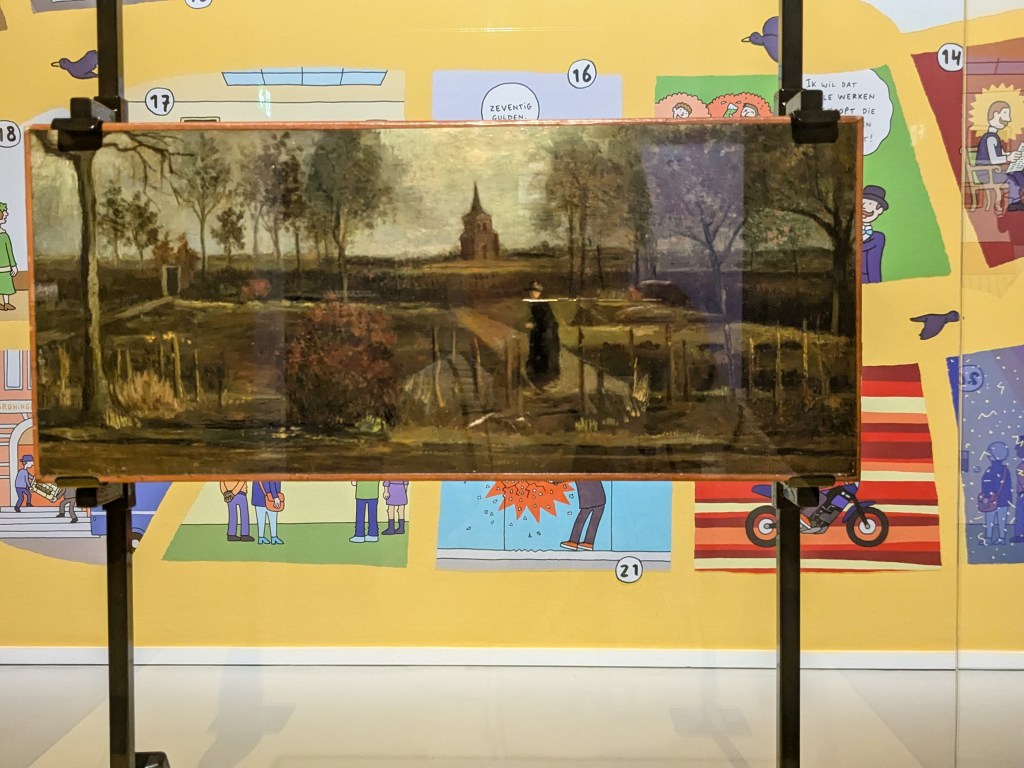
April
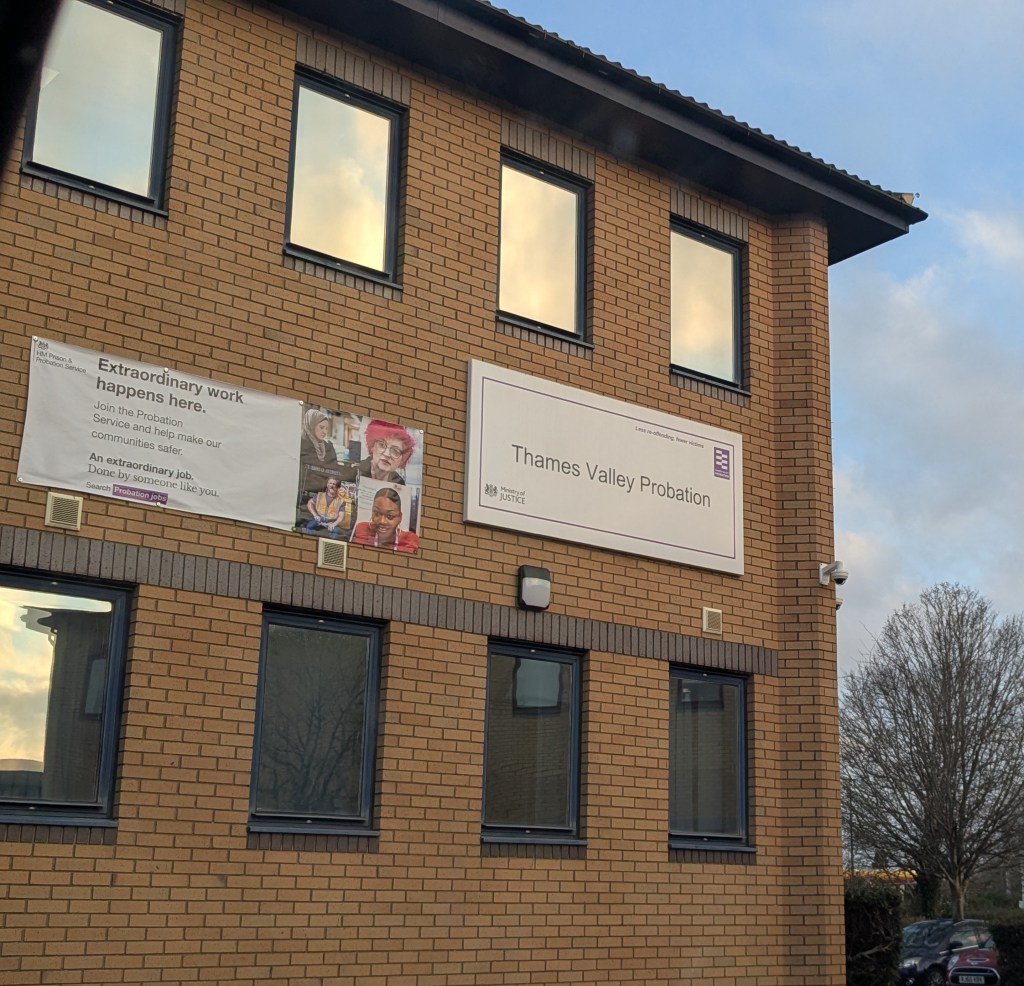
I started my new job as Programmes Facilitator with the probation service! I am thankful to the me of one year ago for taking a chance. I was nervous, full of self-doubt, wondering why on earth I was choosing to stand up in front of people and facilitate their learning as a job. ME! So, so proud of myself.
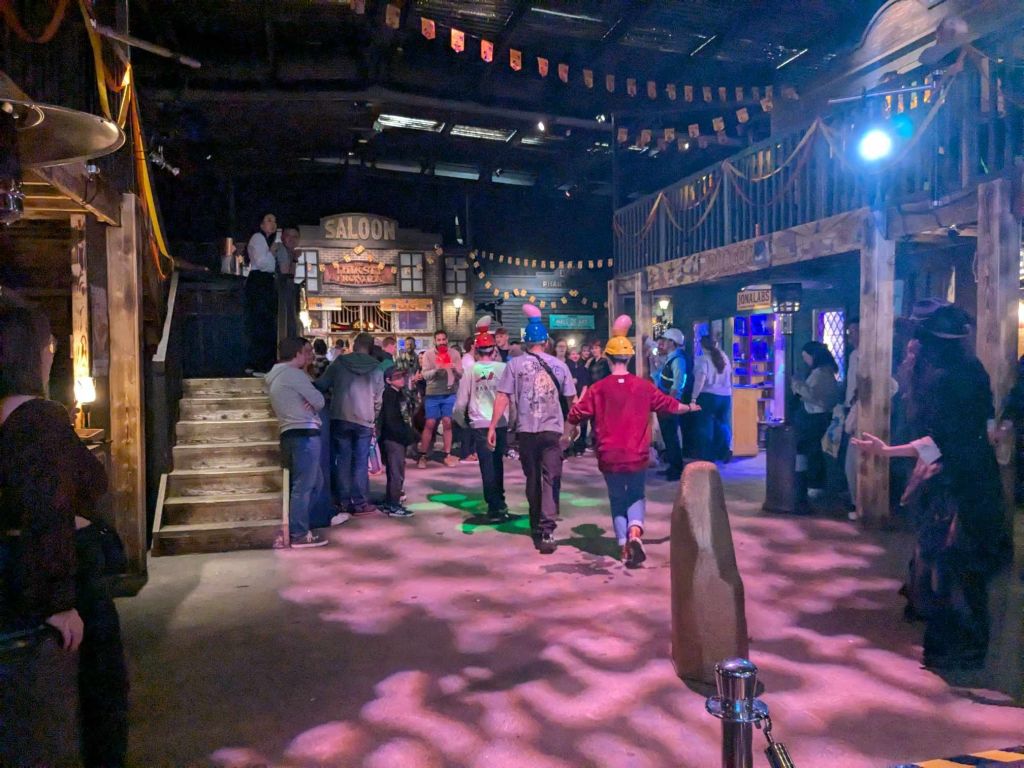
Our 10 year wedding anniversary! Dave surprised me, Ross and Alex to a day out in London and a visit to Phantom Peak, which was great fun as I love anything immersive and competitive and accompanied by drink. In the evening we went to a Olé tapas restaurant, which is 5 minutes from our flat. We ate too much.
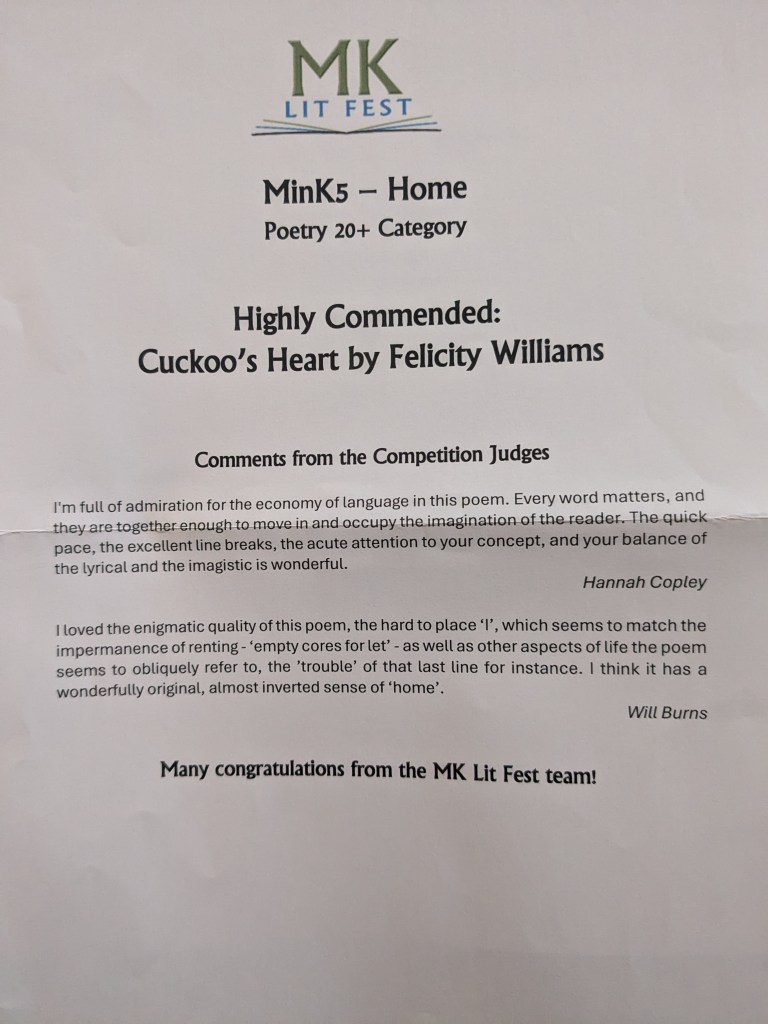
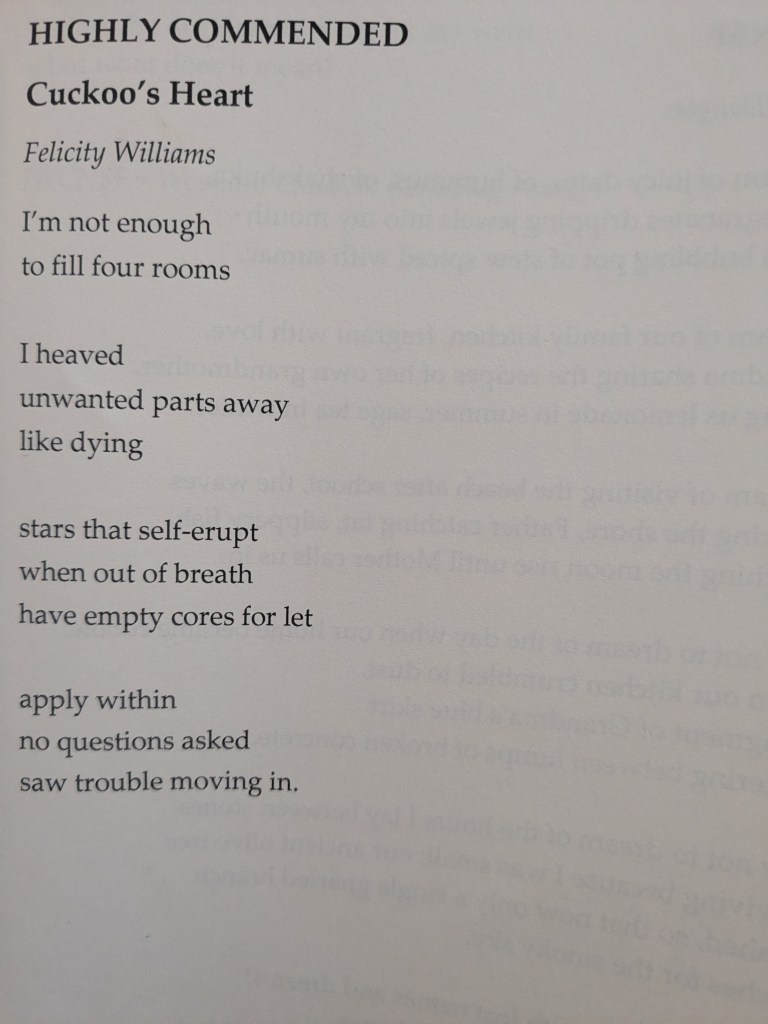
My poem ‘Cuckoo’s Heart’ was highly commended at the MK List Fest competition. It was so special and mind-blowing to receive this feedback.
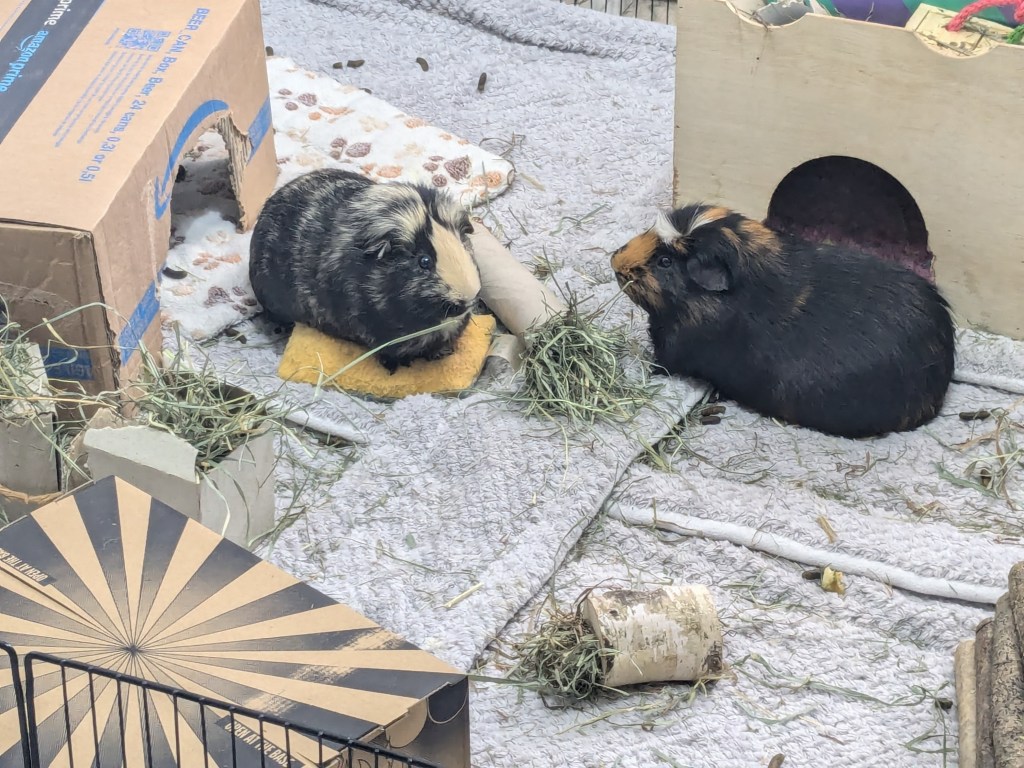
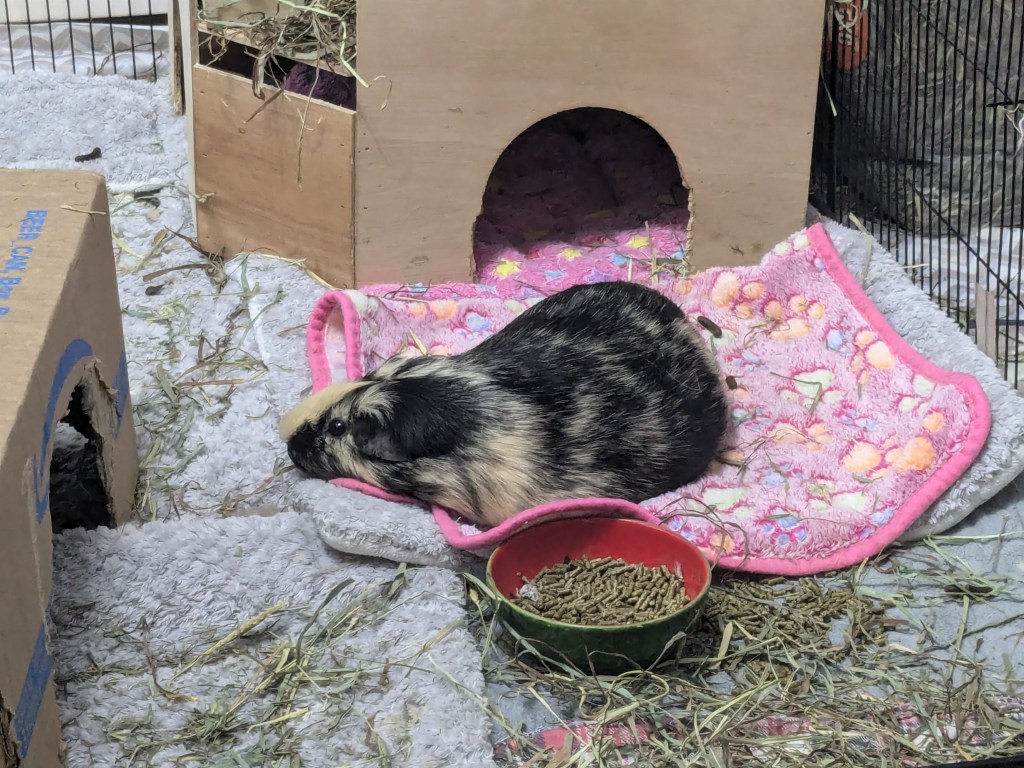
duPiggy continued to be super cute.
May
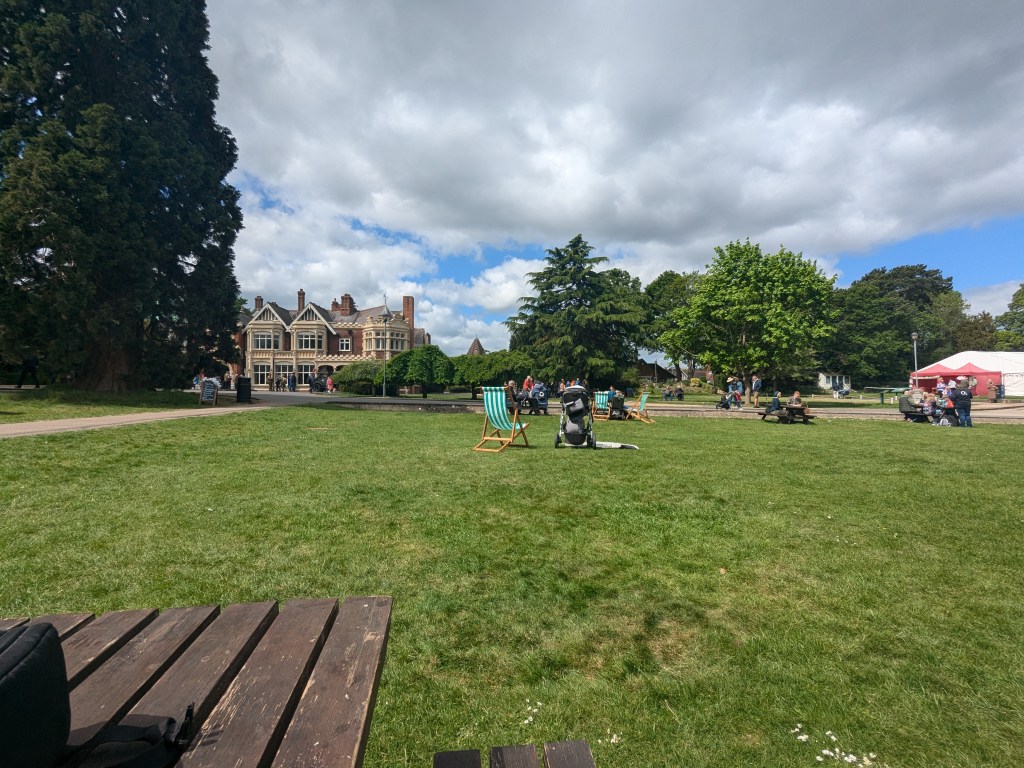
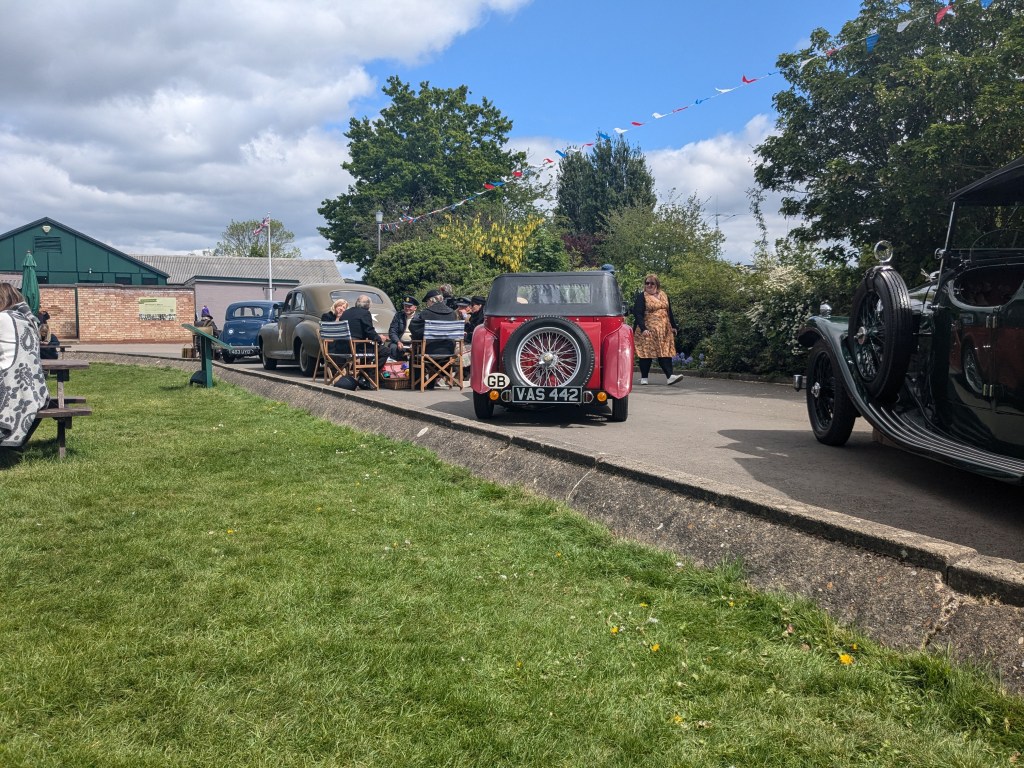
On May 4th (be with you), we attended the 1940s weekend at Bletchley Park, the 80th anniversary of VE day celebrations. I’m starting to realise that I am actually quite lazy when taking photos – is this all I took?!
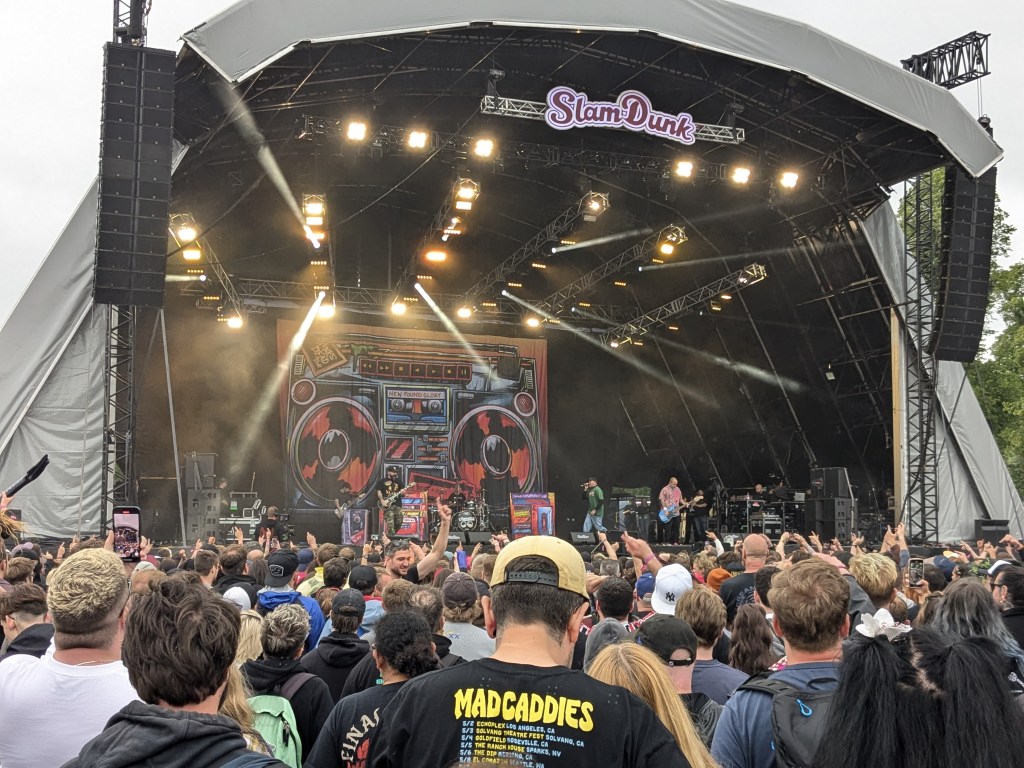
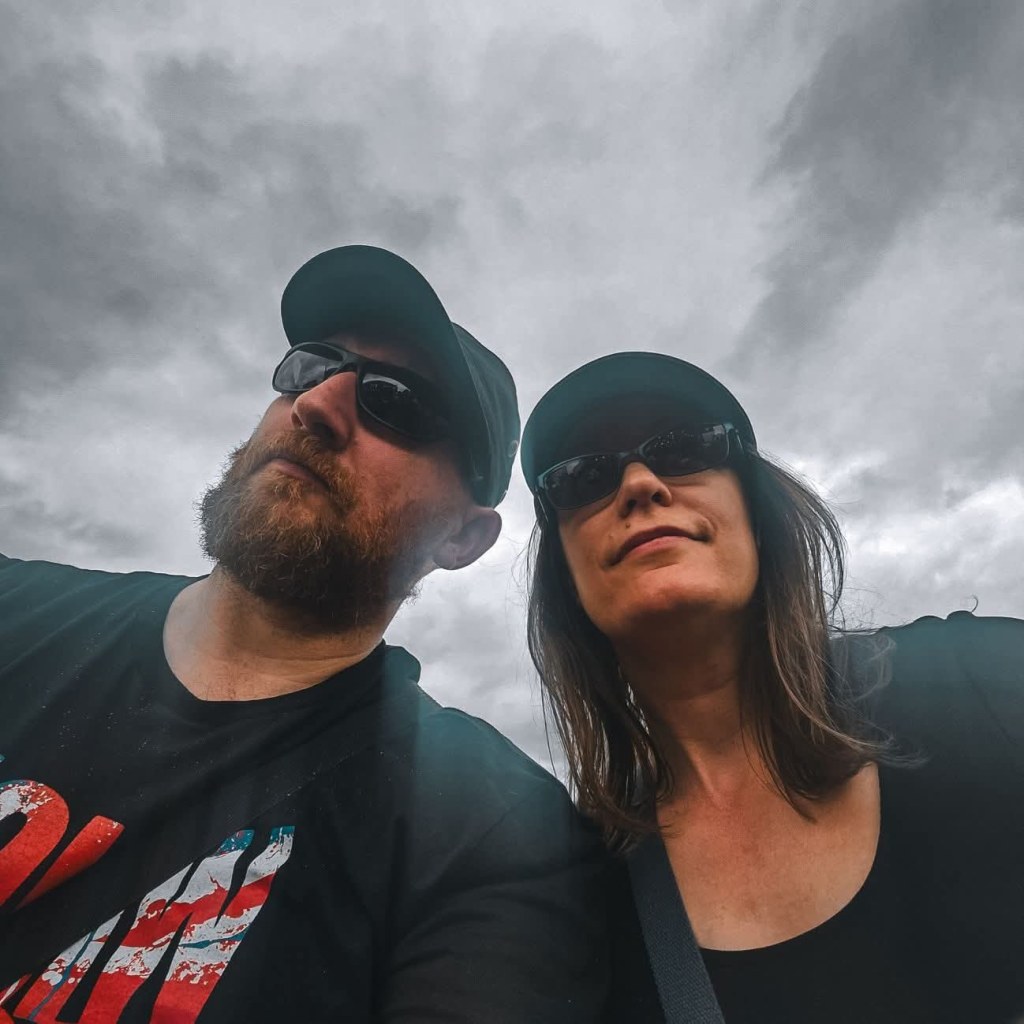
We finally went to Slam Dunk Festival at Hatfield after years of ‘we’ll go next year’. Highlights were Winona Fighter, Save Ferris, New Found Glory, Less than Jake, and Alkaline Trio. Sadly I missed Electric Callboy as they were the same time as Alkaline Trio, but I heard they were fun.
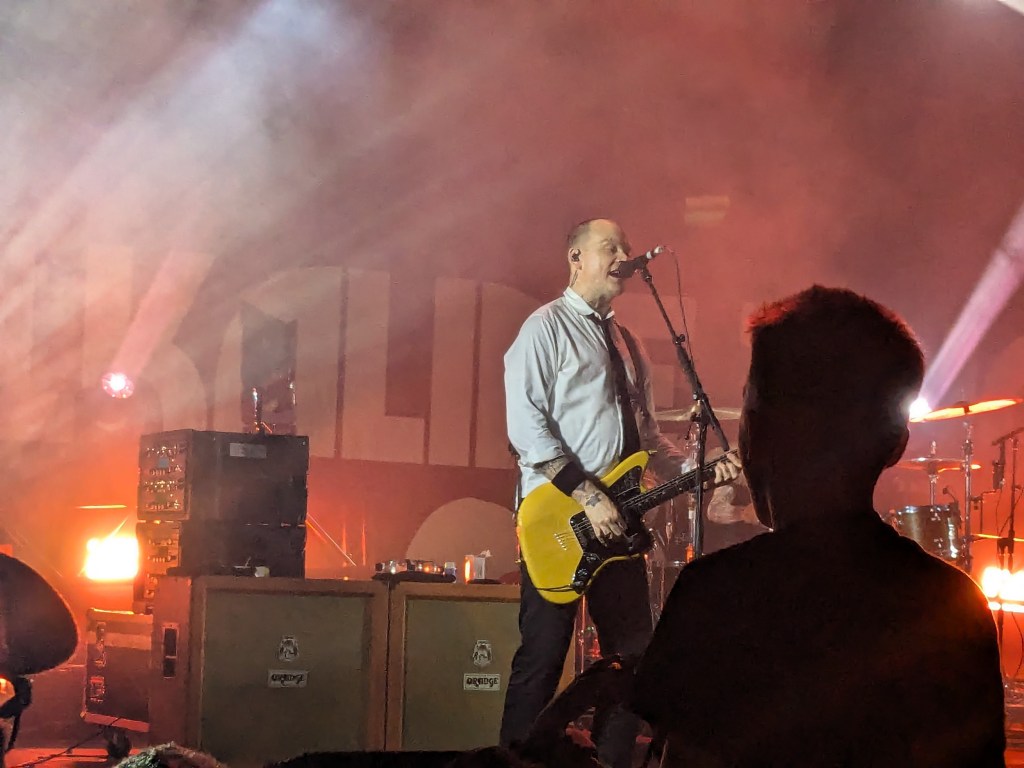
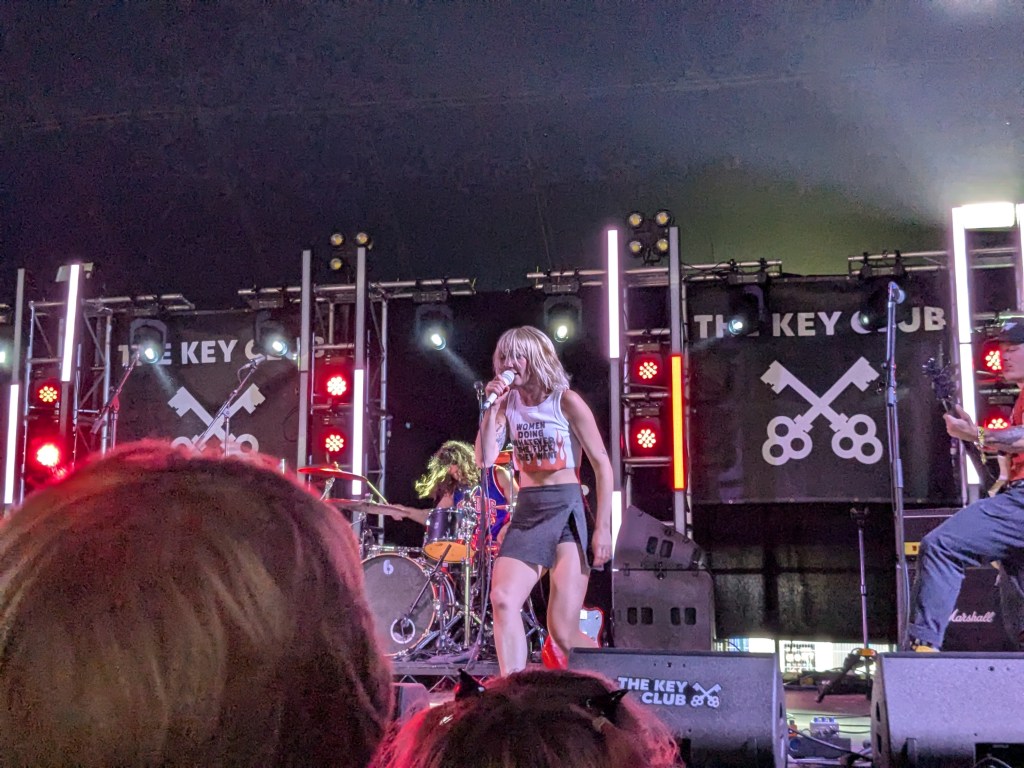
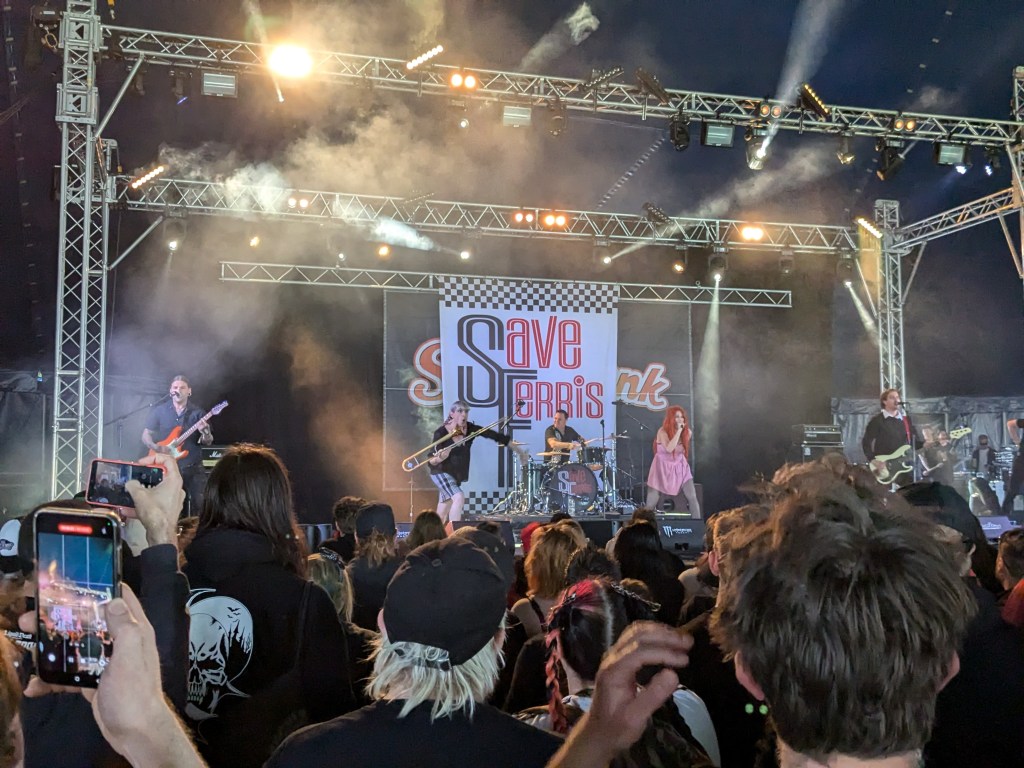
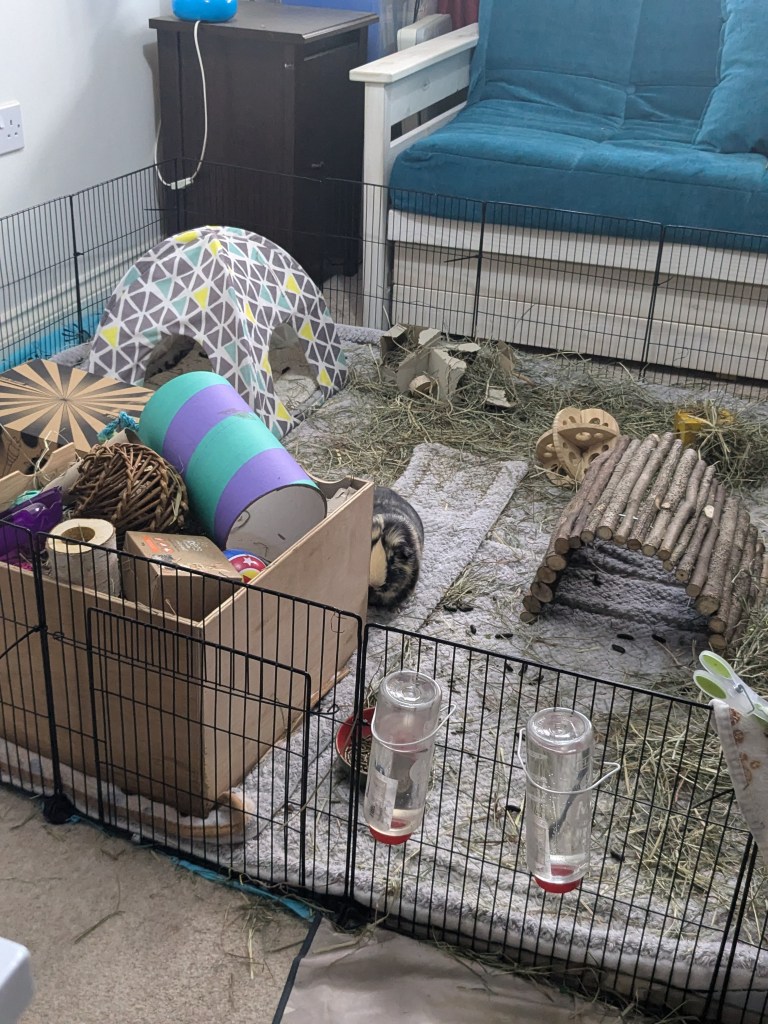
Havok has a death stare. Sometimes I think he would kill us in our sleep.
June
Oooh June was great! Two weeks in a hotel in Shepherd’s Bush to attend training to become a Programmes Facilitator for the Building Choices accredited programme! I passed!
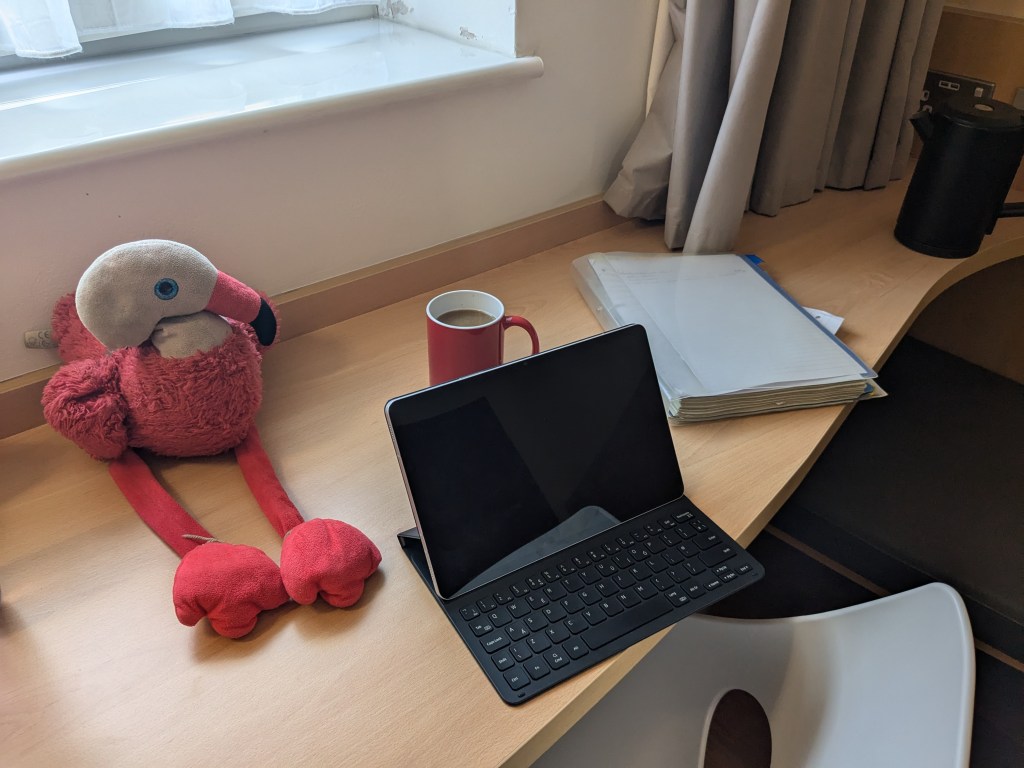

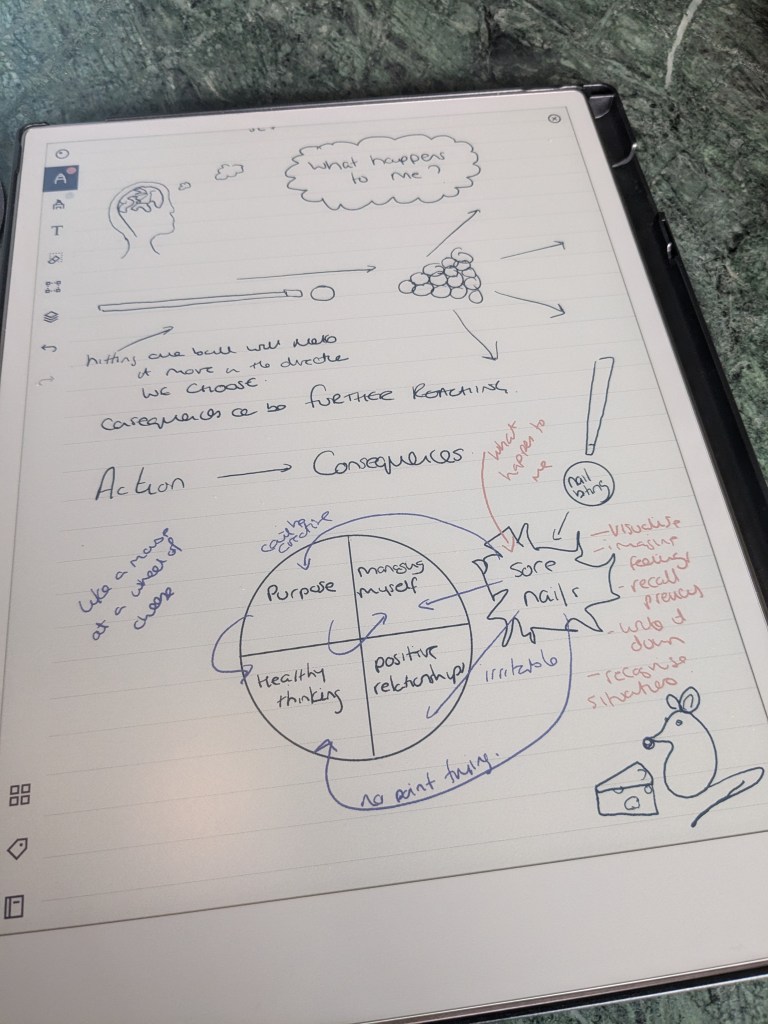
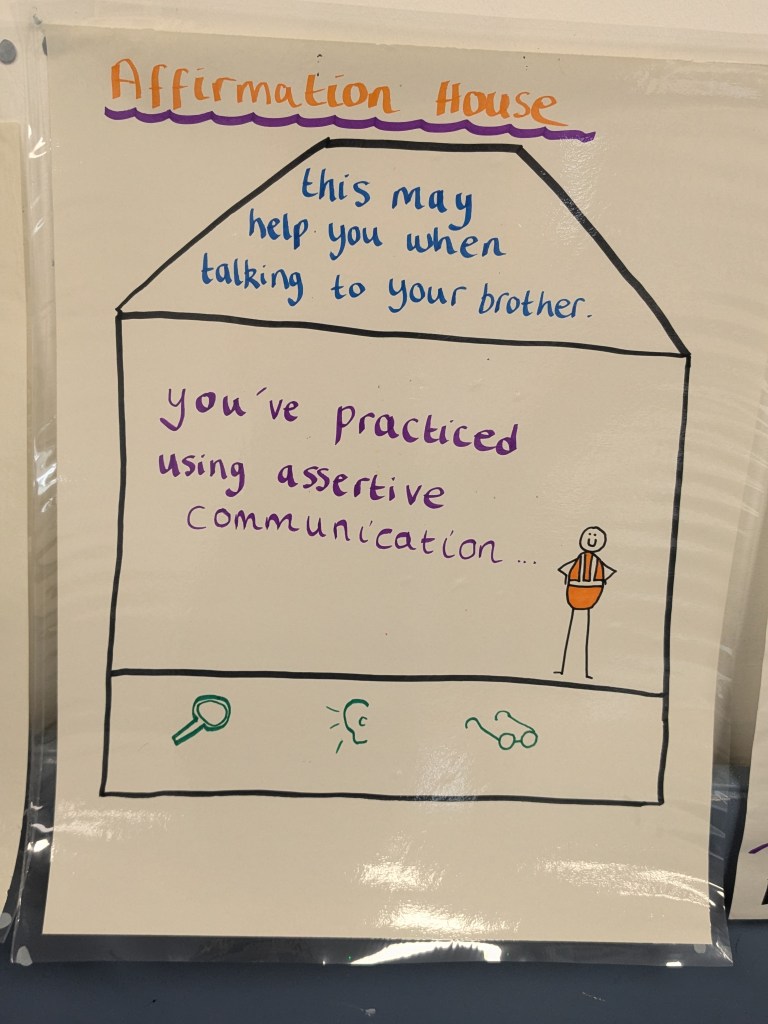
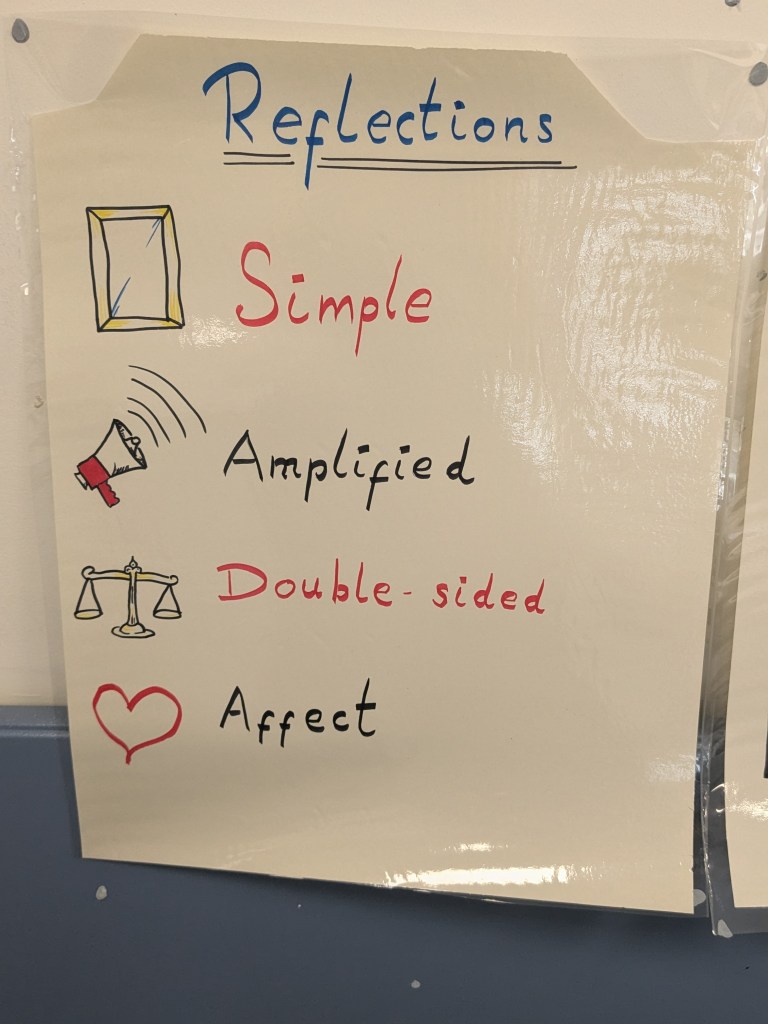
I have to write about this a little bit. I absolutely LOVED this training, not just for the content and the skills. It had been such a long time without this kind of environment; one where you interact, support, discuss. I spent far too long hiding away behind a desk feeling so utterly miserable and like I could probably spend the rest of my life there, out of fear, uncertainty, self-doubt. I’ve taken a step out of my comfort zone and I’m so thankful.
At the same time as my Programmes Facilitator training, I was also undergoing my training to become a volunteer for Shout, the crisis texting line. Happy to say I passed this also. For anyone interested in volunteering in a listening capacity and wants the convenience of doing it from home, Shout is perfect. The training is comprehensive. It’s really rewarding and tough at times, but lots of support from other volunteers and supervisors.
duPiggy were duPiggying.
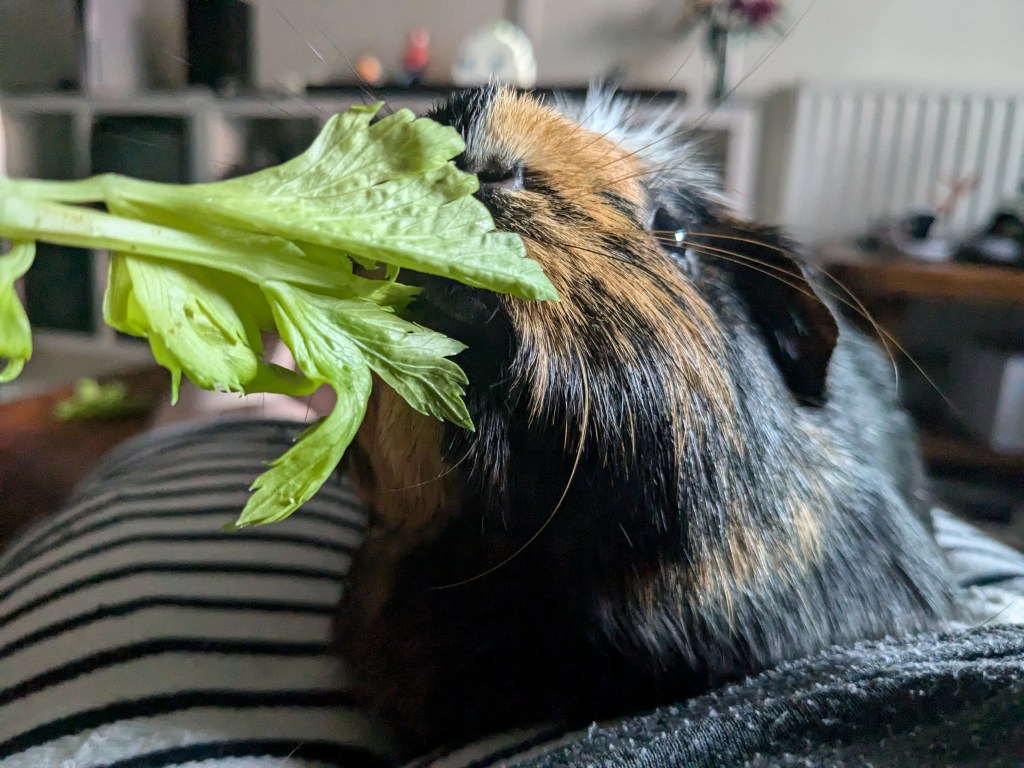
Oh and my niece had a baby, because that’s where we are in time now. I’m Great Aunty Fee.
Baby Evie is gorgeous and I am a proud aunty (and great aunty, ffs).
July
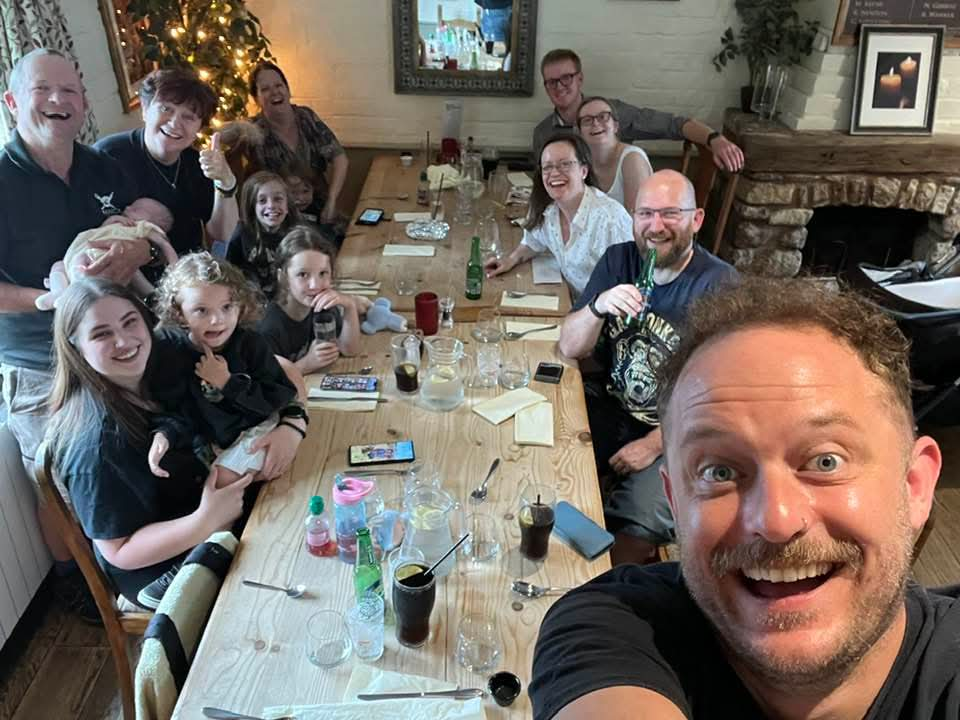
Mum turned 60! We all met up for a lovely lunch.
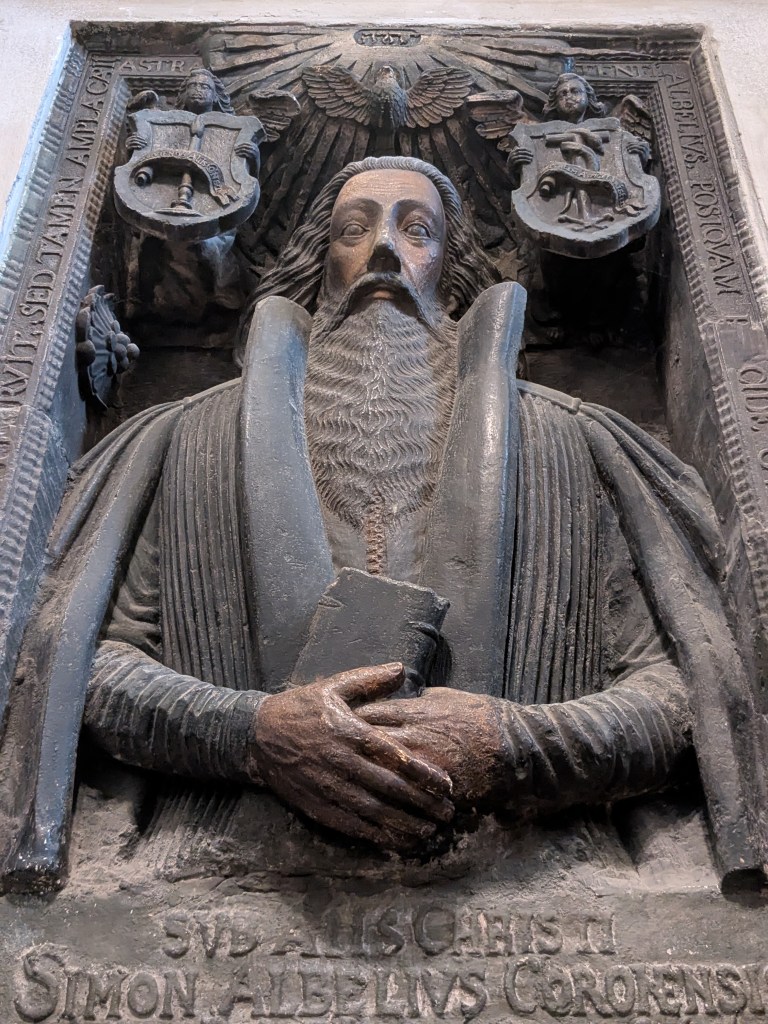
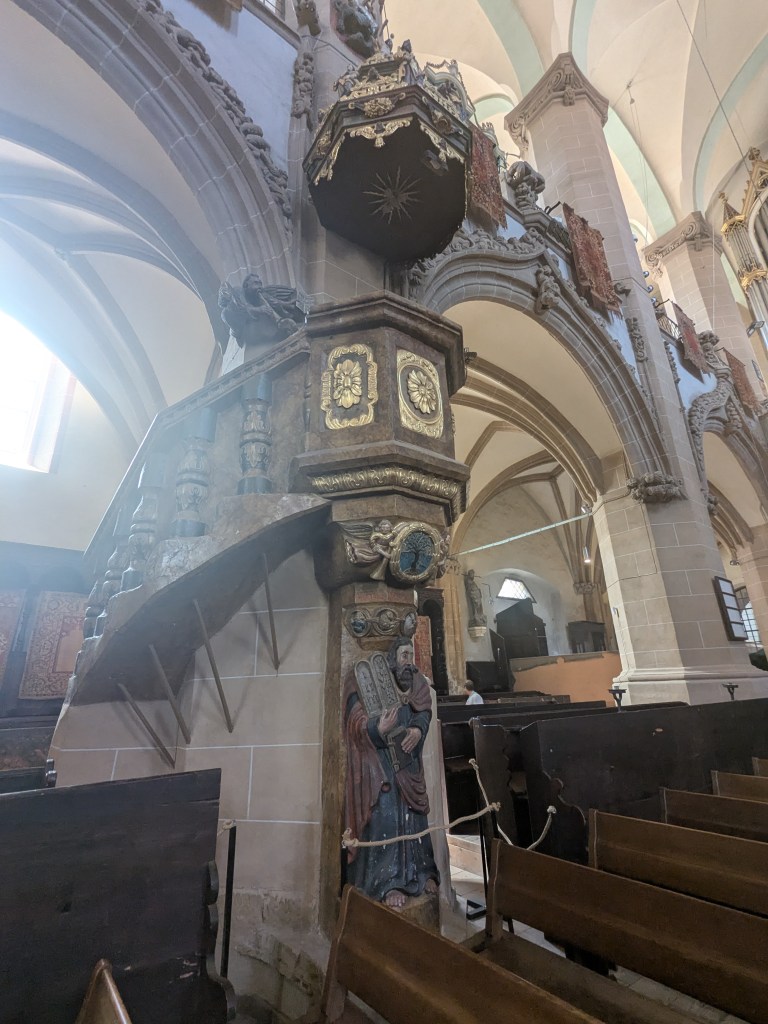
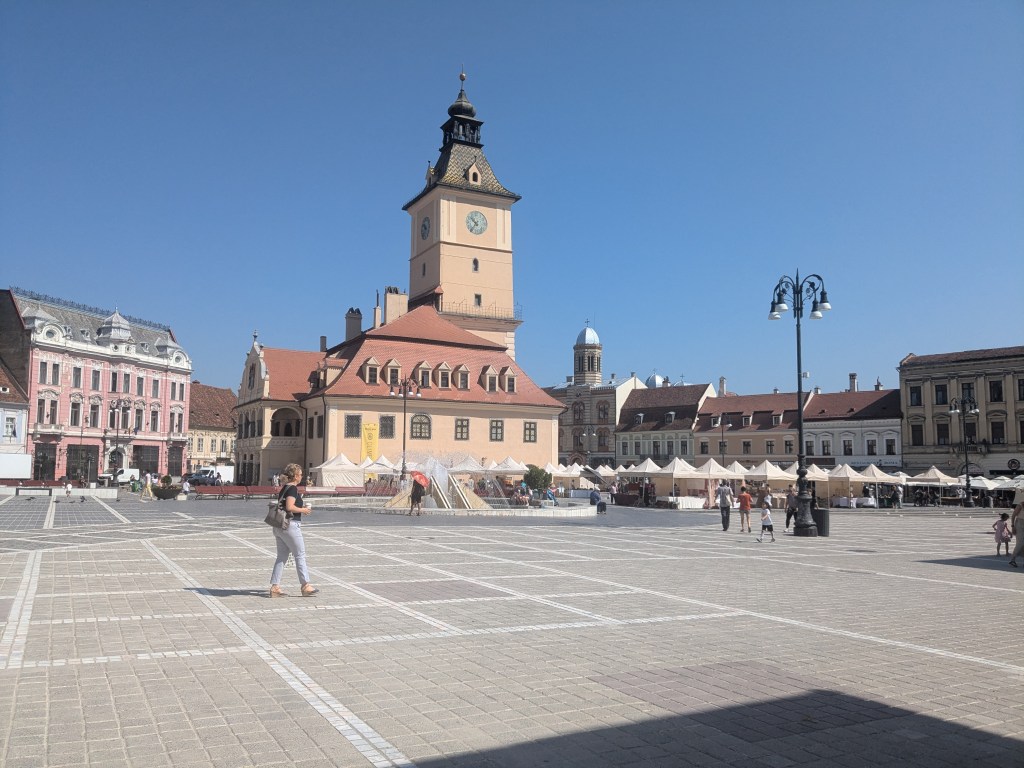
Dave and I went to Romania with mum and dad! Three nights in Brasov and two in Bucharest. We travelled between the two by train and … oh what an experience that was! Wild scenery, but omg is was hot.
The LiBEARty bear sanctuary is a place doing great work, but it was sad to see how traumatised some of the bears still are. All the acres they have to roam and yet the trauma keeps them close to the fences because cage bars are what they are used to. The sanctuary really cares for the bears – guided tours and for only a few hours each morning, to give the bears plenty of space and rest.
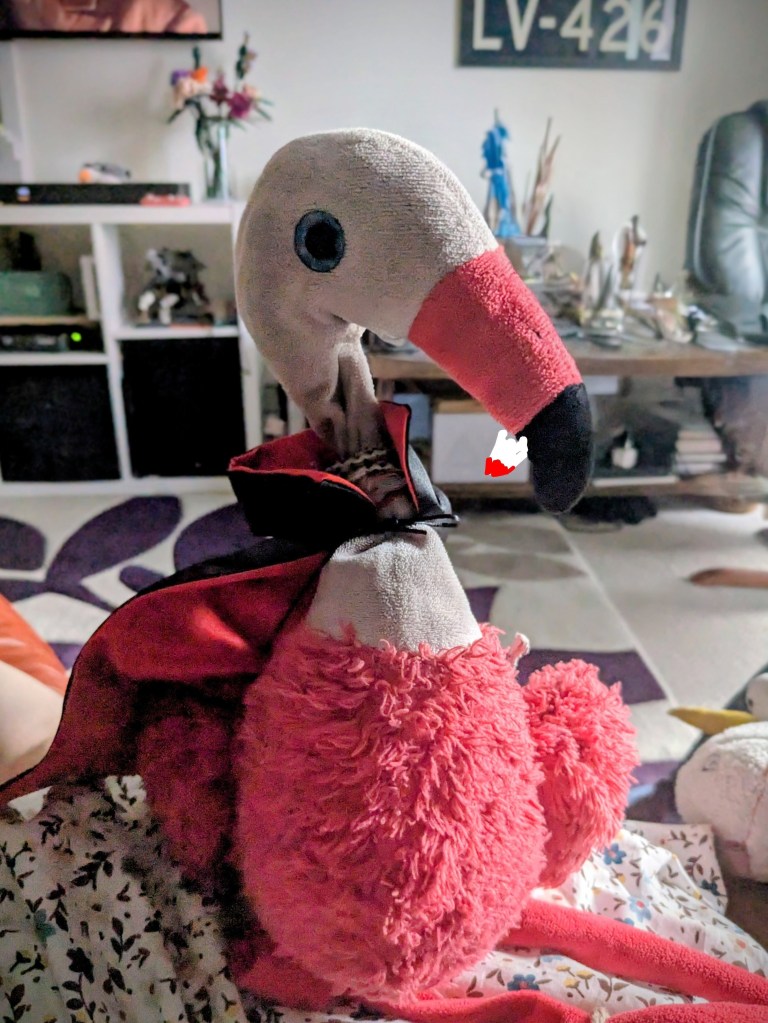
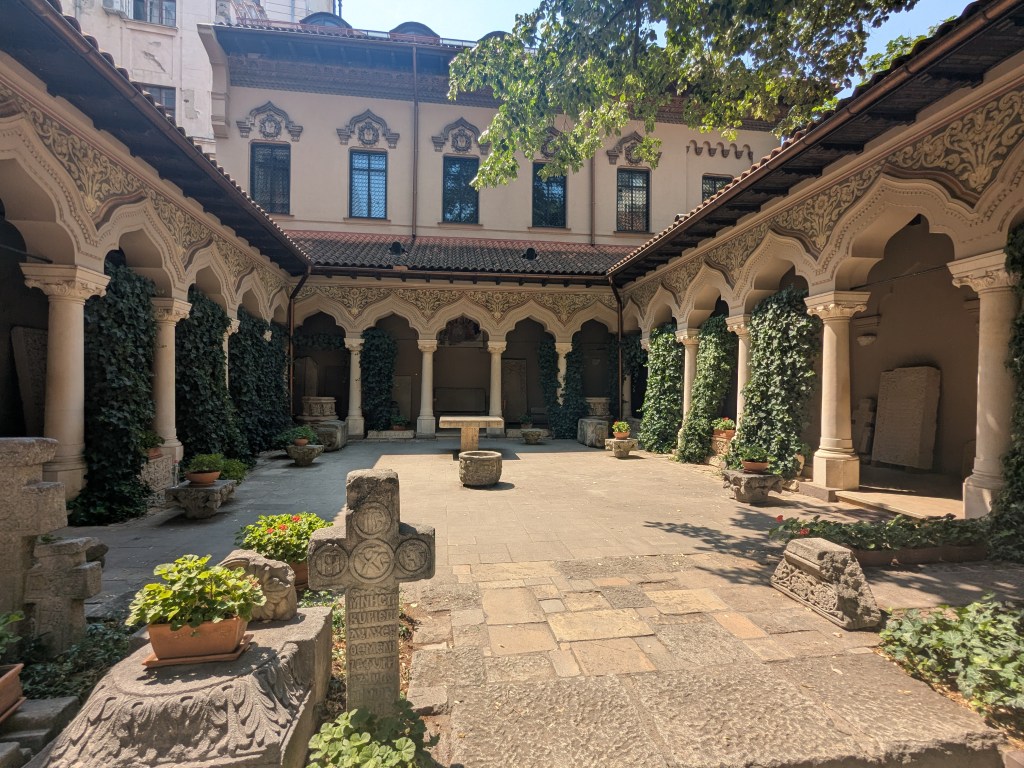
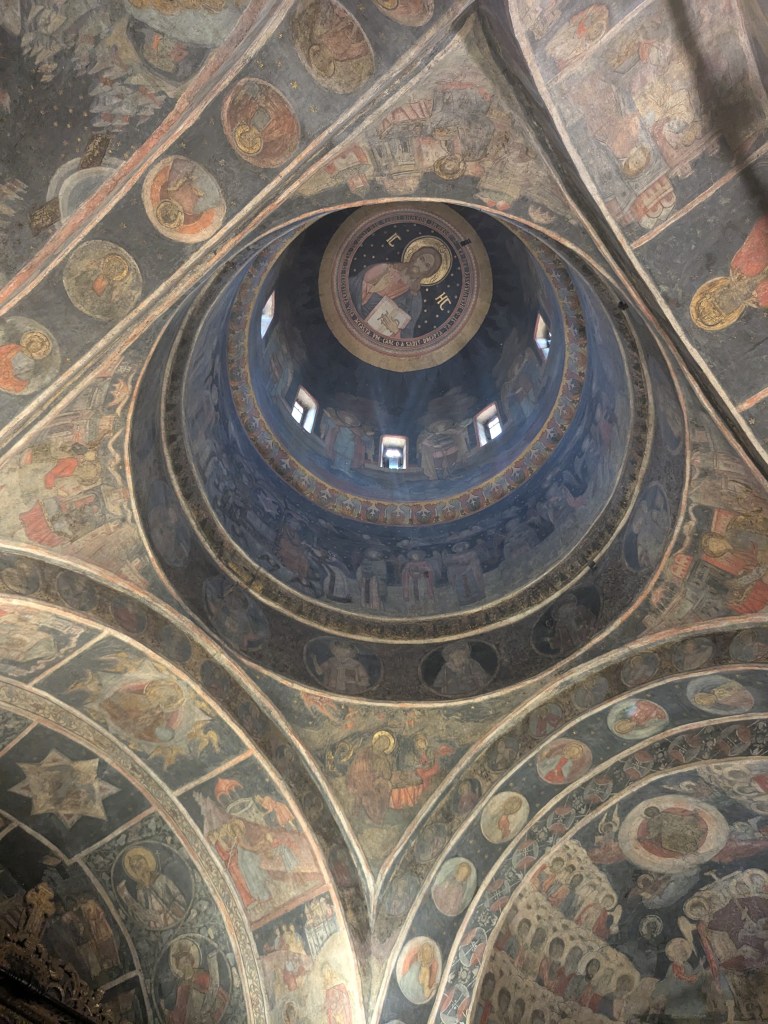
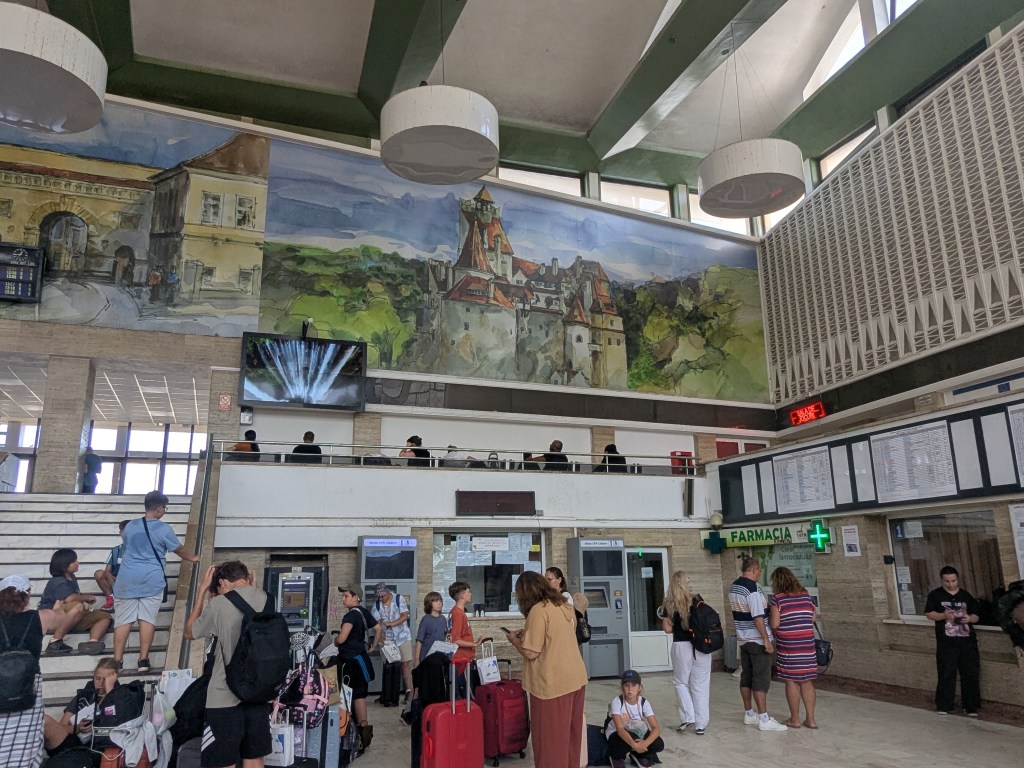
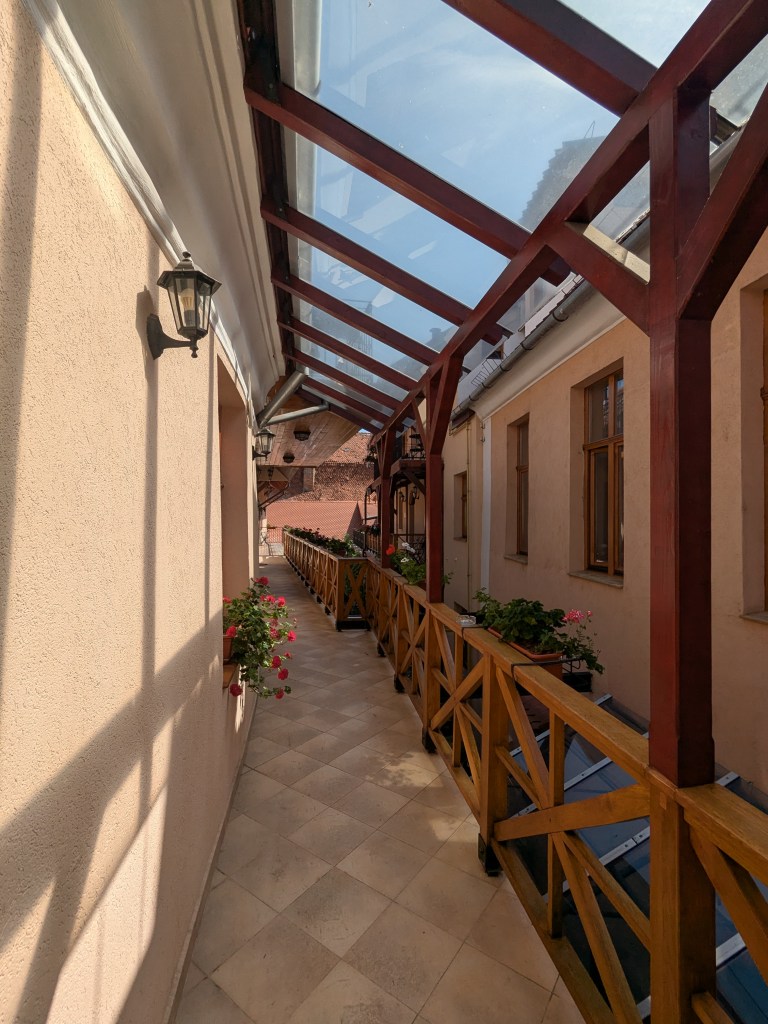
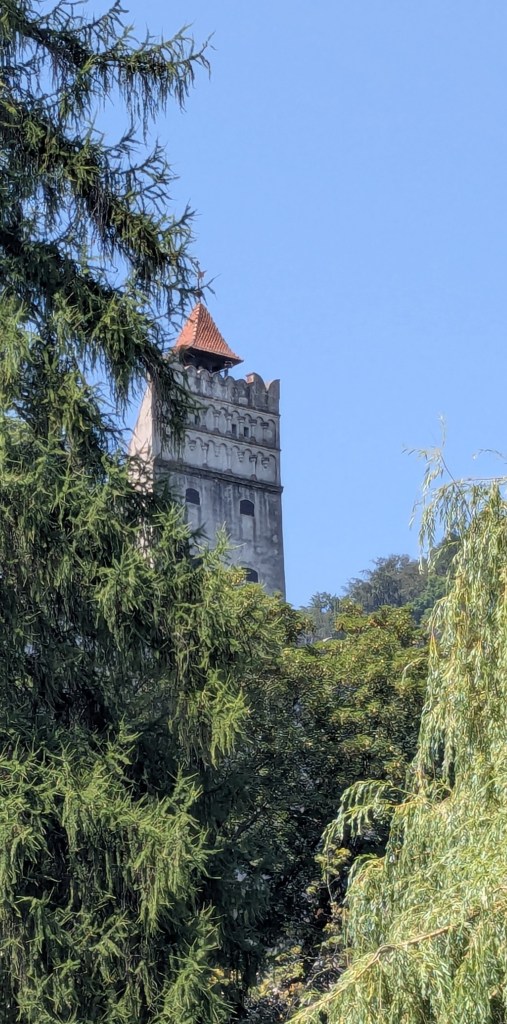
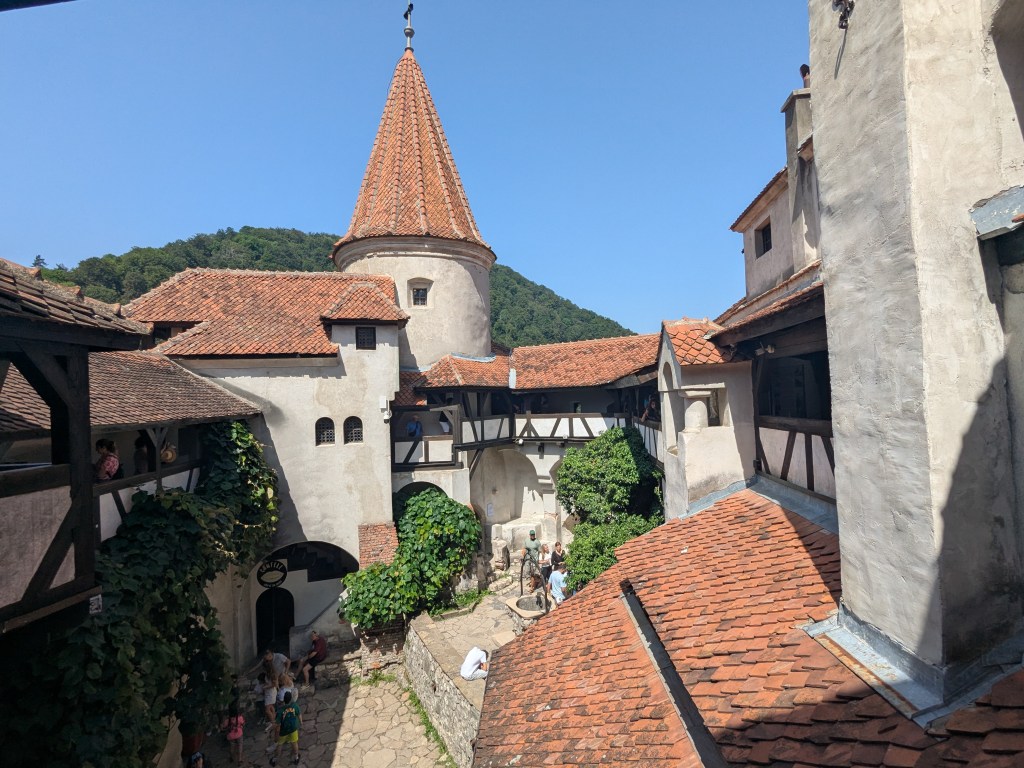
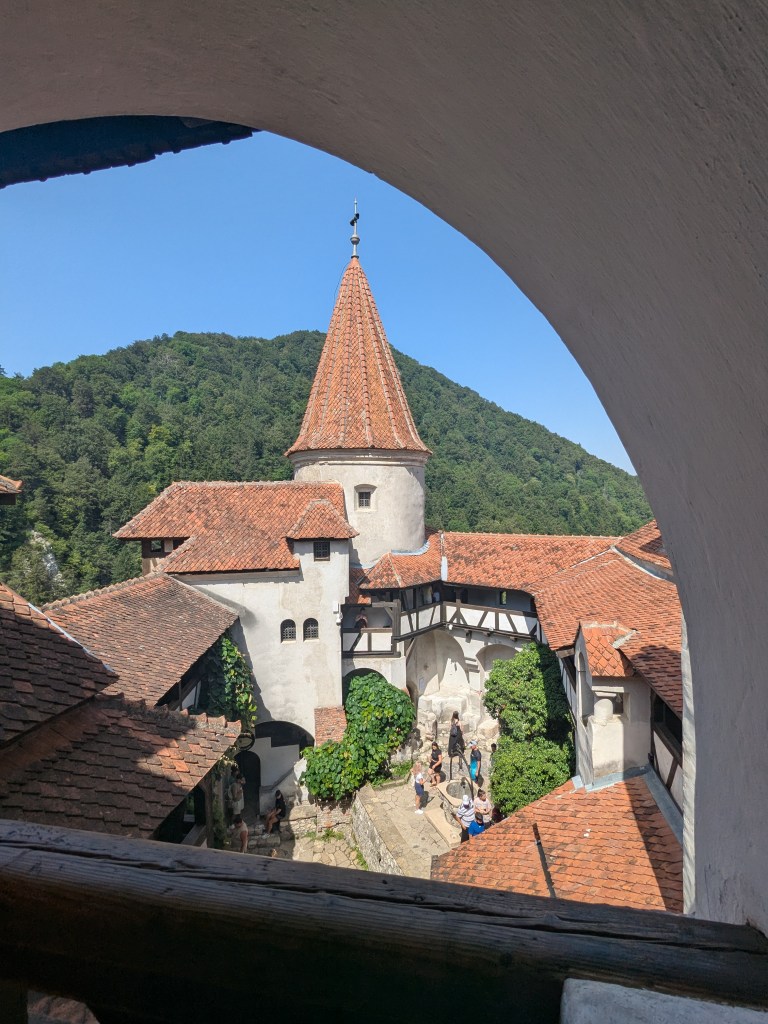
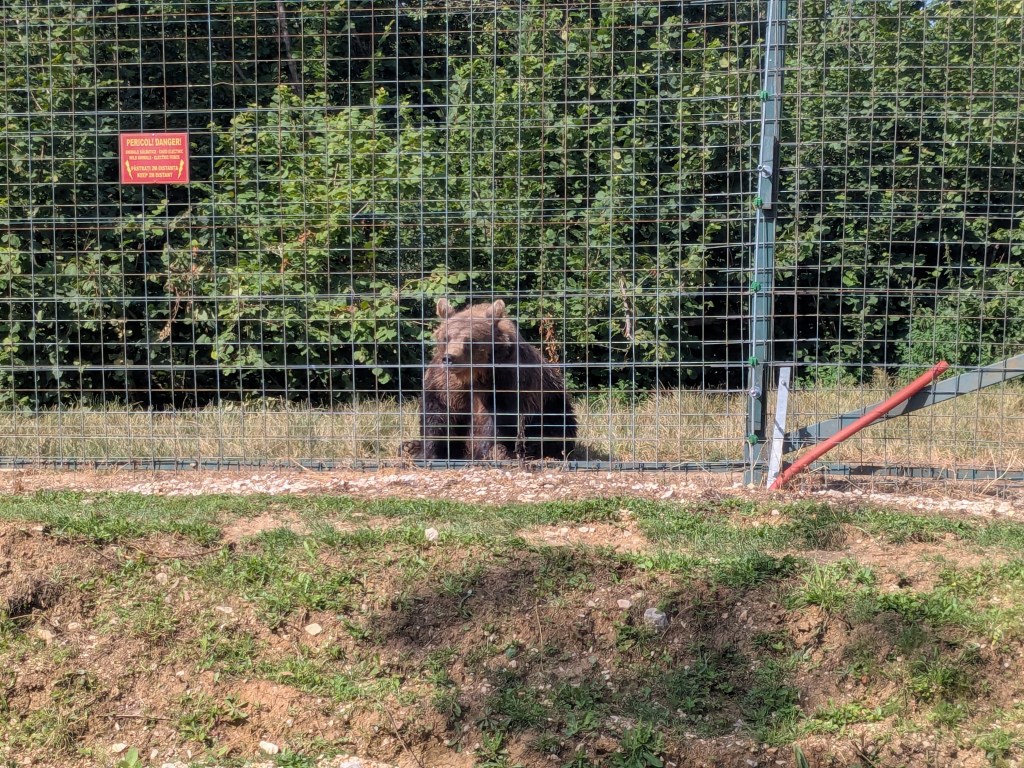
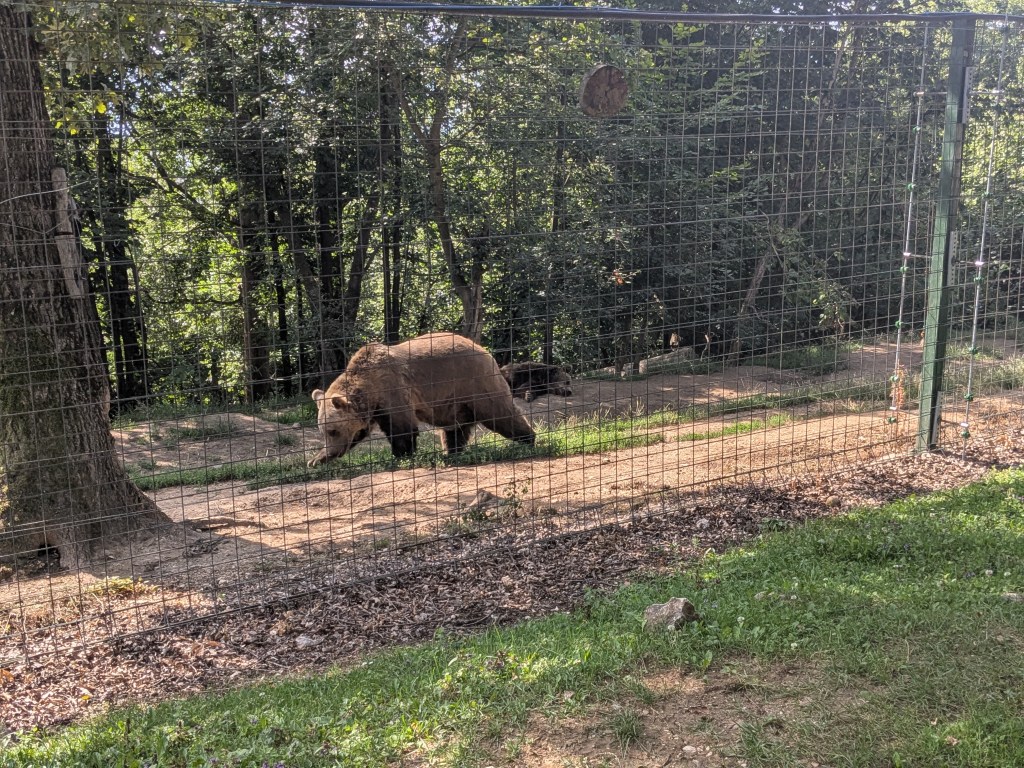
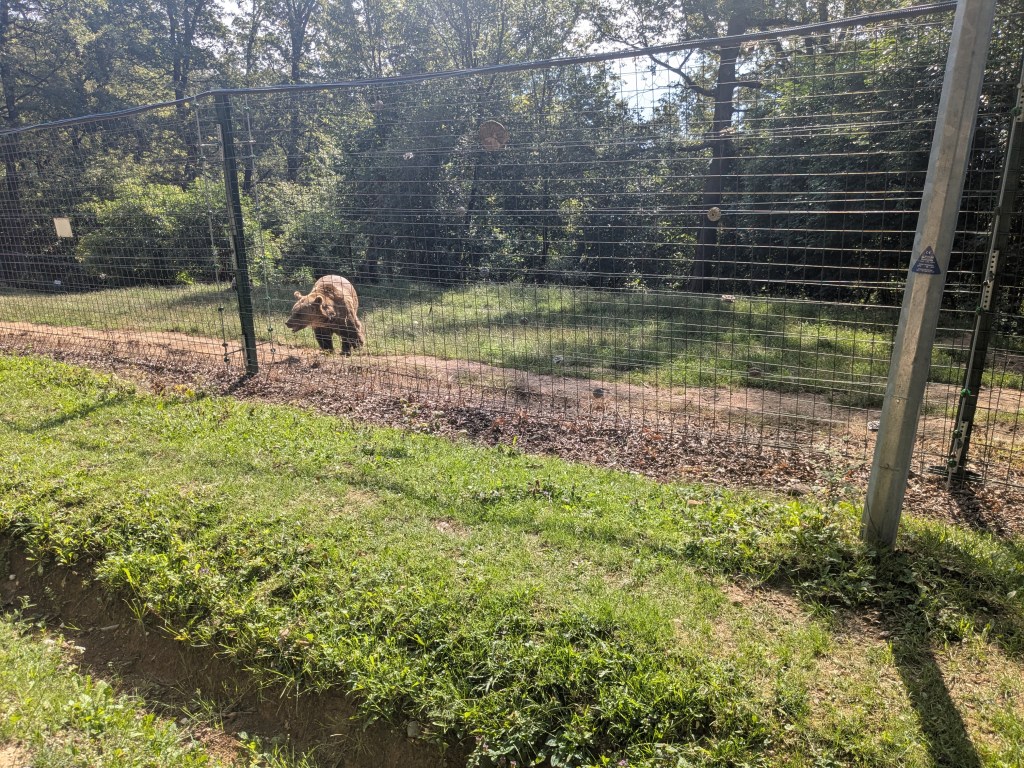
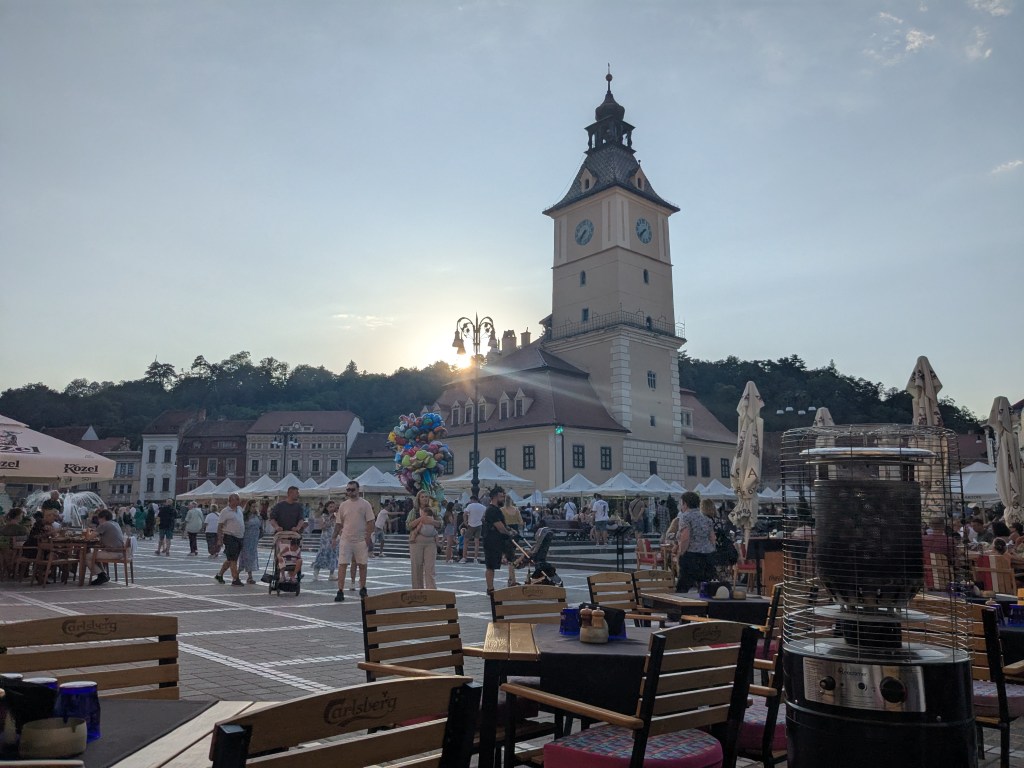
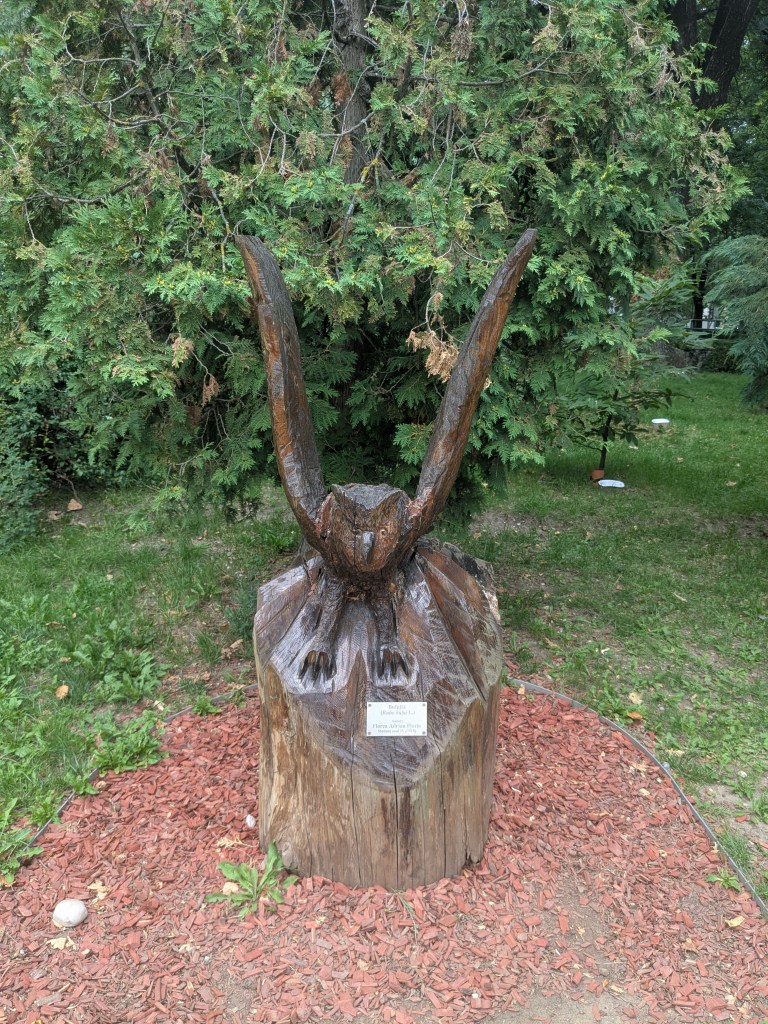
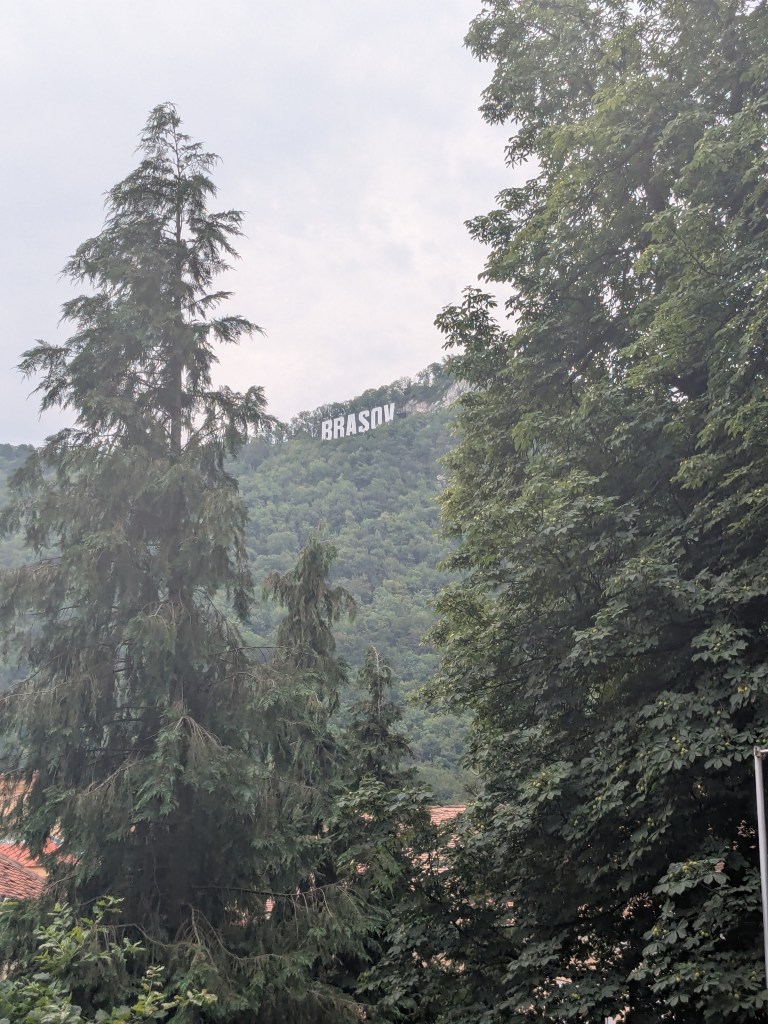
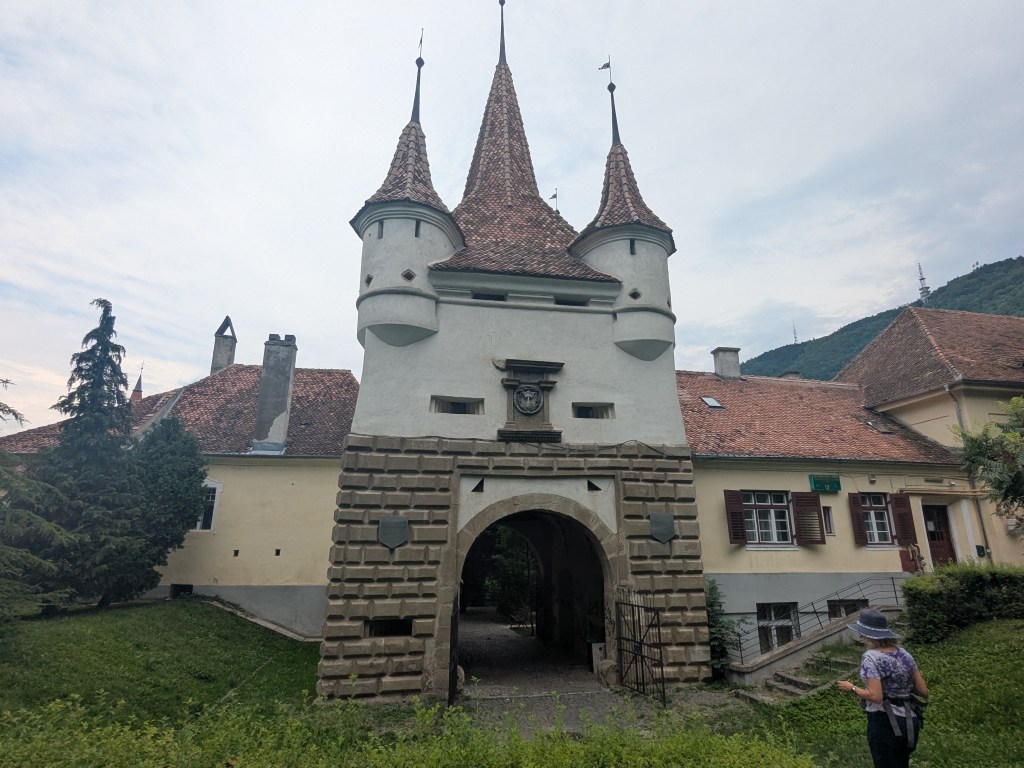
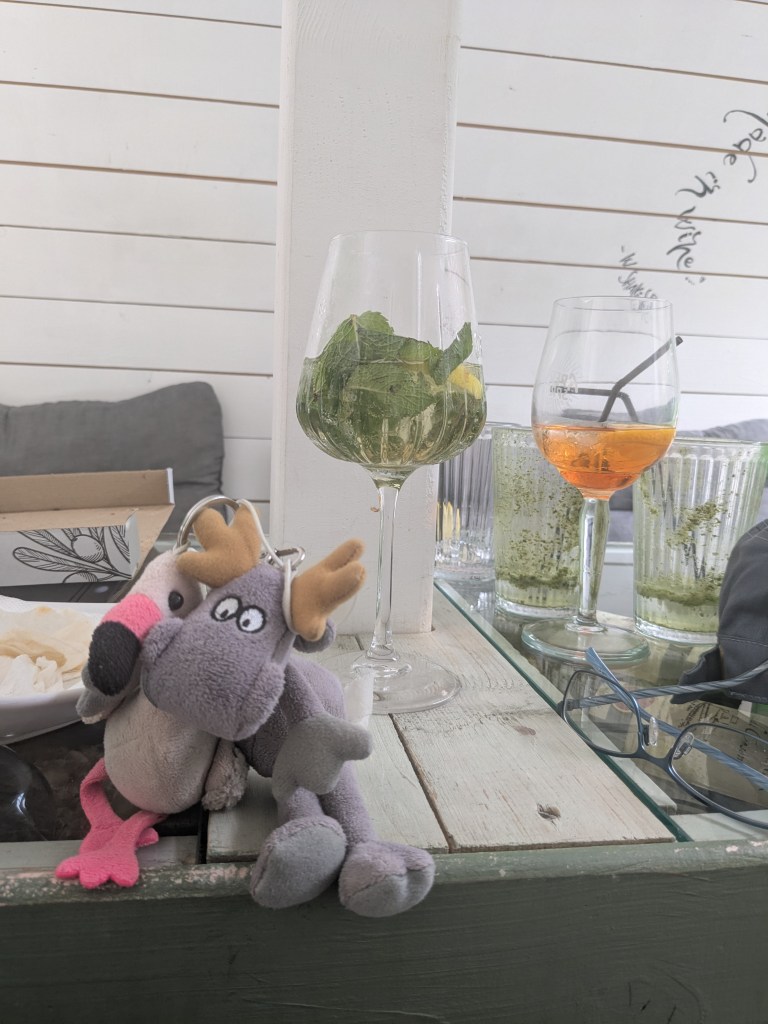
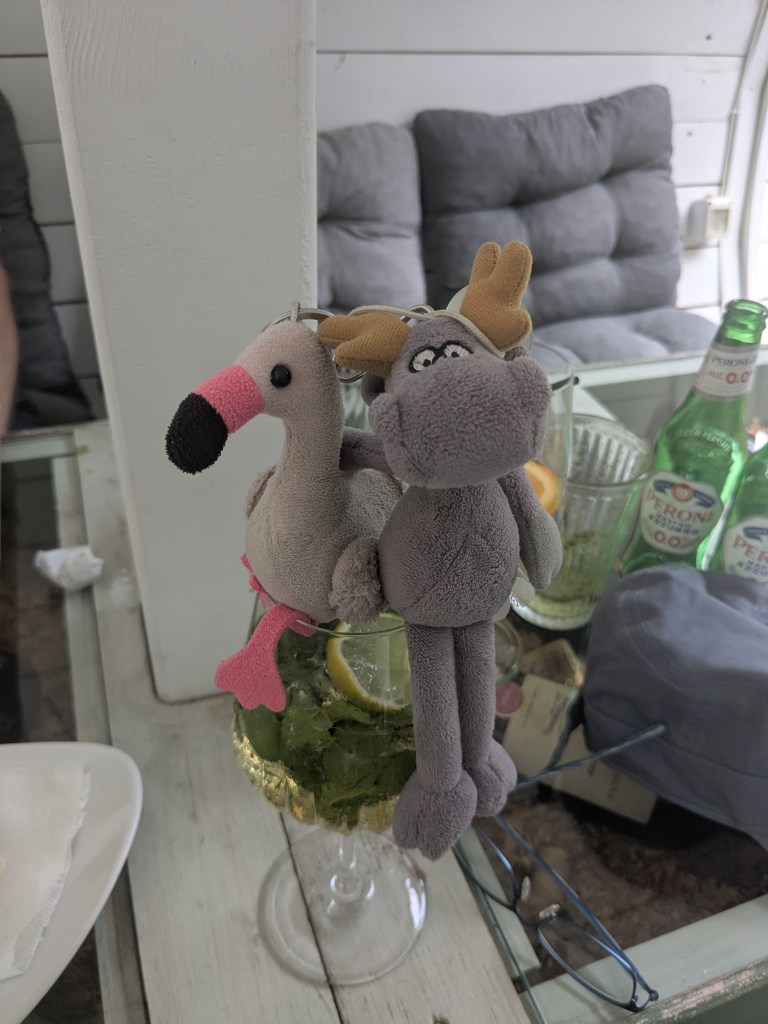
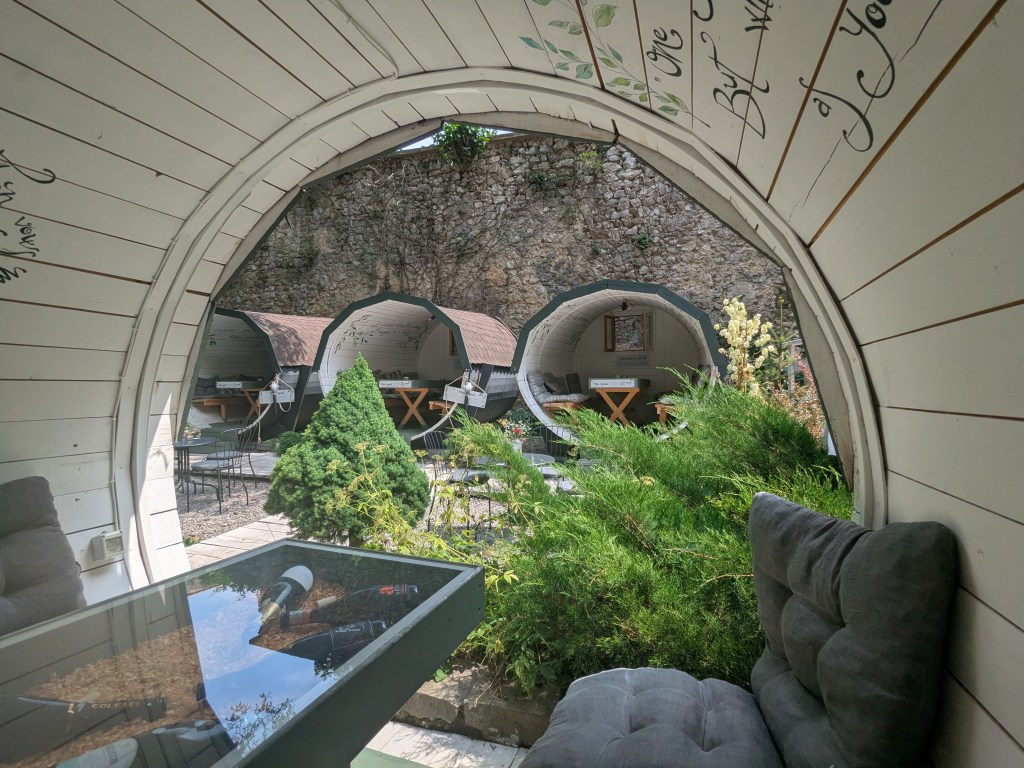
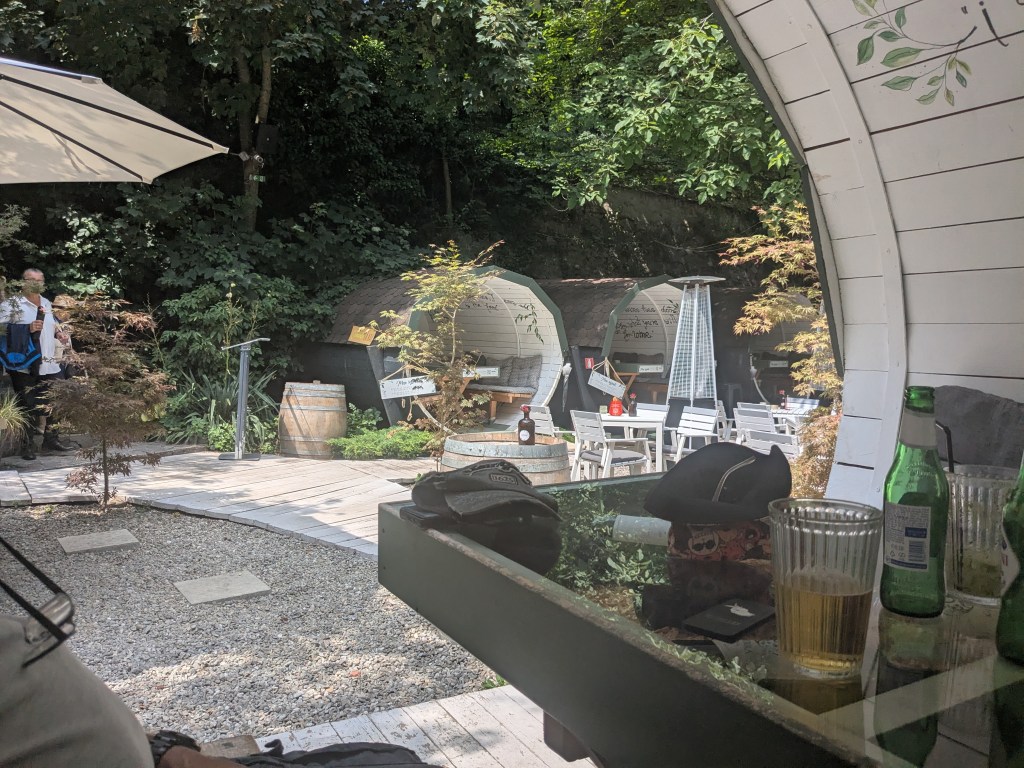
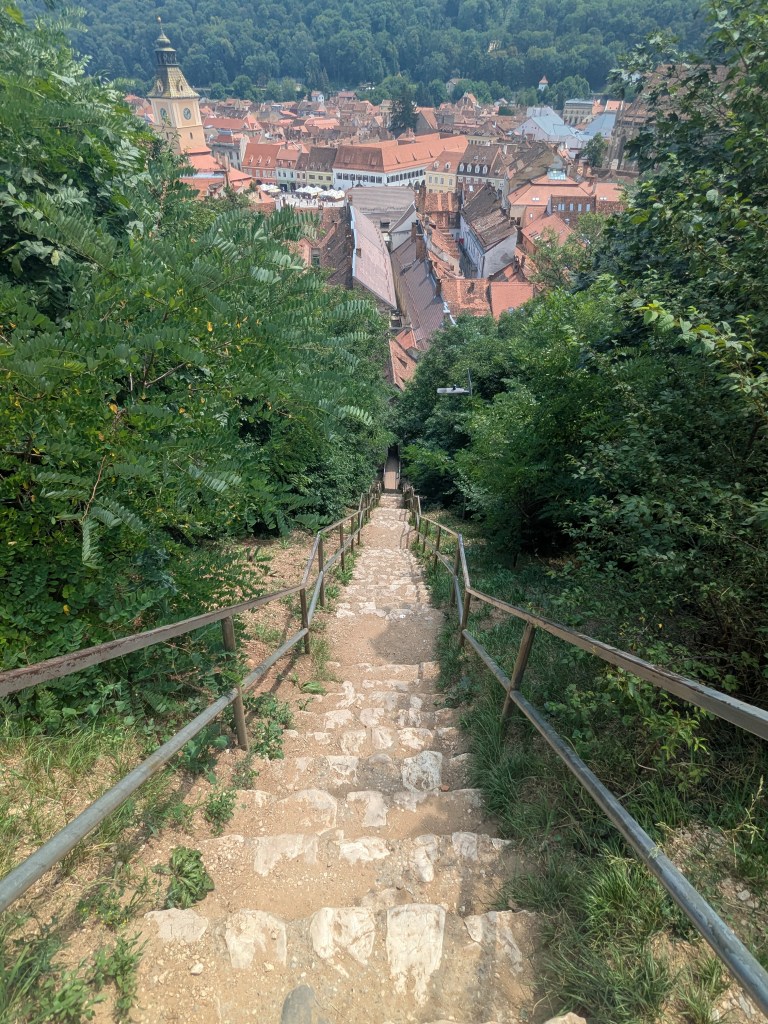
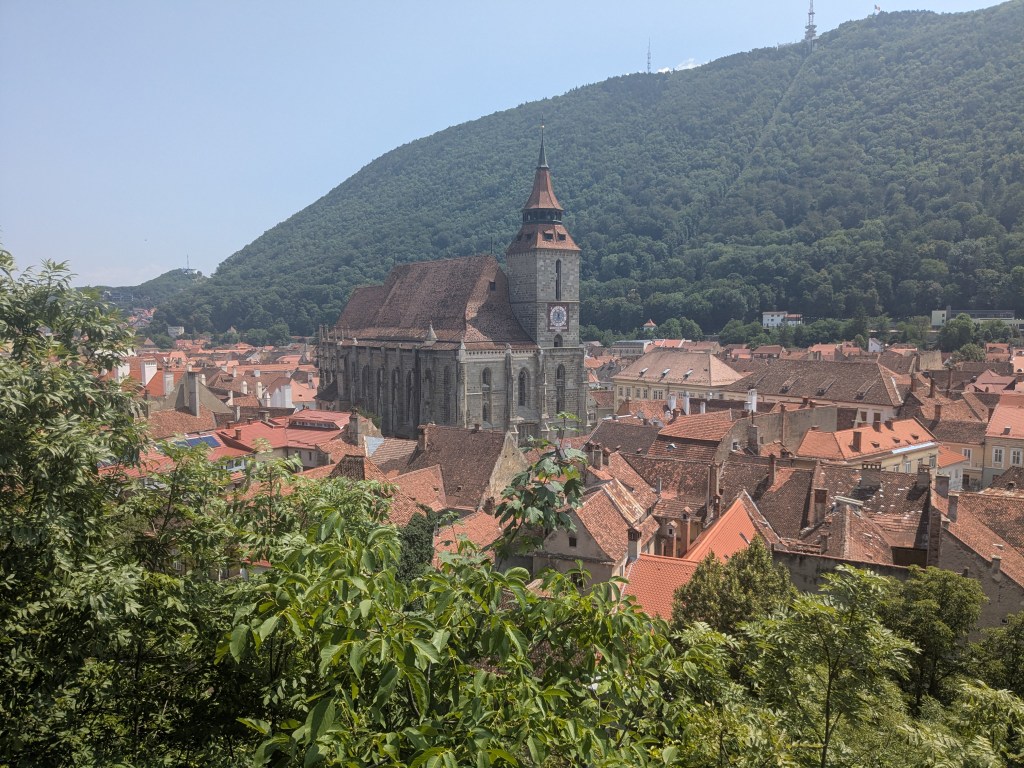
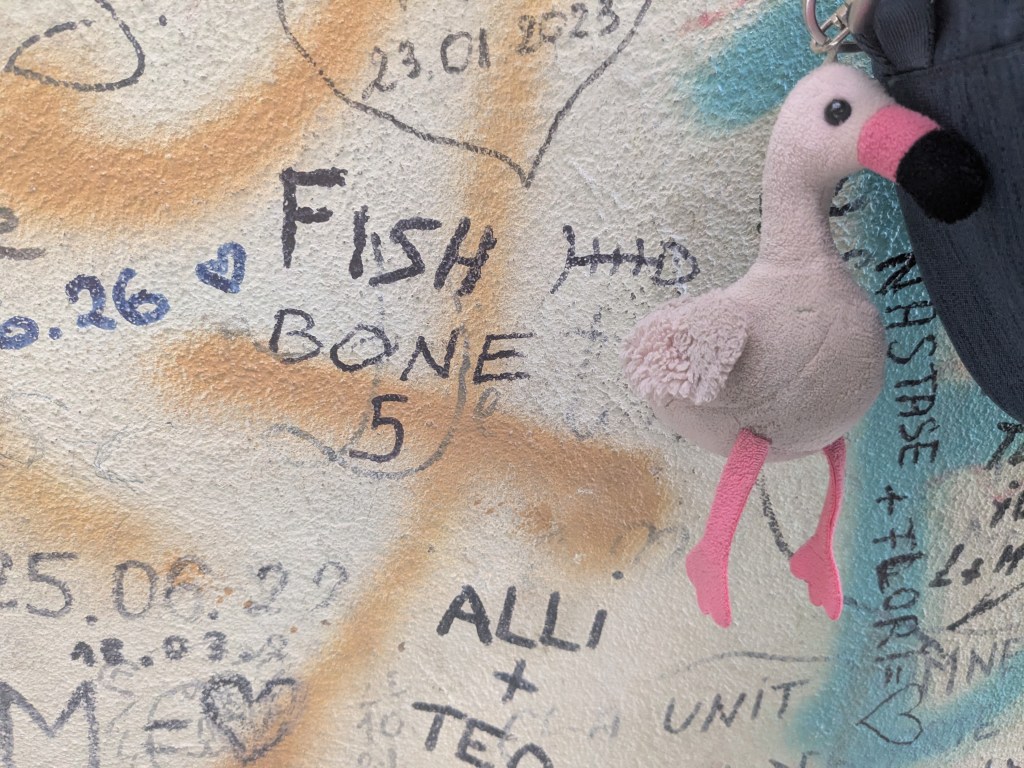
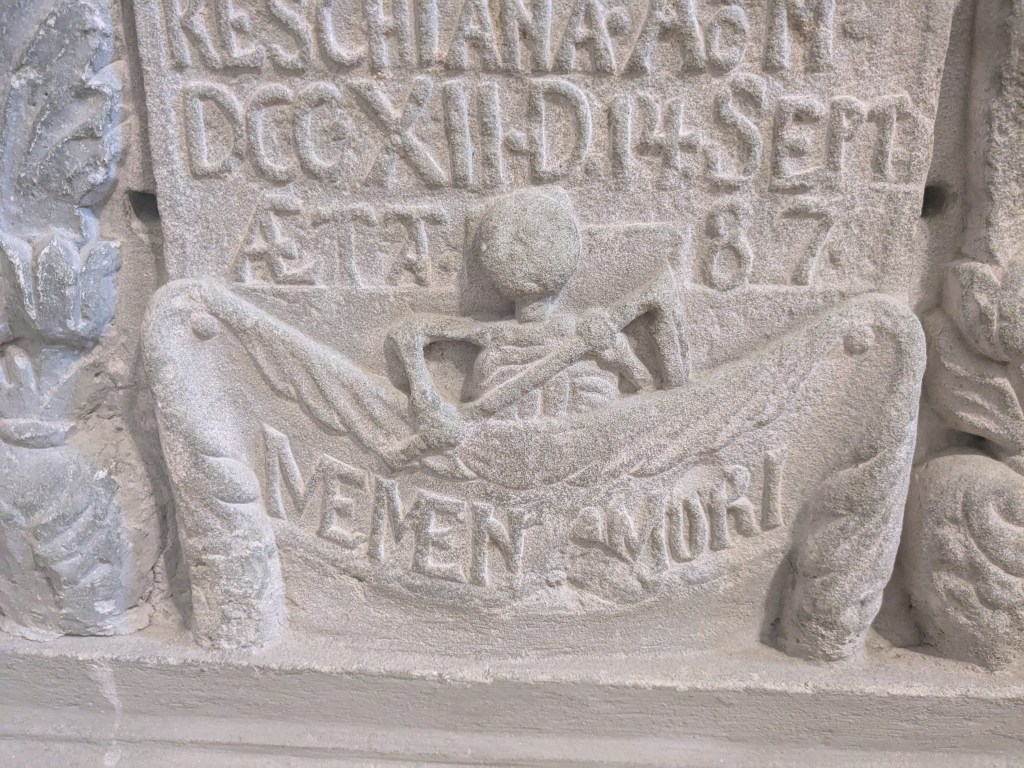
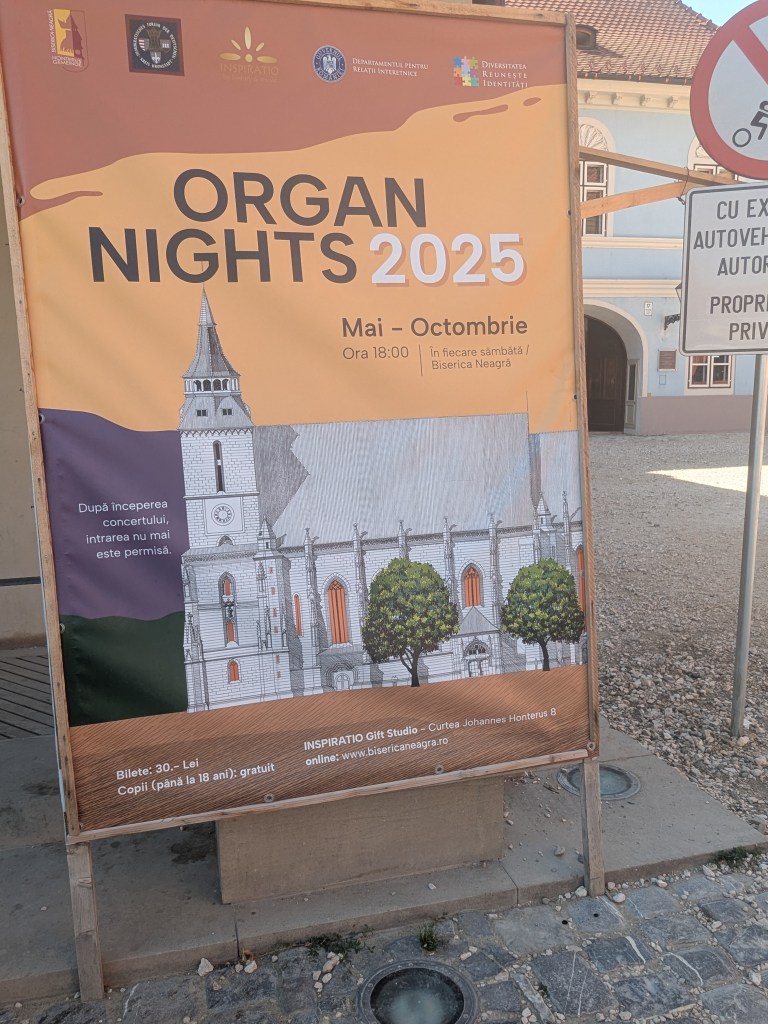
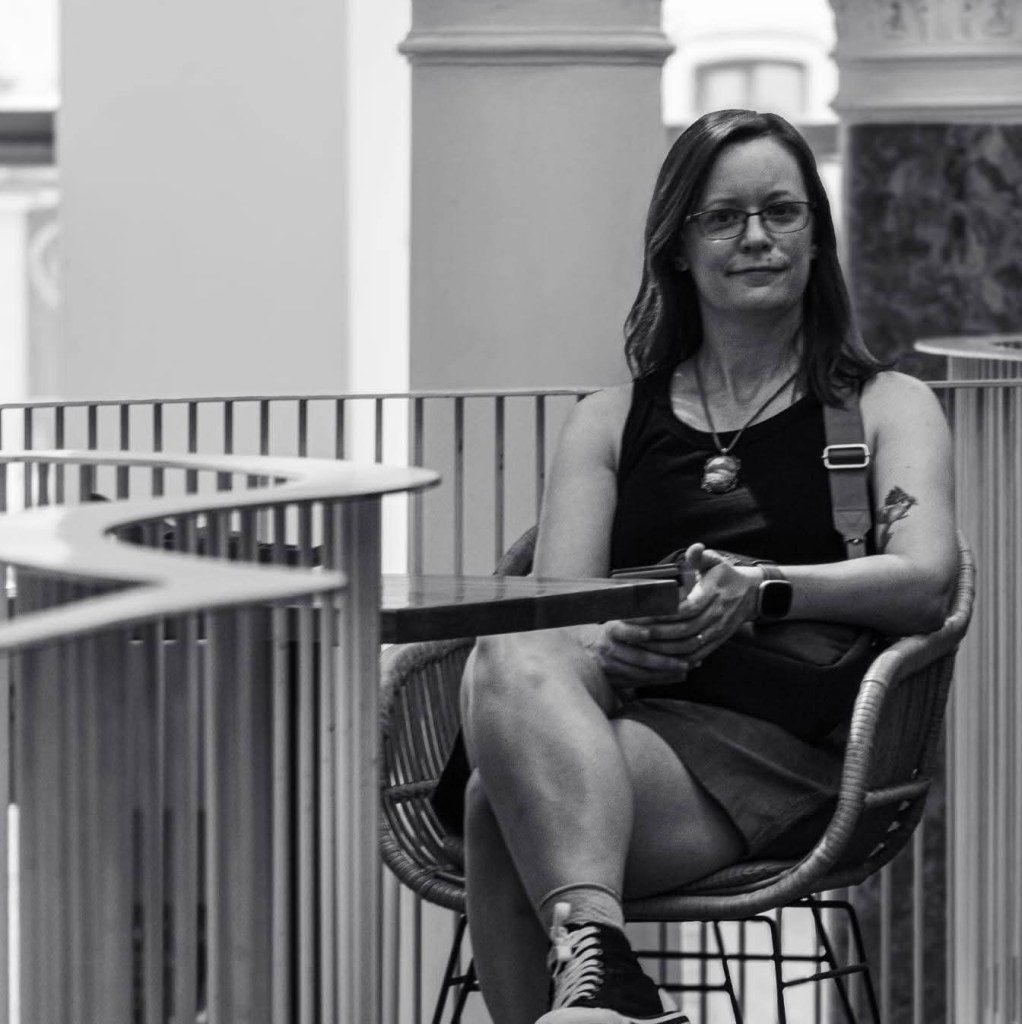
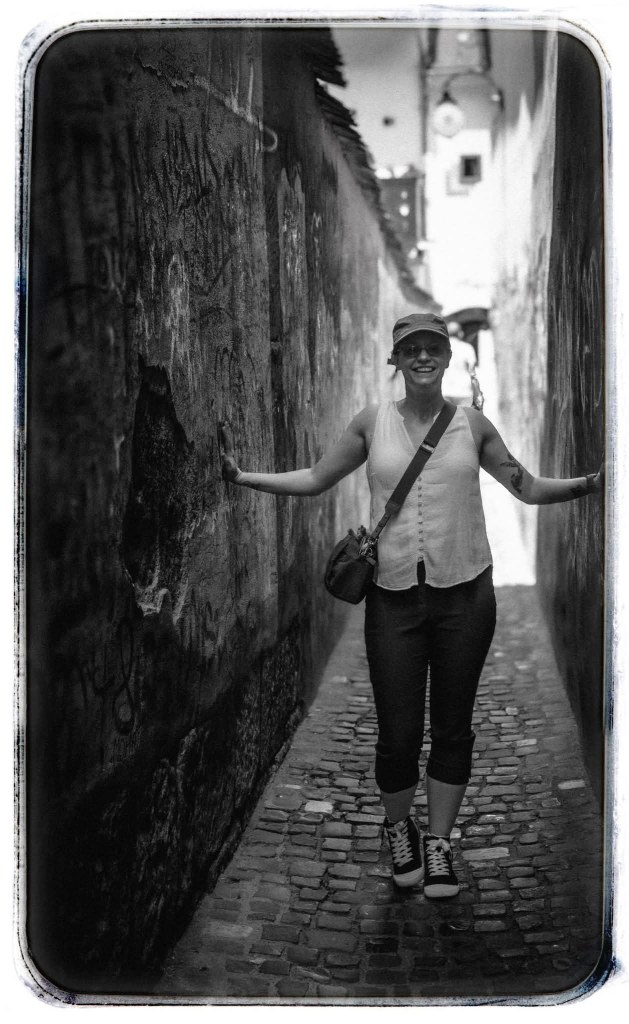
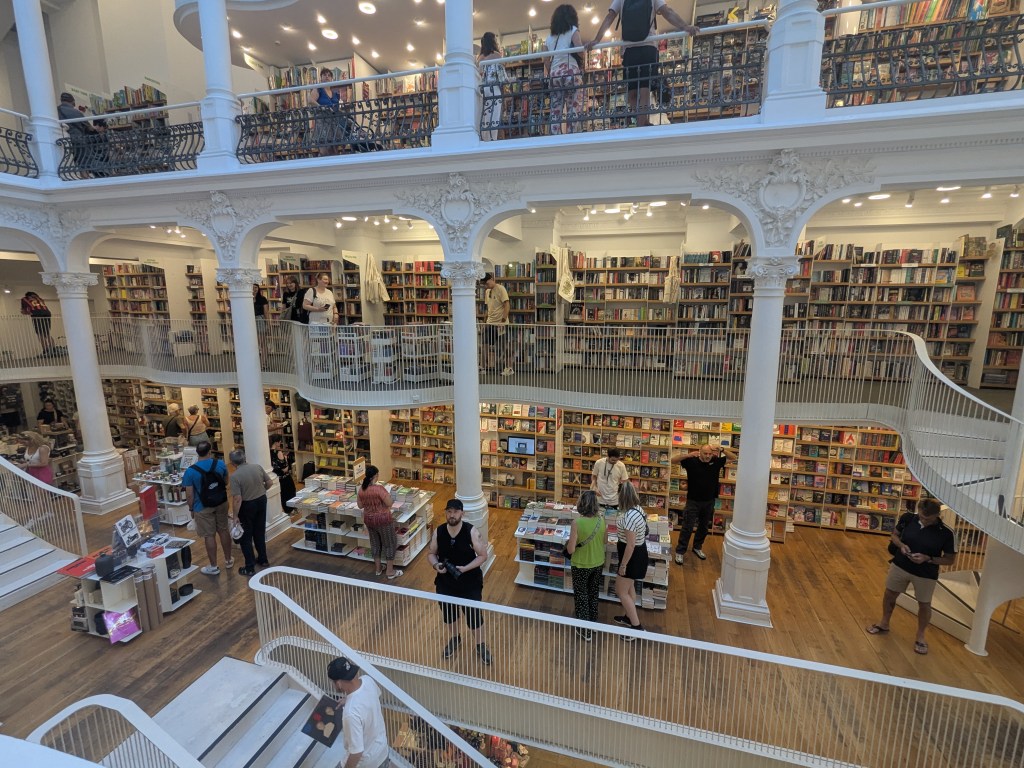
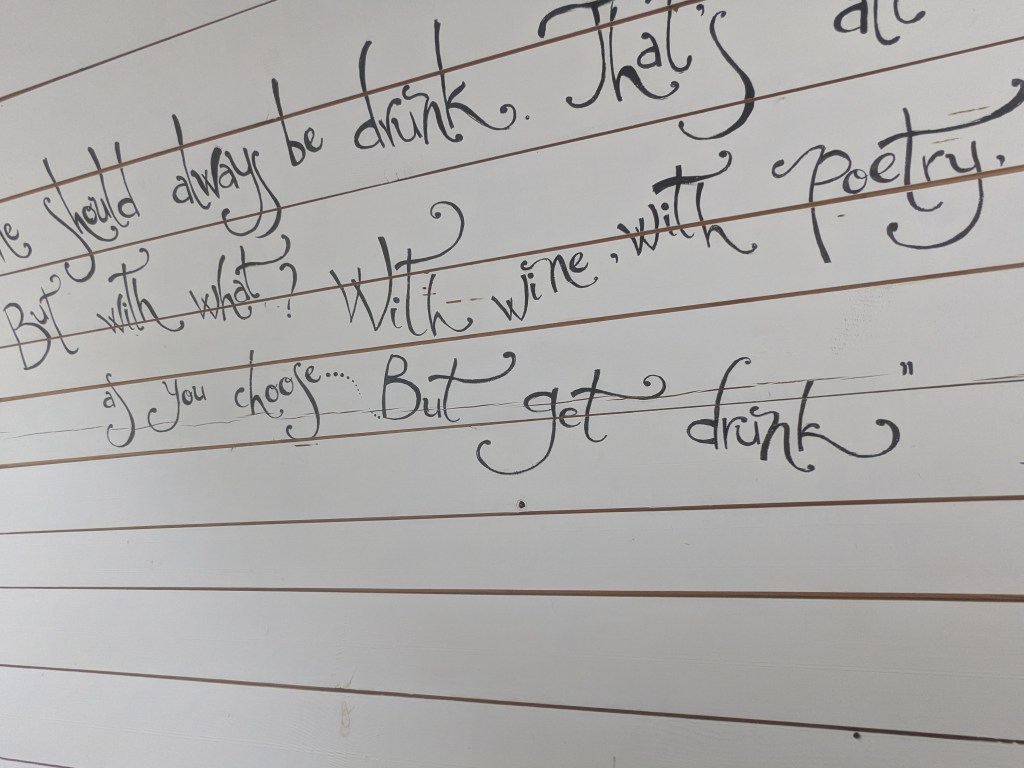
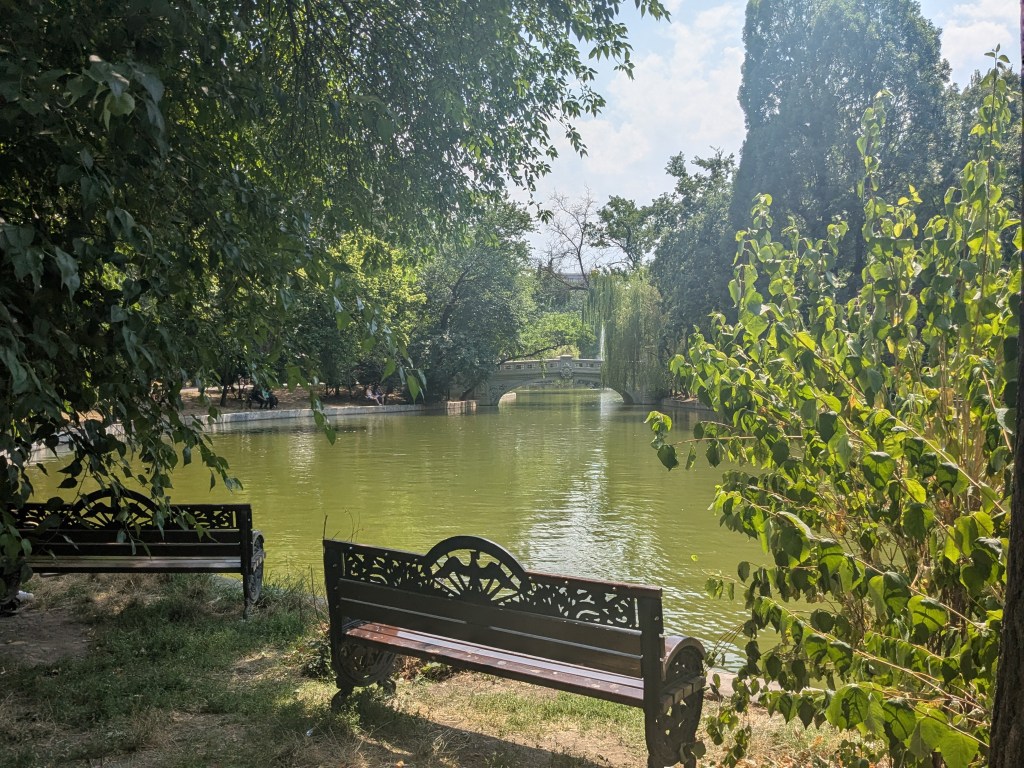
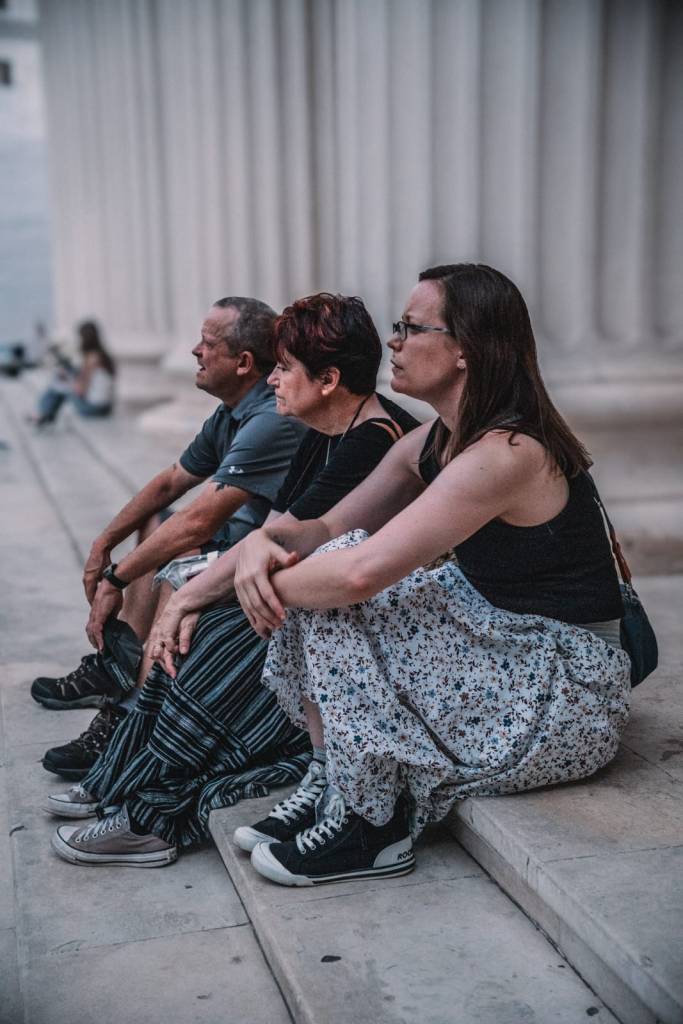
It was an adventure! But always lovely to get home to duPiggy.
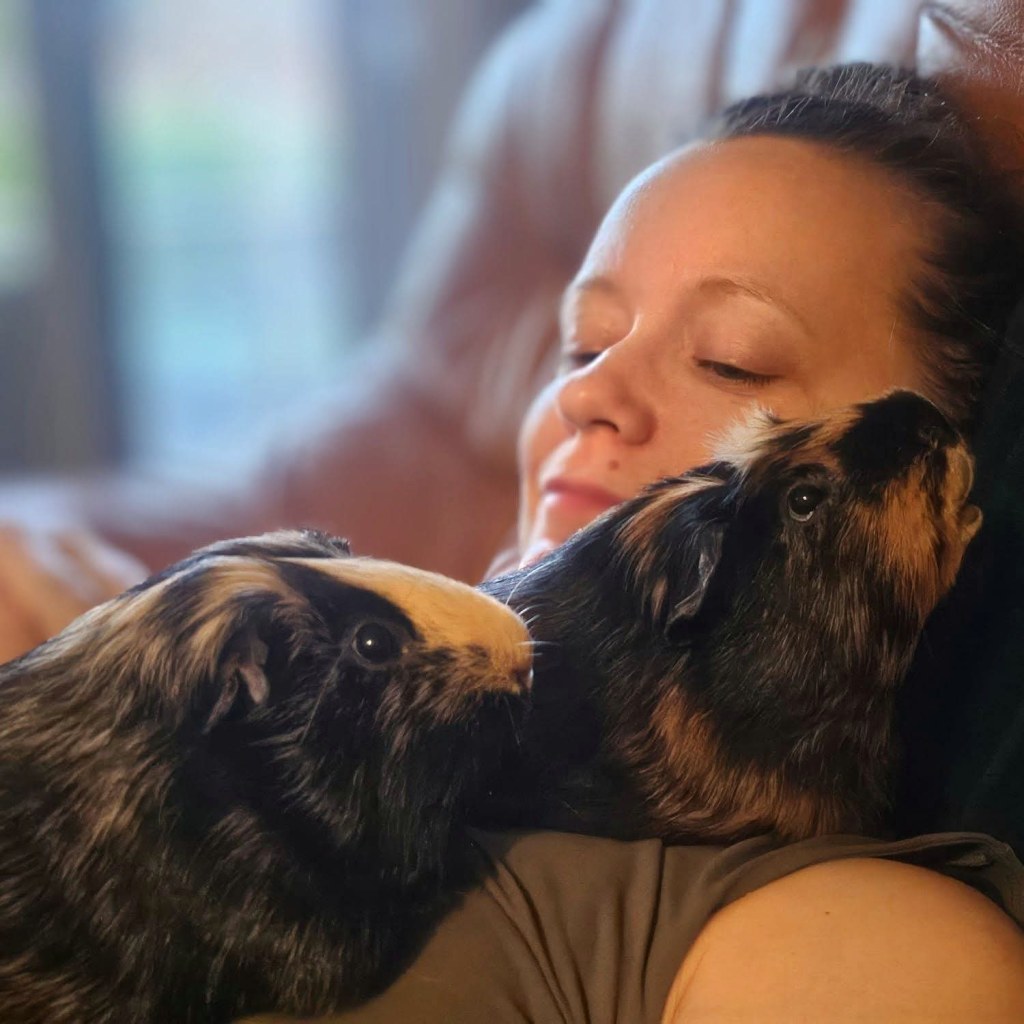
August
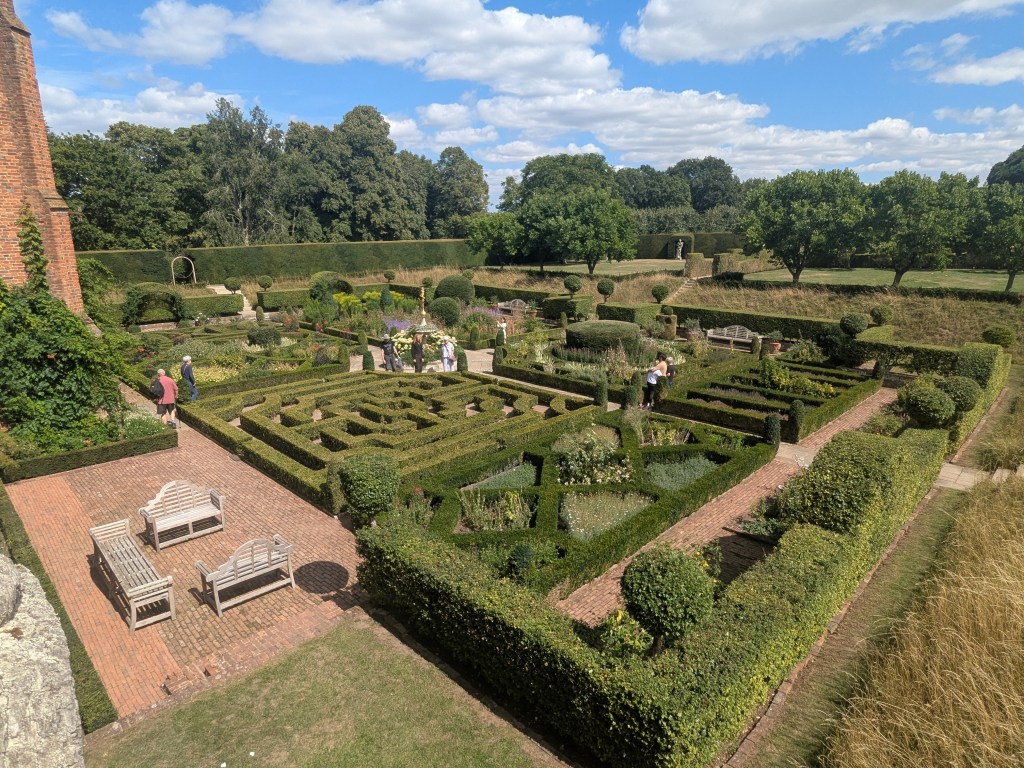
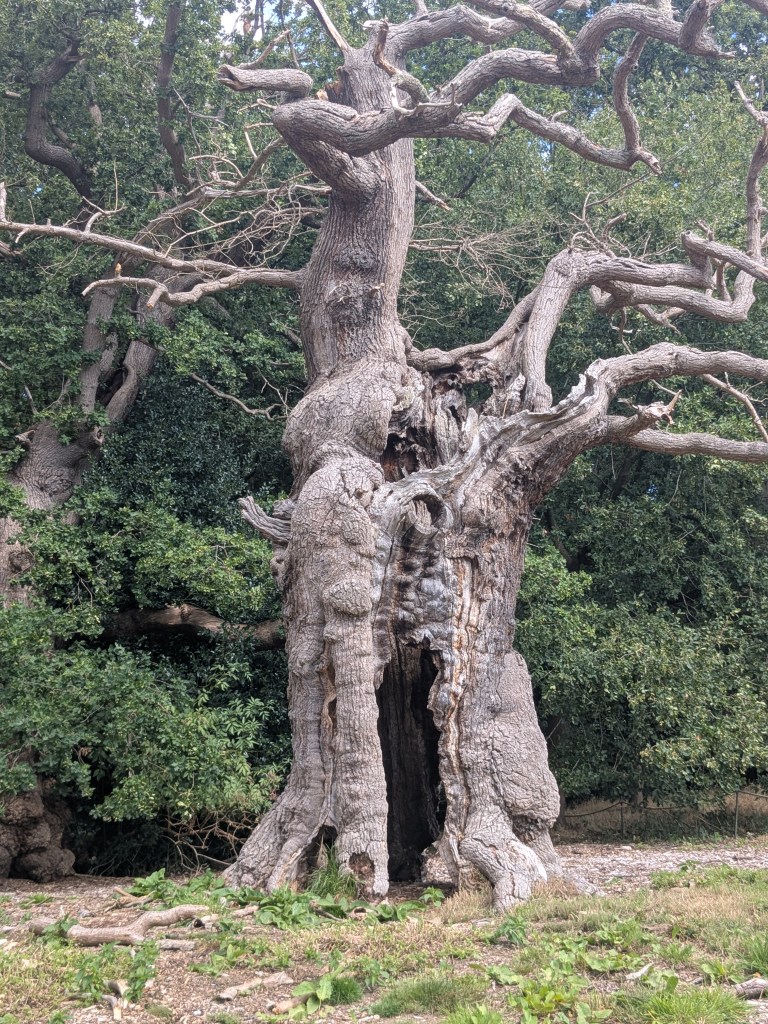
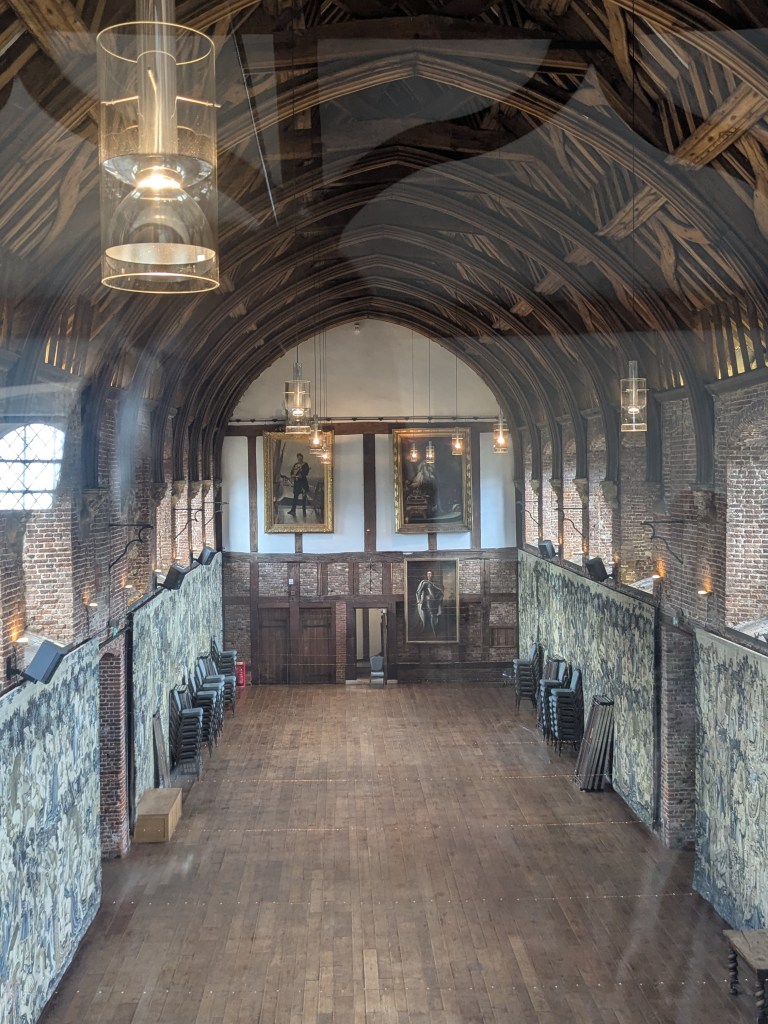
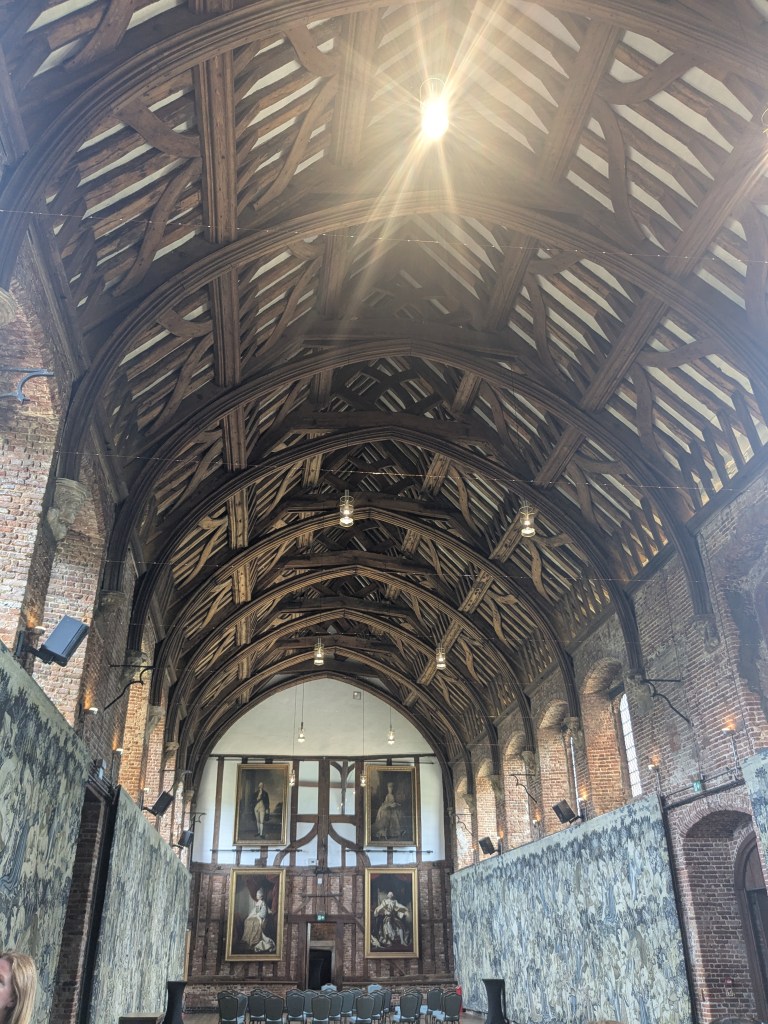
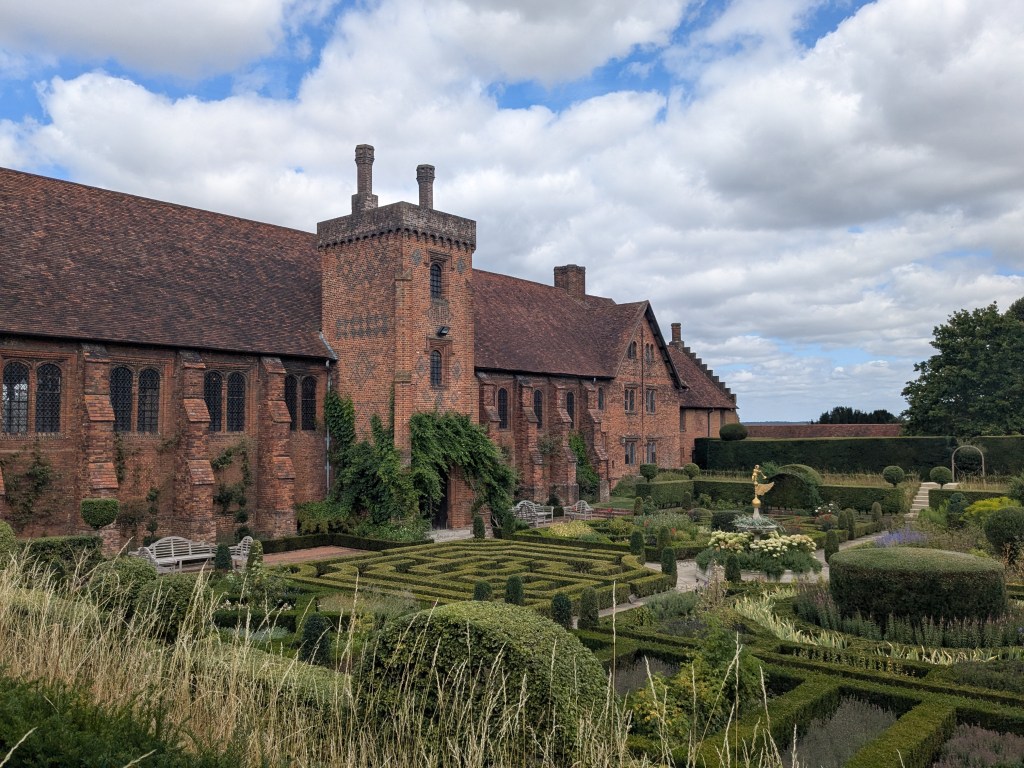
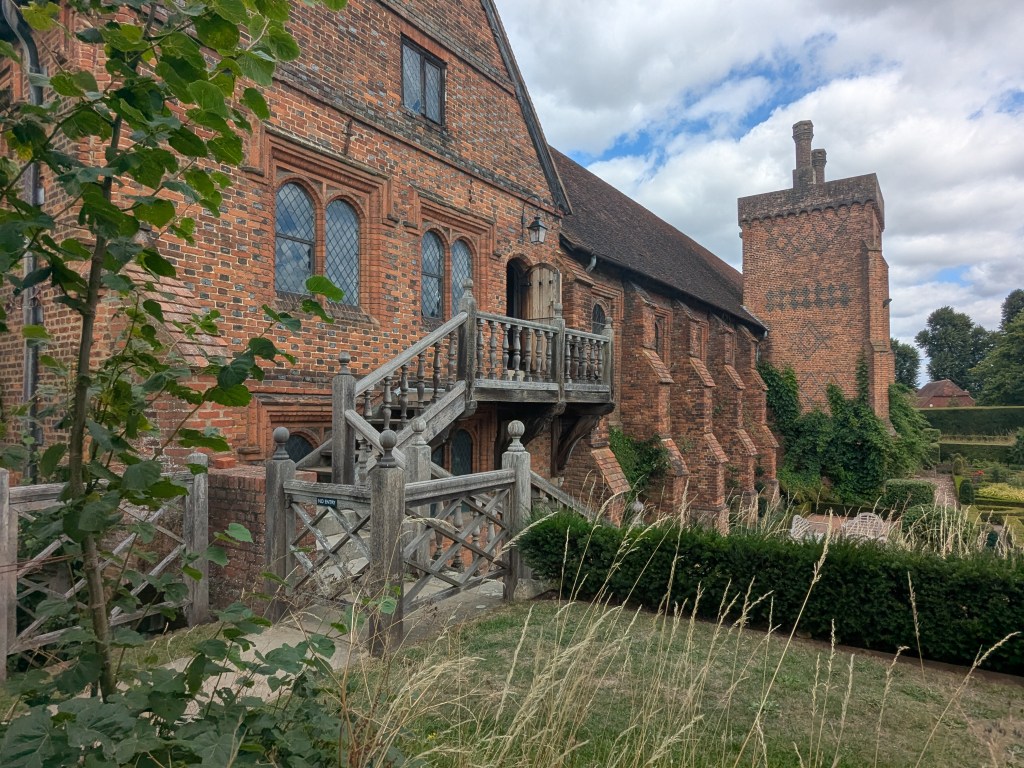
A trip to Hatfield Park for a ‘me’ day. Had a tour of the Old Palace this time. The tour guide was full of information and clearly fascinated by Elizabeth I.
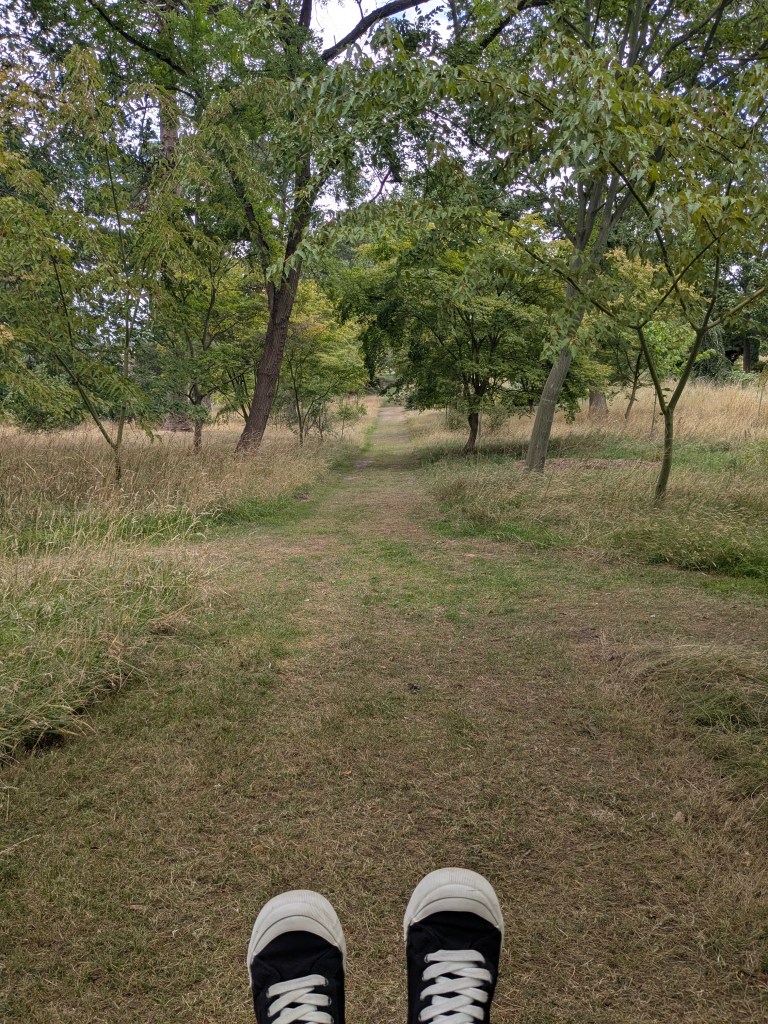
Hatfield Park is a spiritual boost place for me. It’s got a bit of everything. Historic buildings, curated gardens, rivers, lakes, woodland walks, restaurant, café, and craft shops.
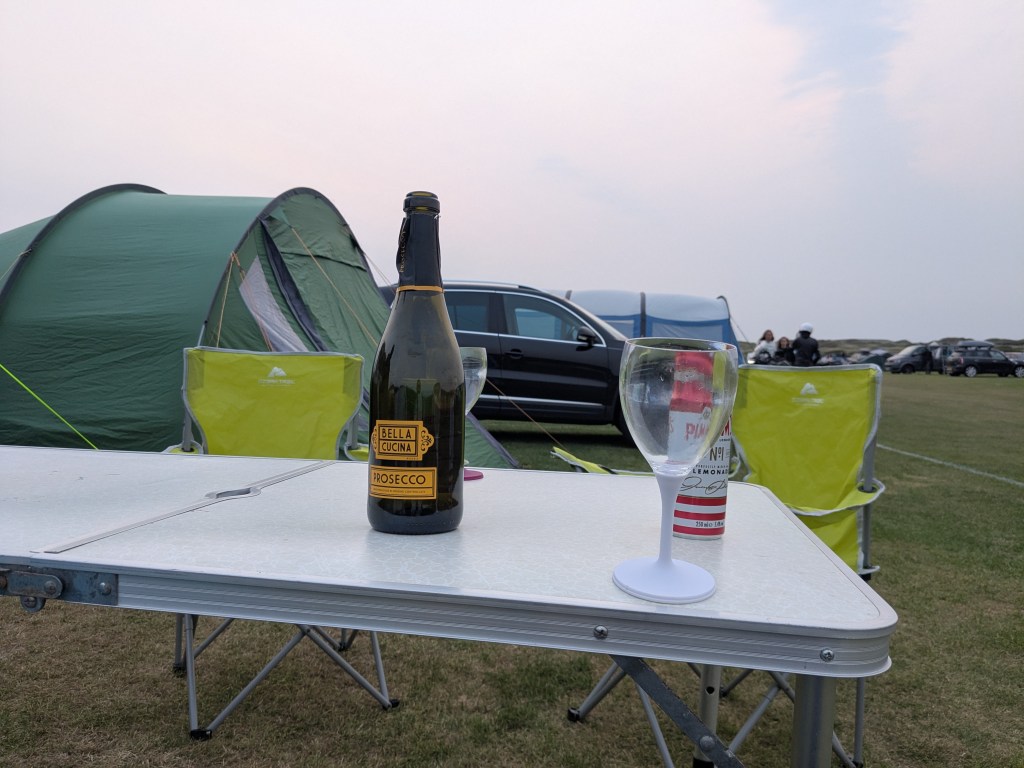
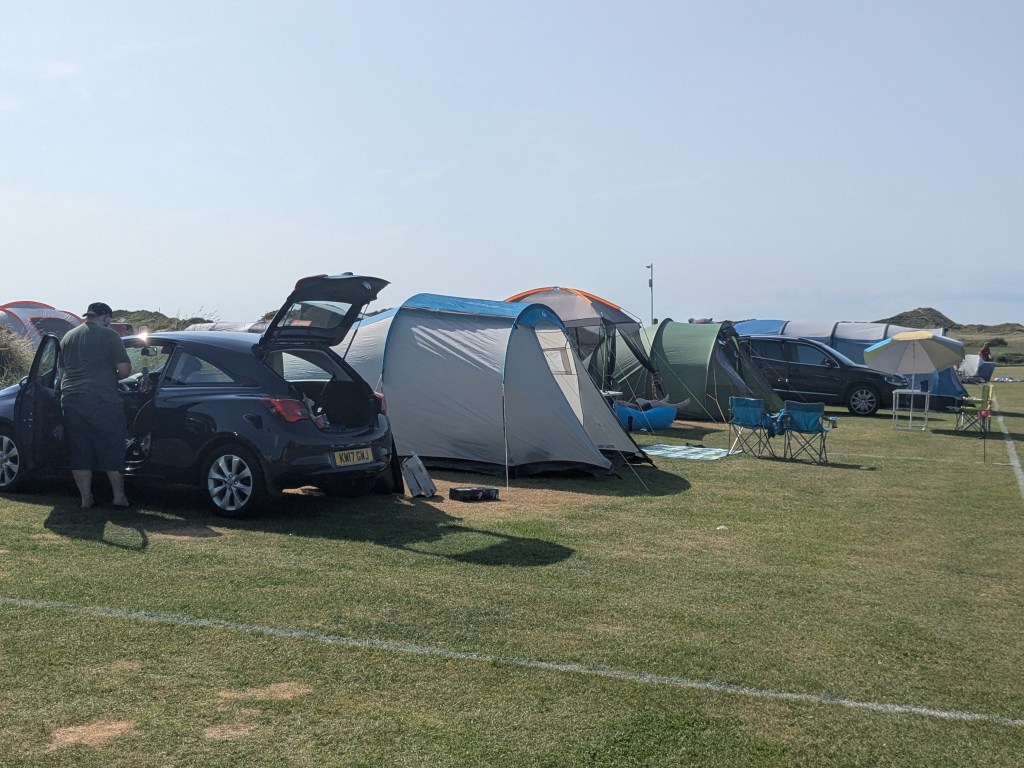
Camping at Llangennith, Gower, with Ross and Alex.

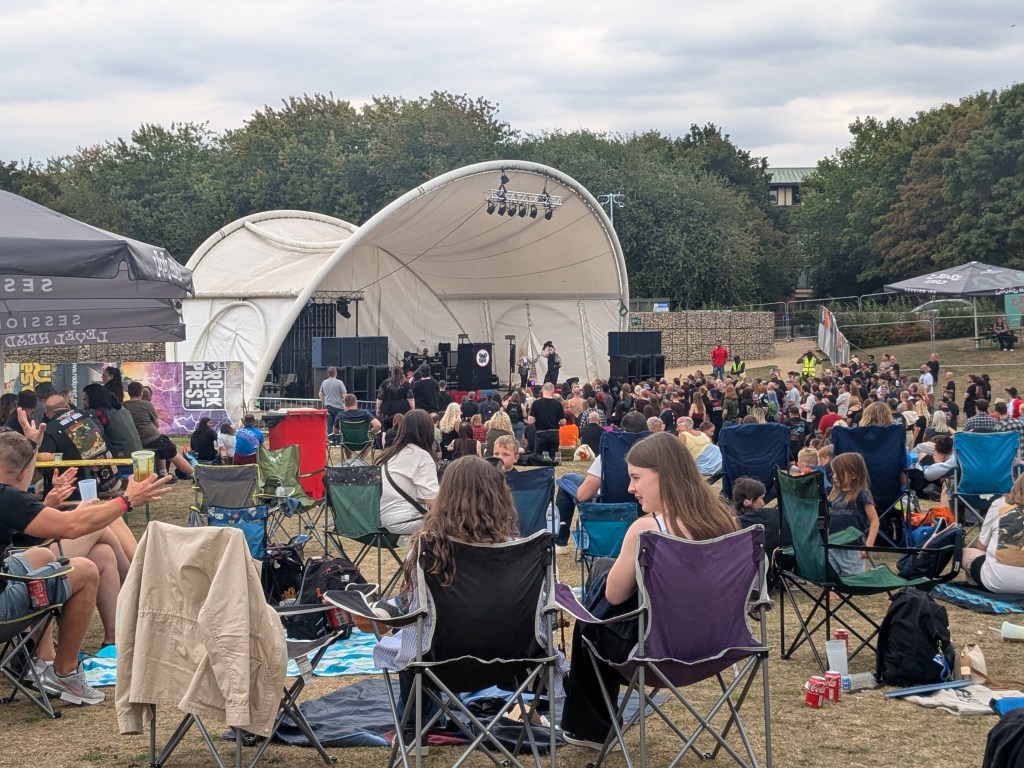
MK tribute festival at Campbell Park.
September
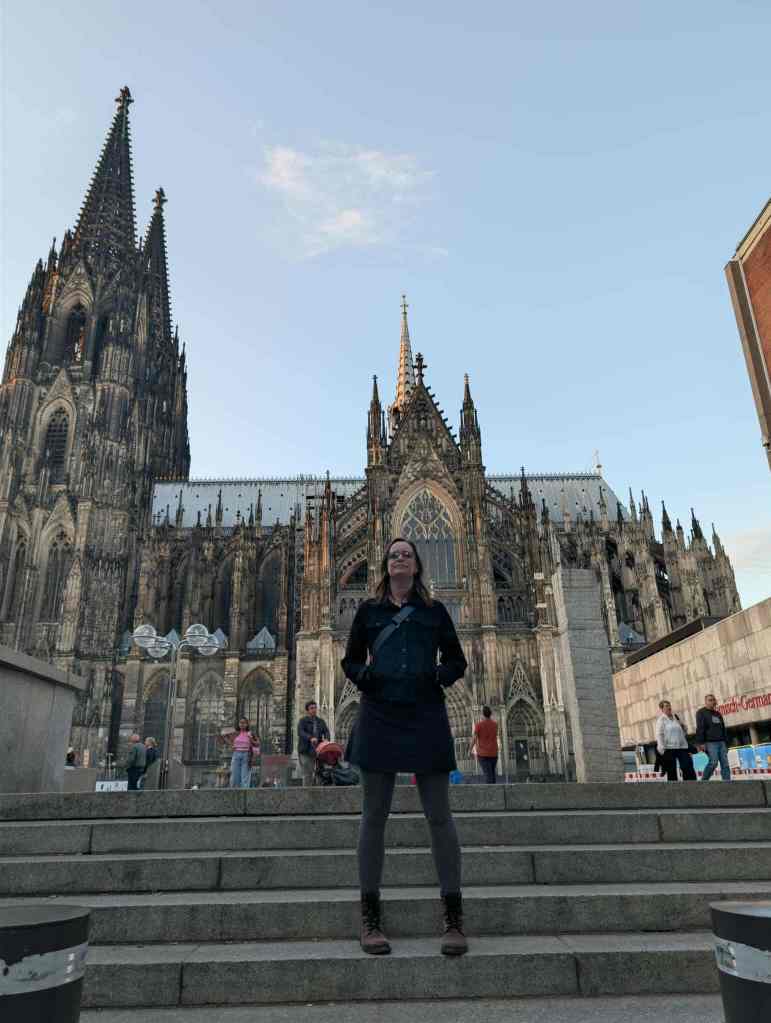
A trip to Cologne as part 1 of my 40th birthday celebrations! See post
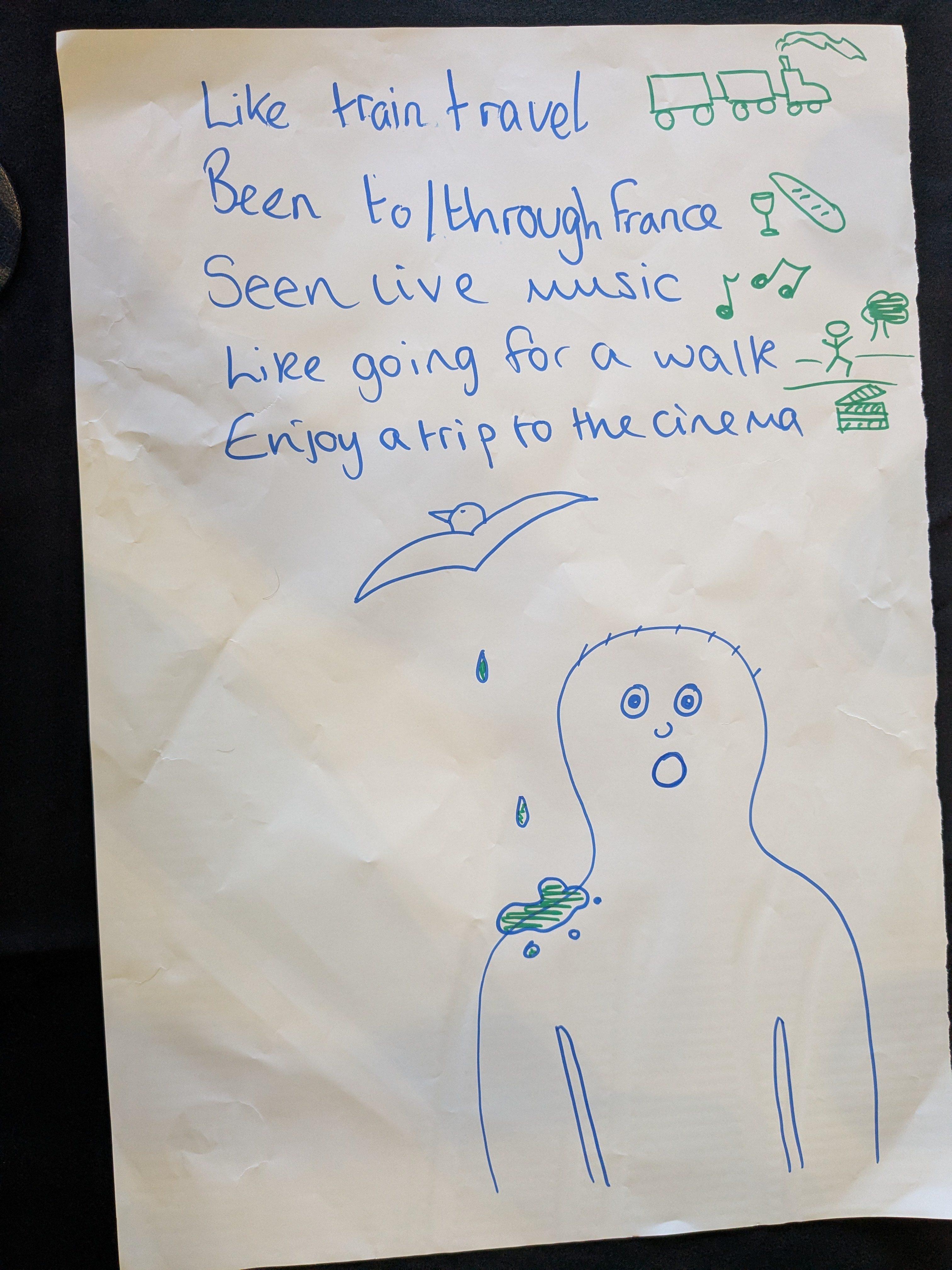
Programmes team away day with work. I was welcomed as a new facilitator to everyone across our region. Felt very special. As a table we needed to find out the most unusual thing we all had in common.
October
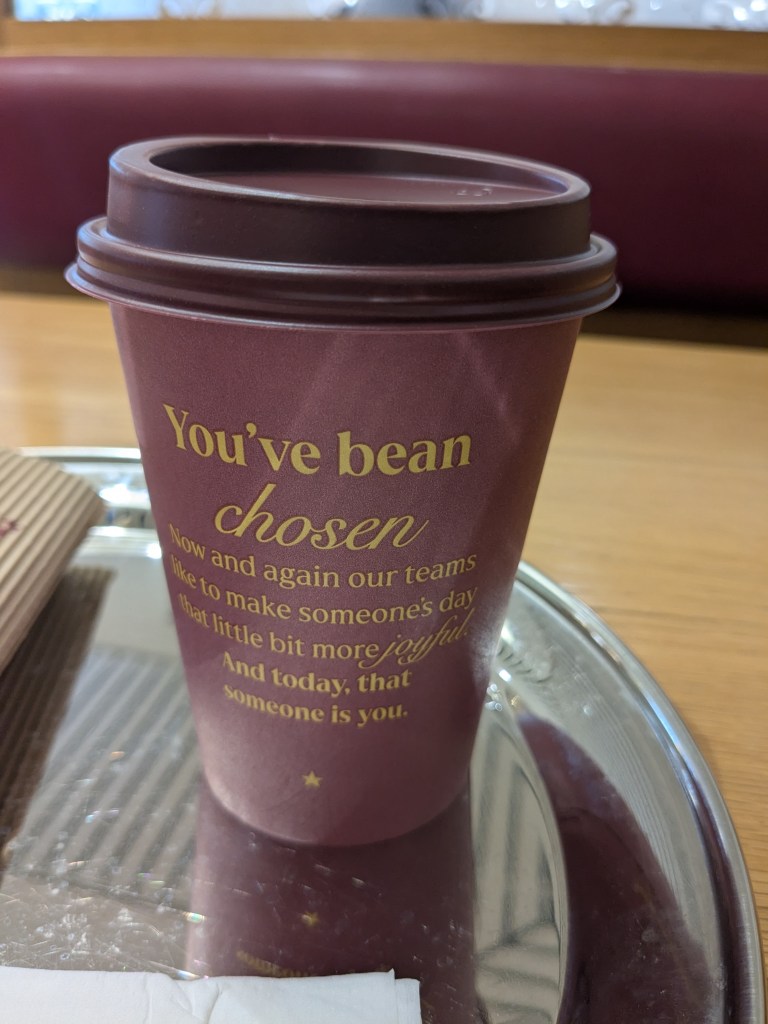
Went to Pret for a coffee and I must have looked stressed as I got my first FREE COFFEE.
I turned 40! Part 2 of my birthday celebrations, I took a week off work to celebrate. We went away with Ross and Alex. We stayed in a village called Barford St Martin, just outside of Salisbury, in a self catering converted barn with hot tub. Everyone made it very special for me.
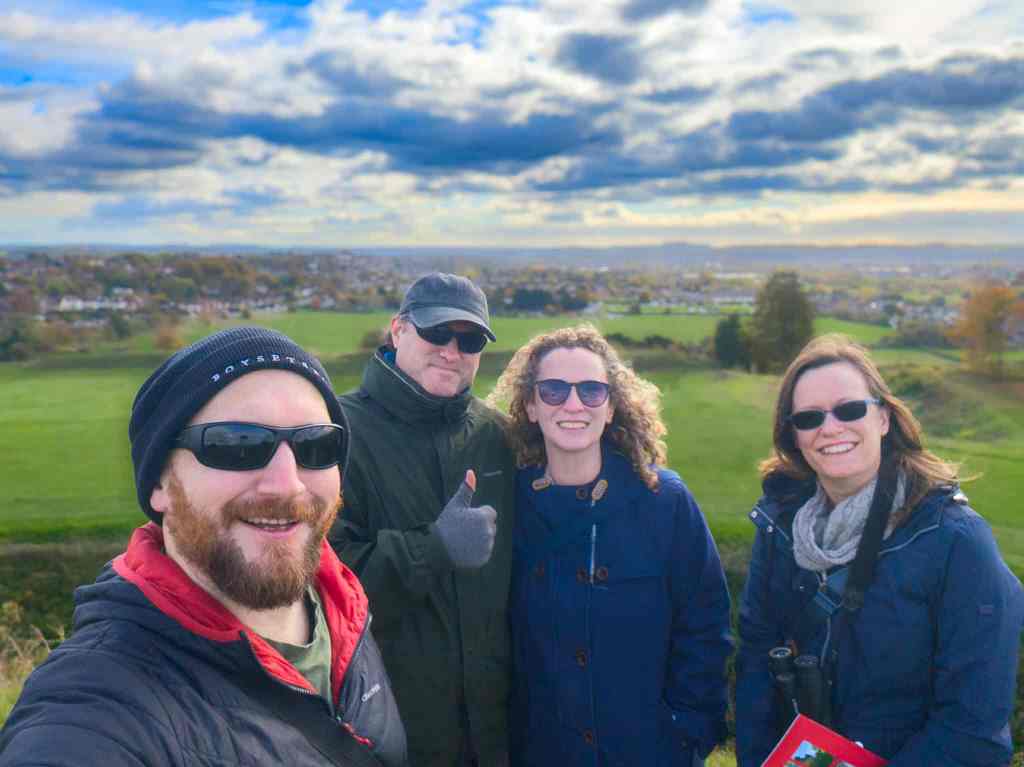
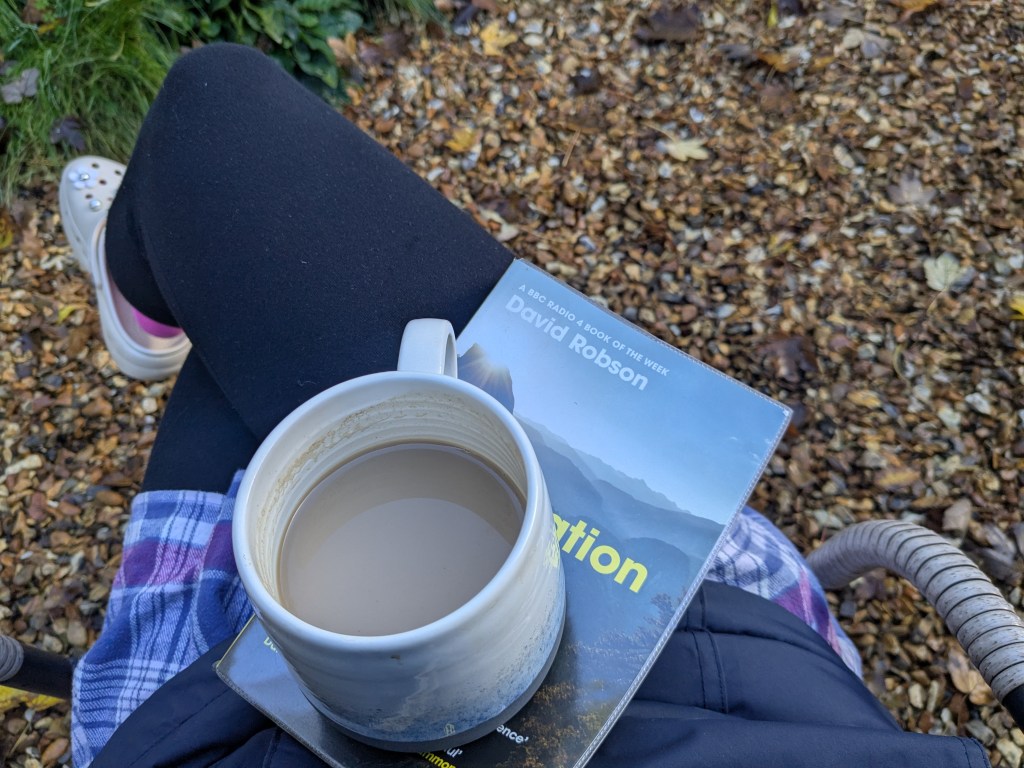
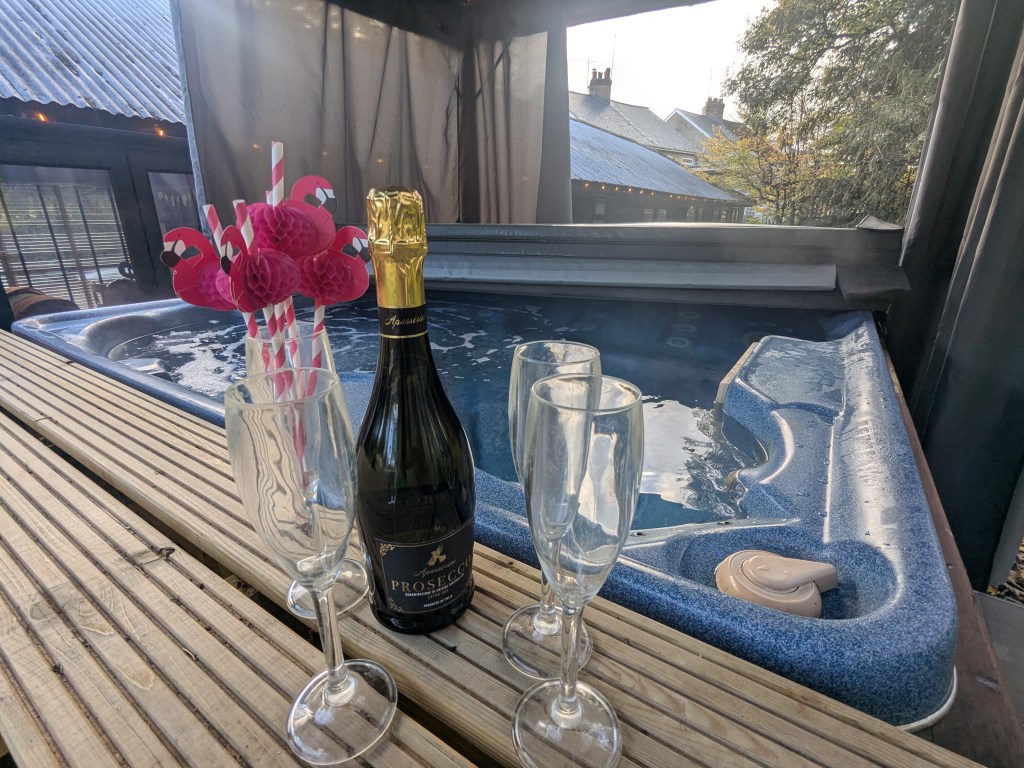
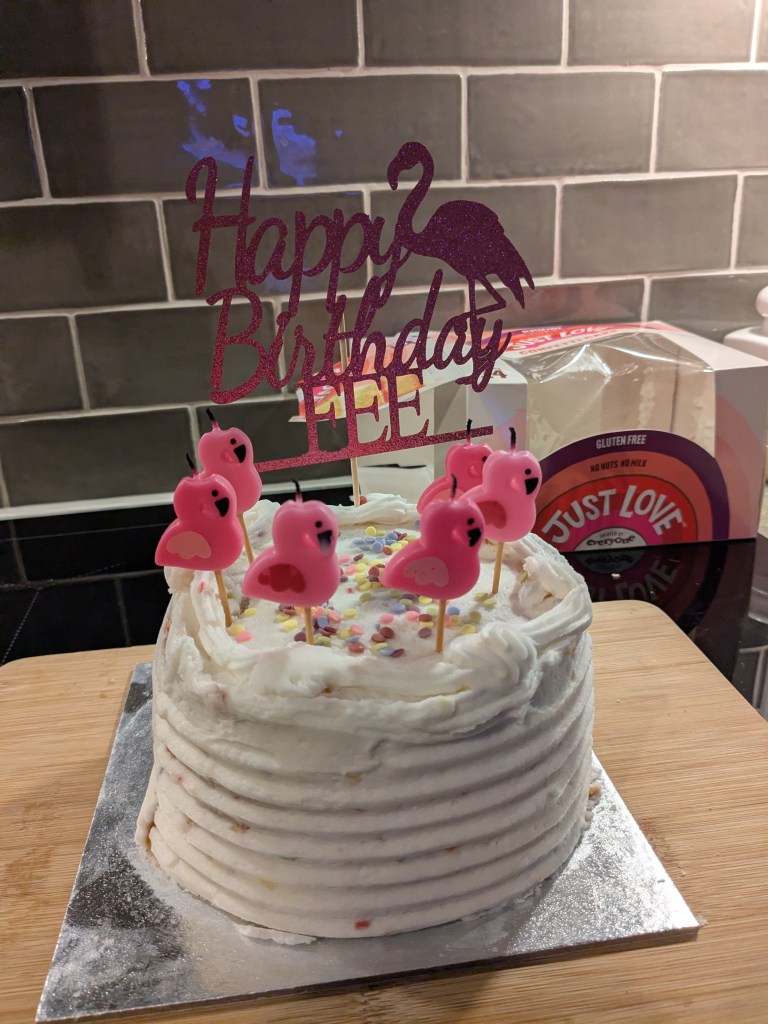
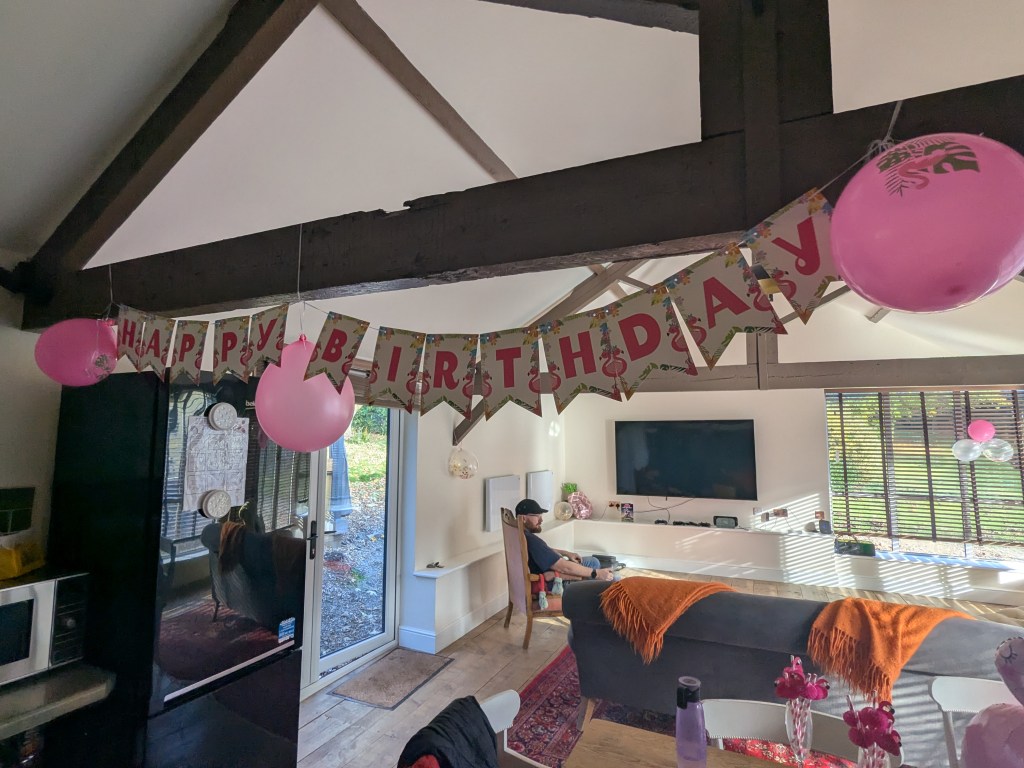
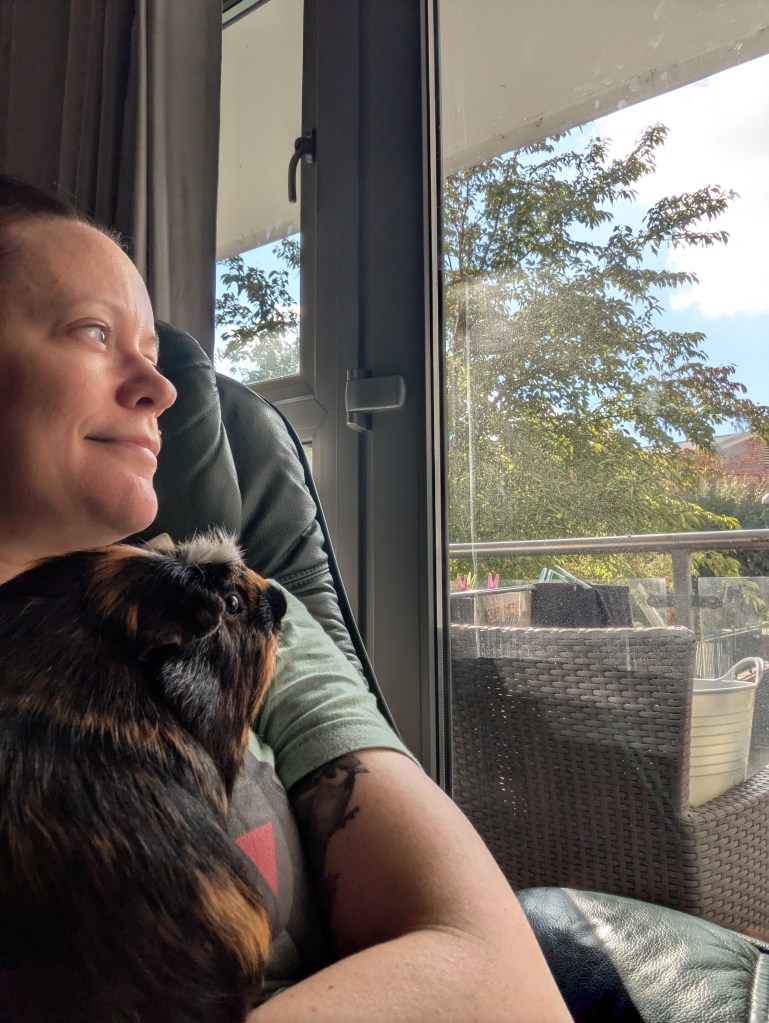
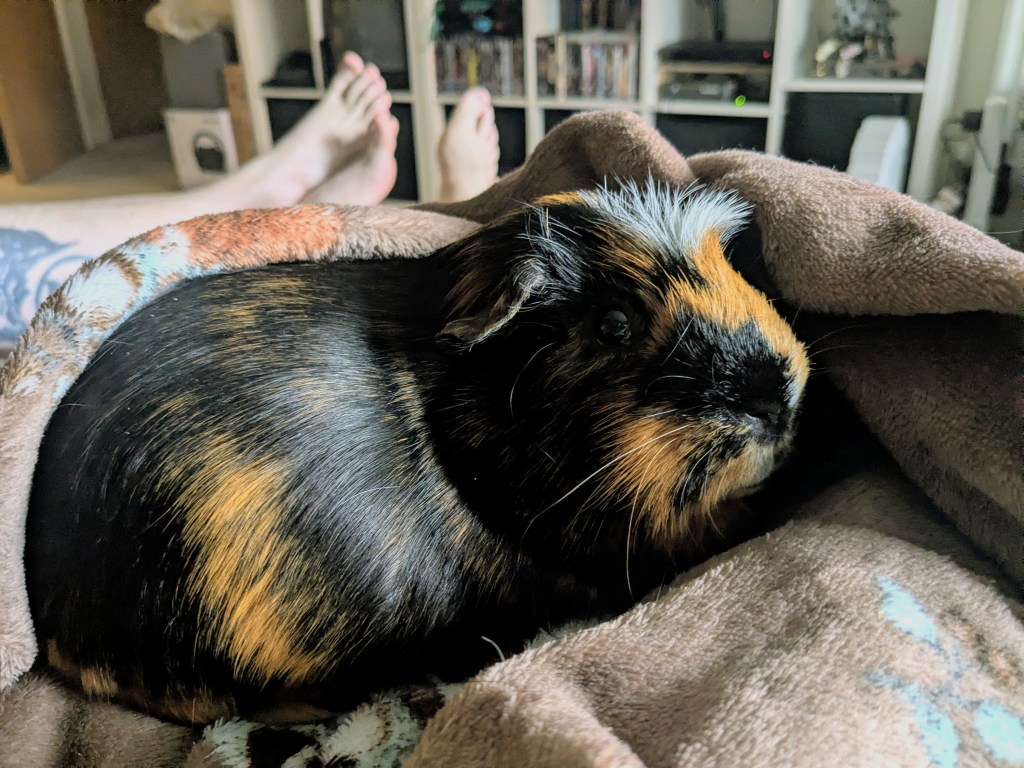
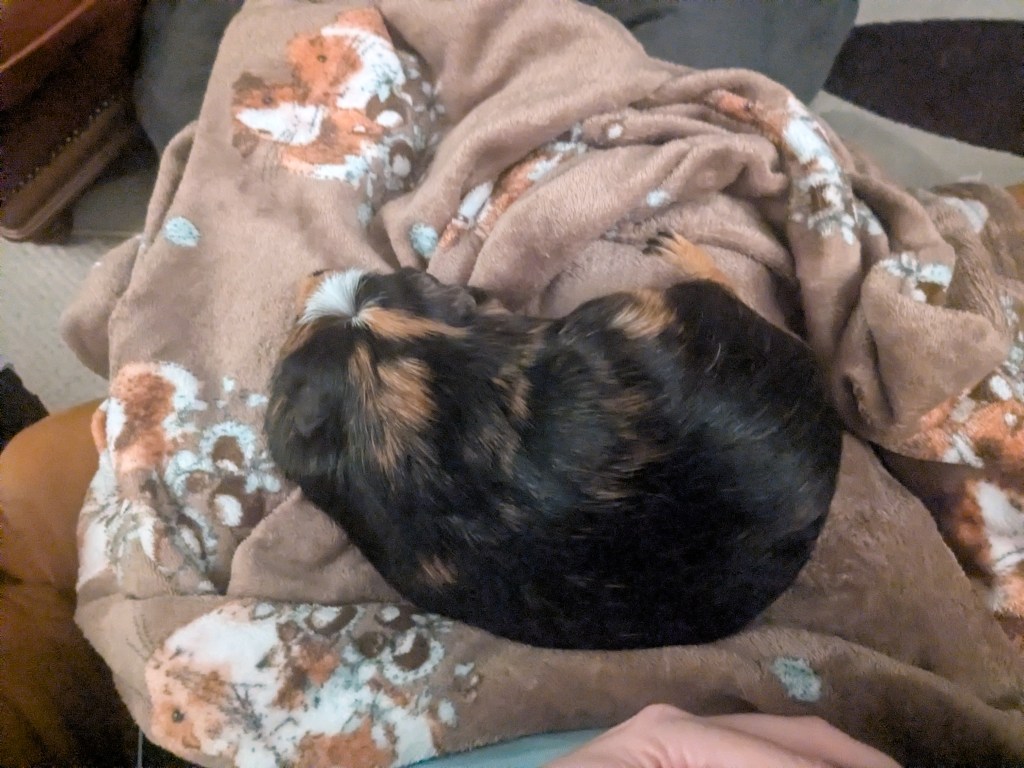
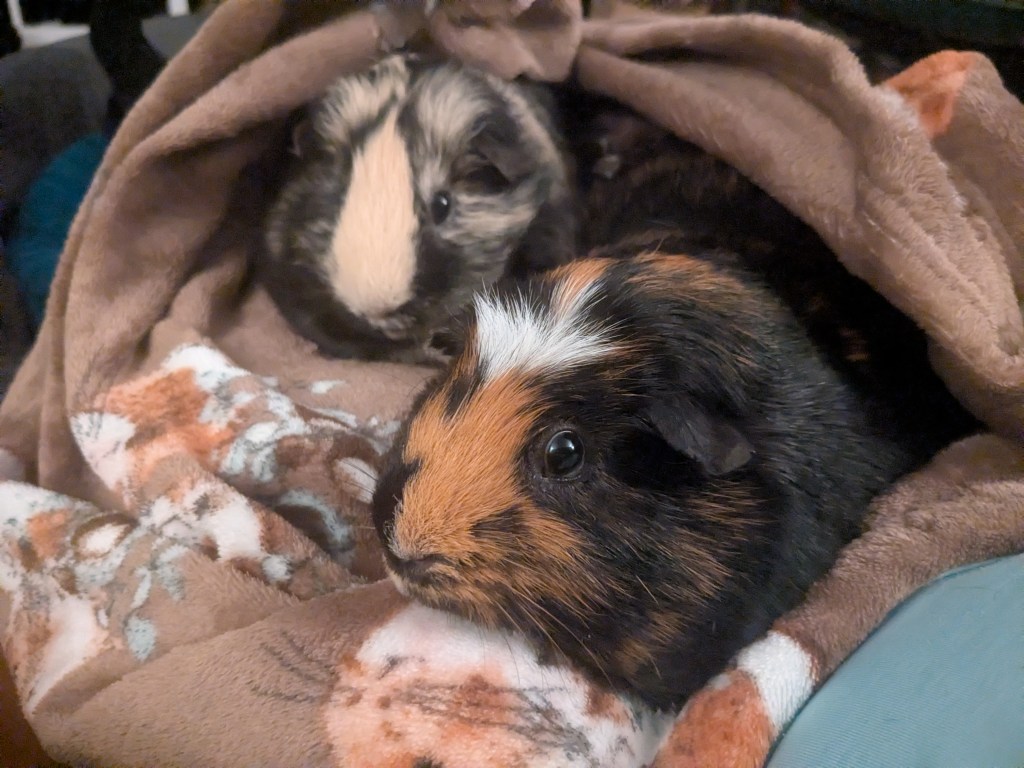
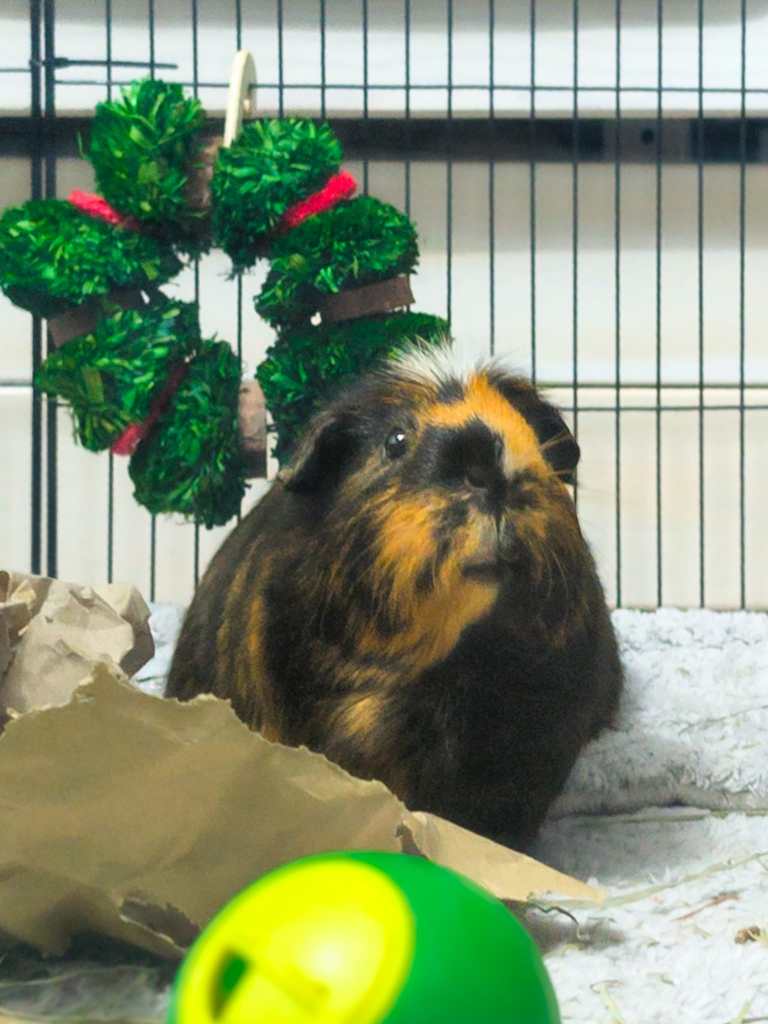
duPiggy continued to be the cutest things.

November
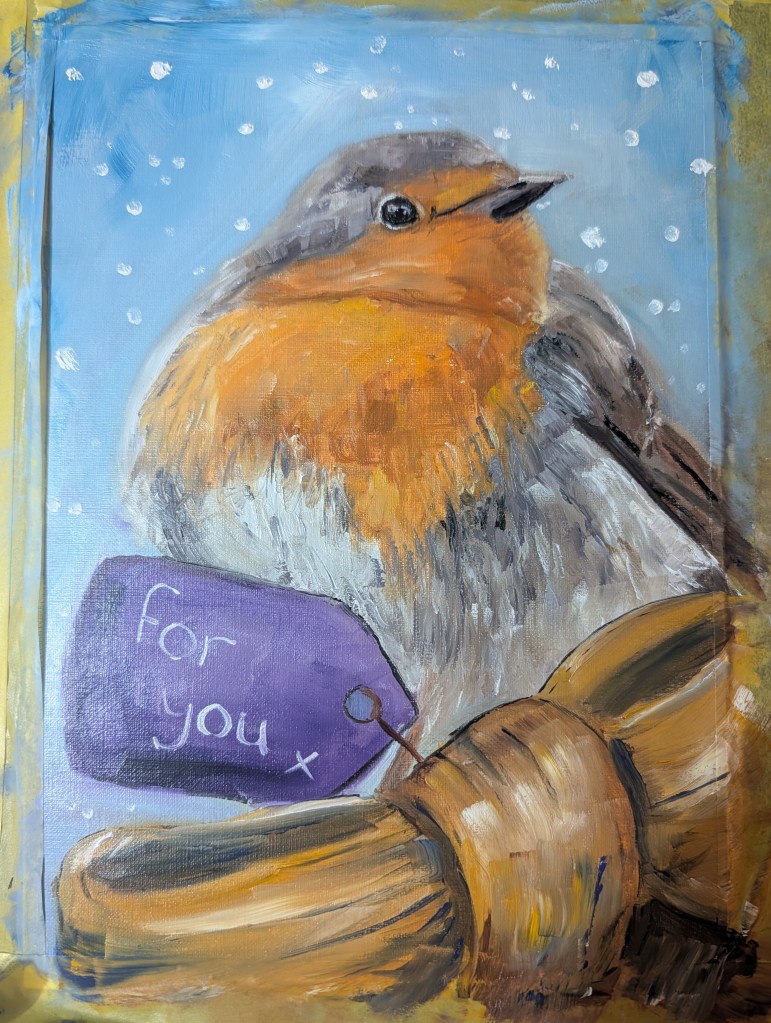
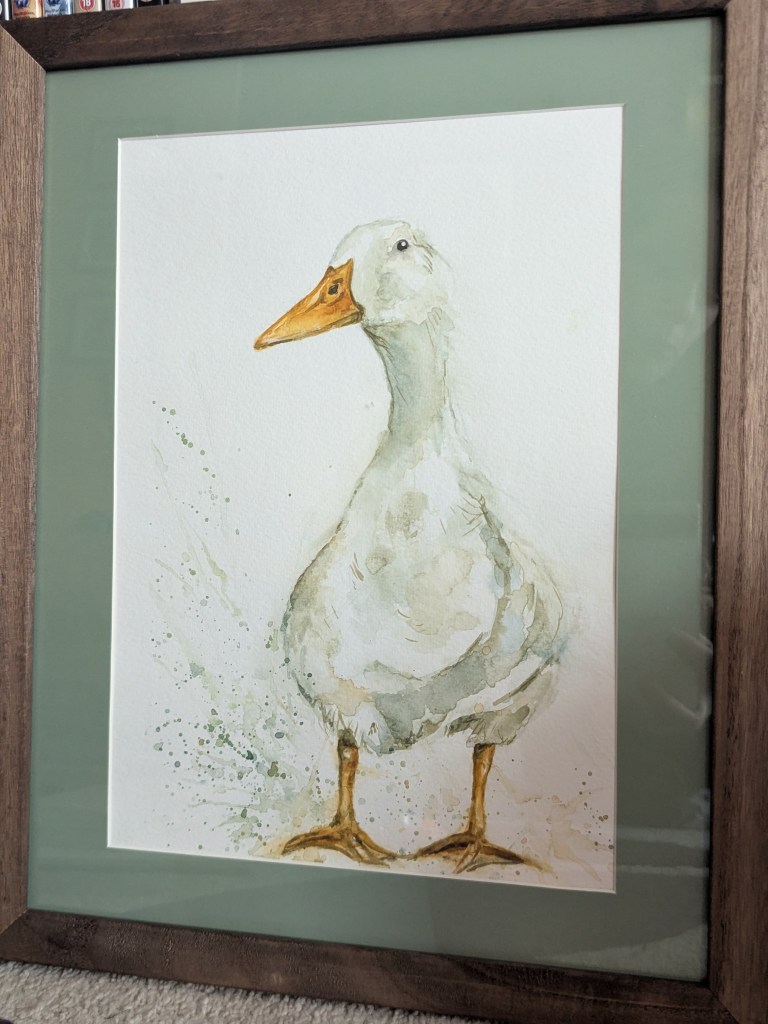
Found time (and energy) for painting!
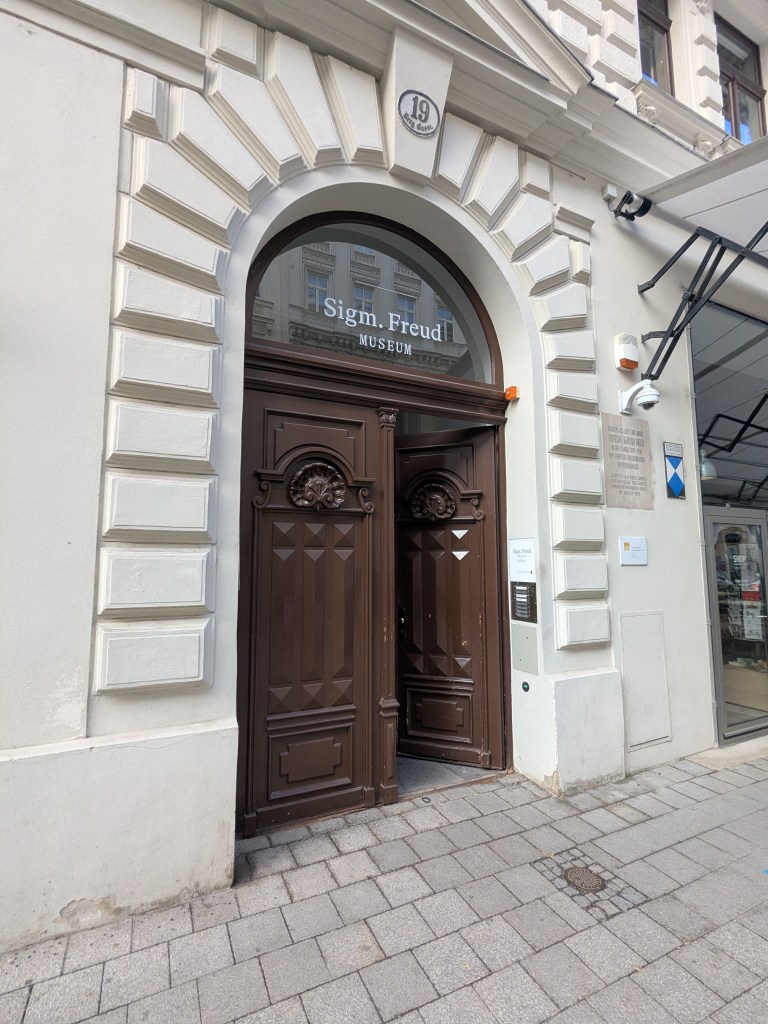
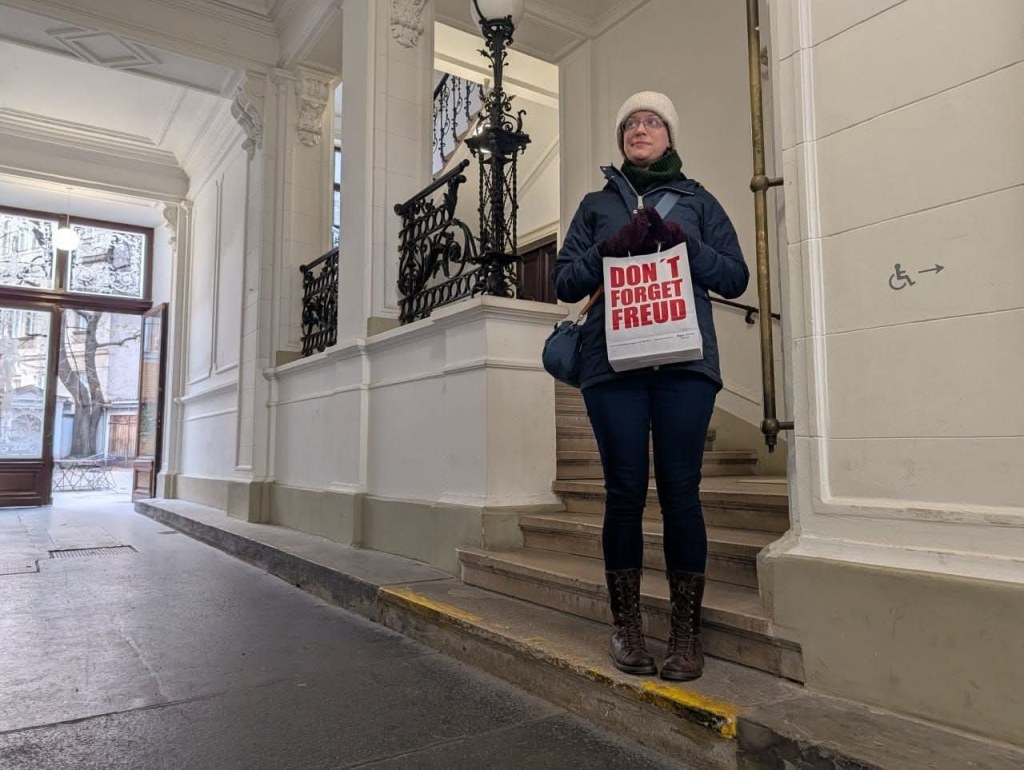
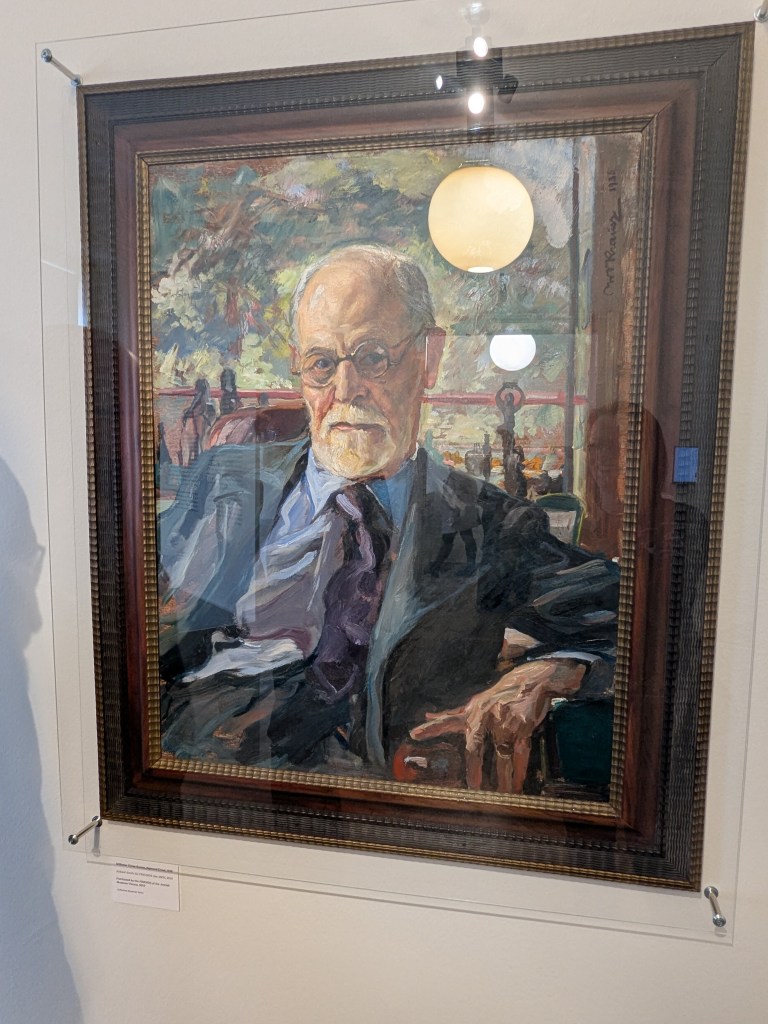
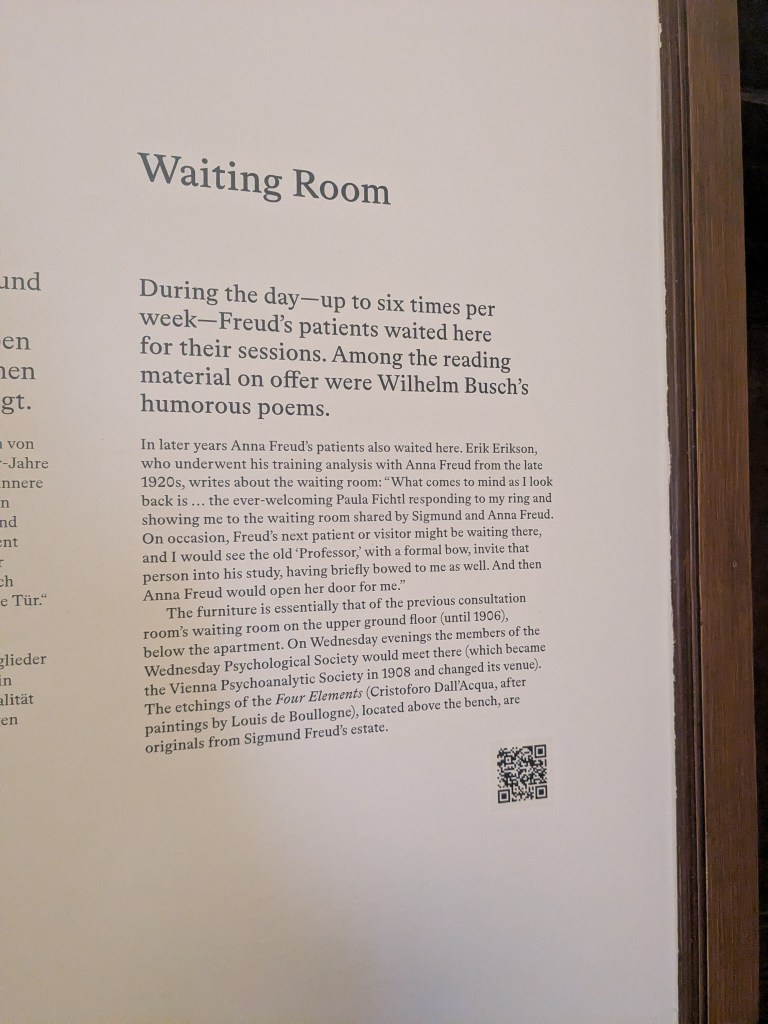
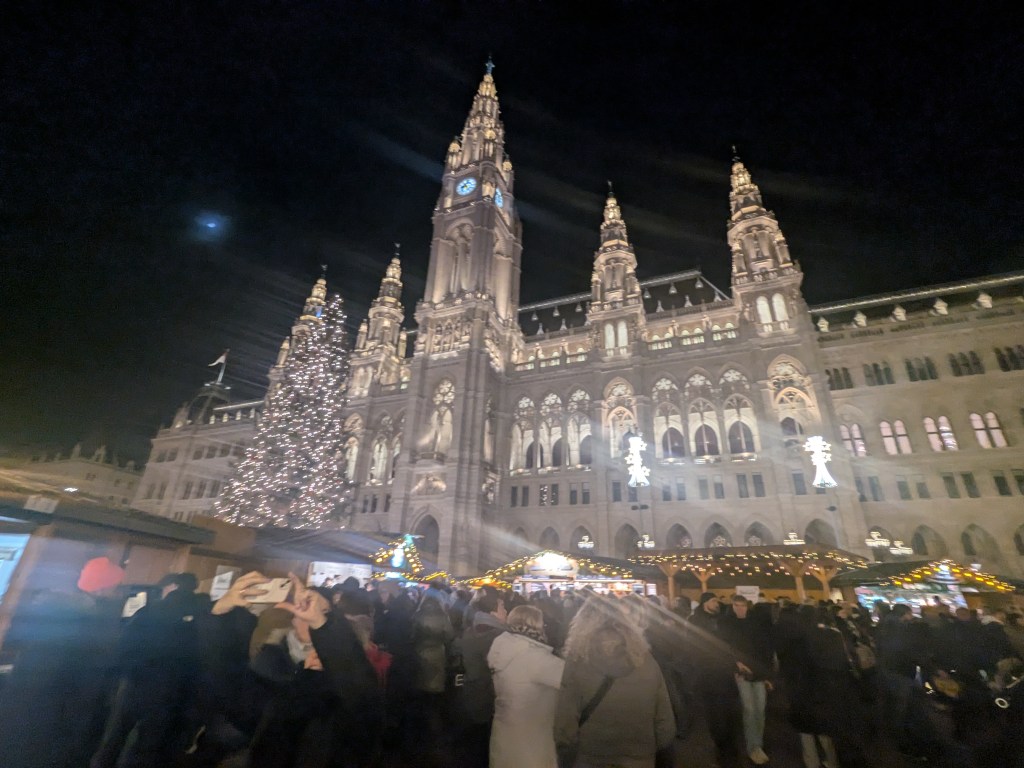
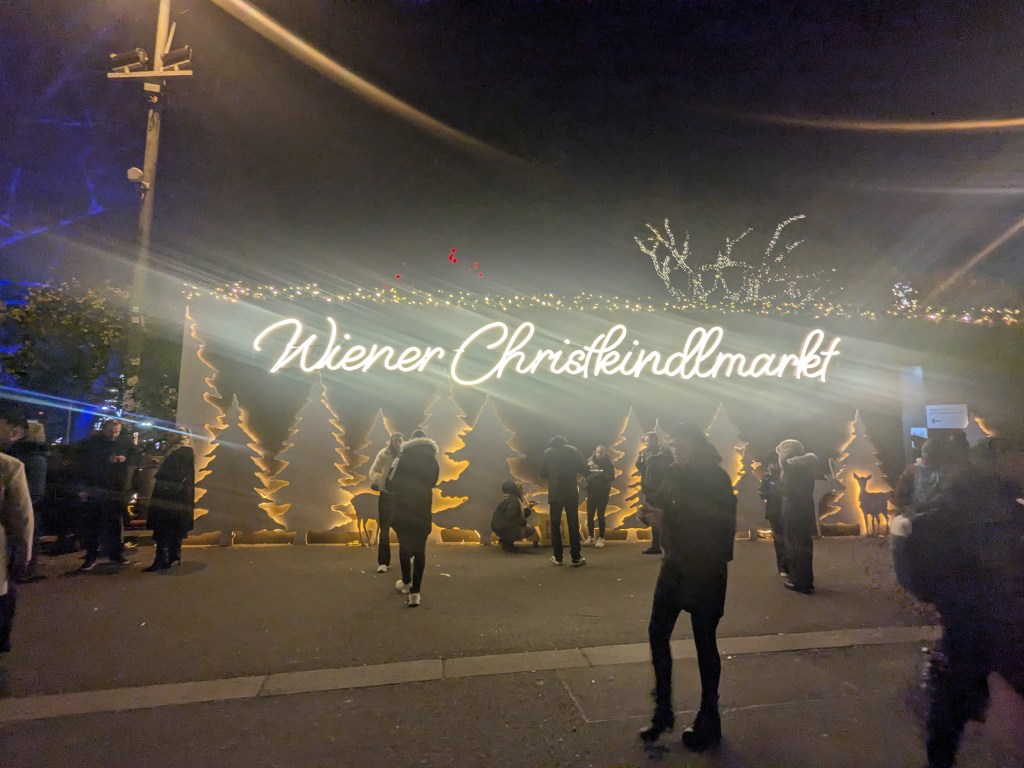
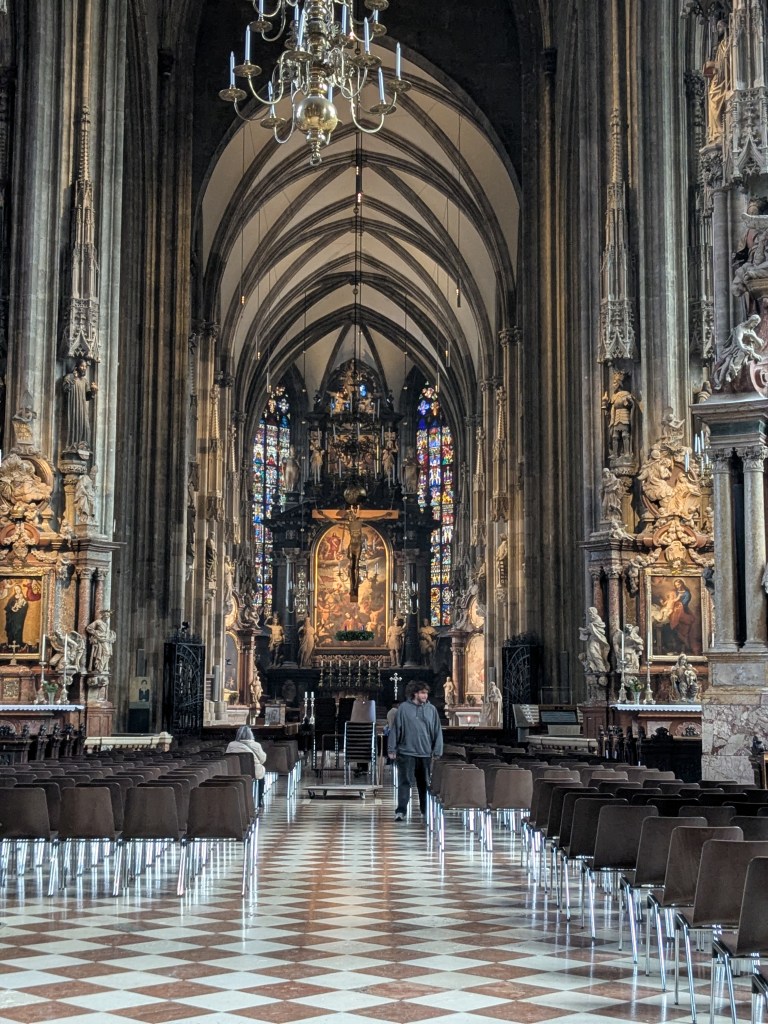
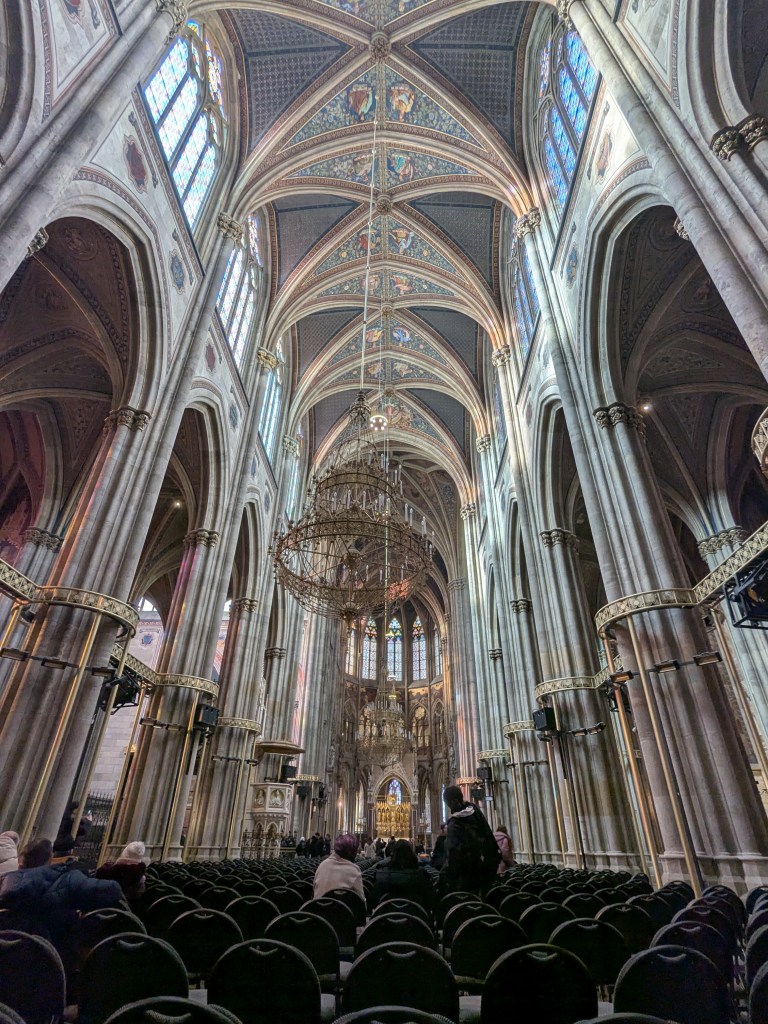
A trip to Vienna! The third and final instalment of my 40th birthday celebrations. I was really spoilt!
This was a two night trip away as Dave’s school gives a wellbeing day to staff in November each year. When we looked what was on that weekend, it turned out Emil Bulls were playing Vienna, so we decided to go. Plus we would get to visit the Christmas markets.
I have to admit, I have not always been the most enthusiastic about the whole Christmas market thing. Before Vienna I had only ever visited ones in the UK (Cardiff, Bristol, Birmingham). They’re always SO BUSY. But what I have always loved most about them are the festive drinks (namely, Gluhwein obvs).
Well, all the excitement of being on the continent, my first European Christmas market, we arrived and I was GIDDY! SO FESTIVE. SO MANY DRINKS.
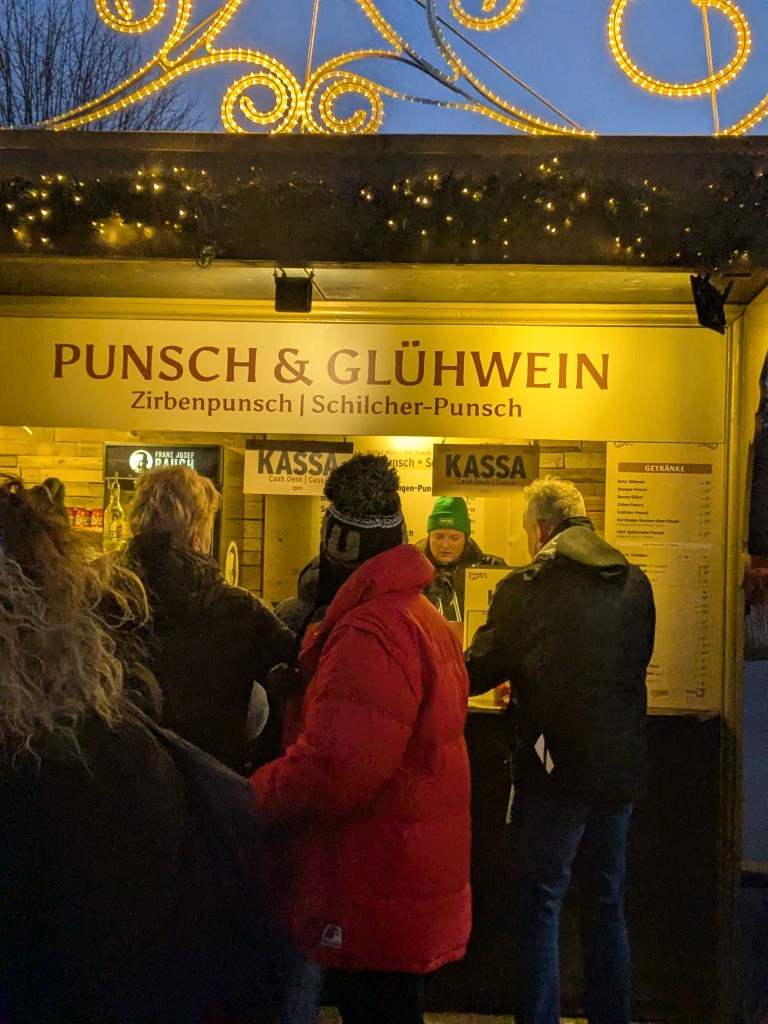
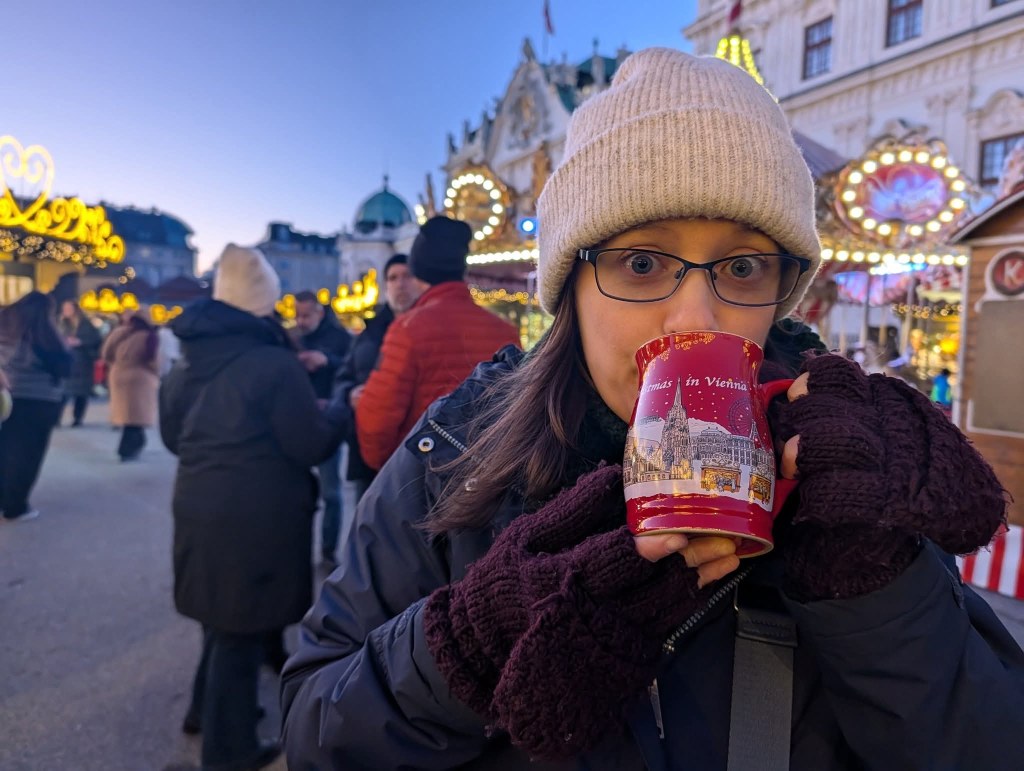
THE drink in Vienna is punsch – a spiced, warm, fruit punch WITH (or without) alcohol. Lots of flavours. My first choice was an orange brandy punsch (I think) but then I lost track of which I tried. I remember going for amaretto a lot and there was an apple strudel punch. And of course, you pay a 5 euro deposit which you get back if you return the mug (I came home with 3 mugs).
It was EXCITING. My parents lived in Germany when my dad was in the army, and he always talks with such fondness about the culture of standing out in the cold with a hot drink with lots of other people. And I really love this too. Such a lovely atmosphere, people just milling around, enjoying drinks. Plus we had the Belvedere Palace as our backdrop. It’s a small enough market that it never felt too overwhelming. And it was easy to break off and walk around the Belvedere gardens at the back or around the lake at the front.
We saw the band Emil Bulls at Simm city. They are dramatic and endlessly magnetic, the soundtrack to life right now, we love them. Dave recorded their opening song (‘Most Evil Spell’) and put it on YouTube. It’s possibly my favourite angry song.
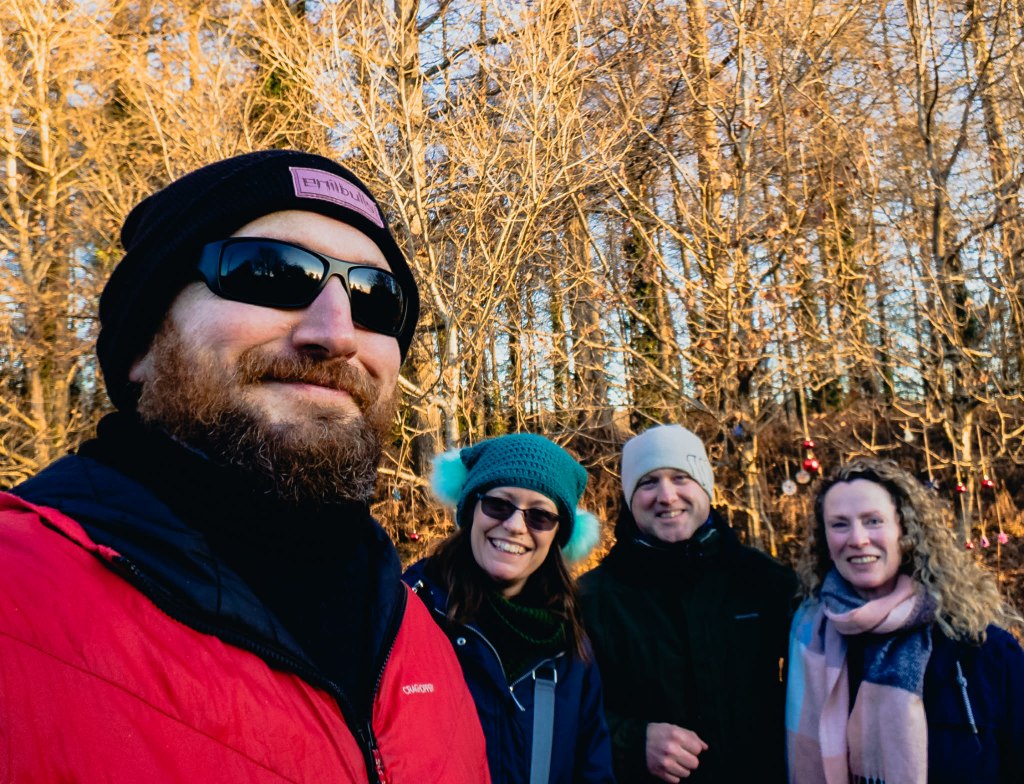
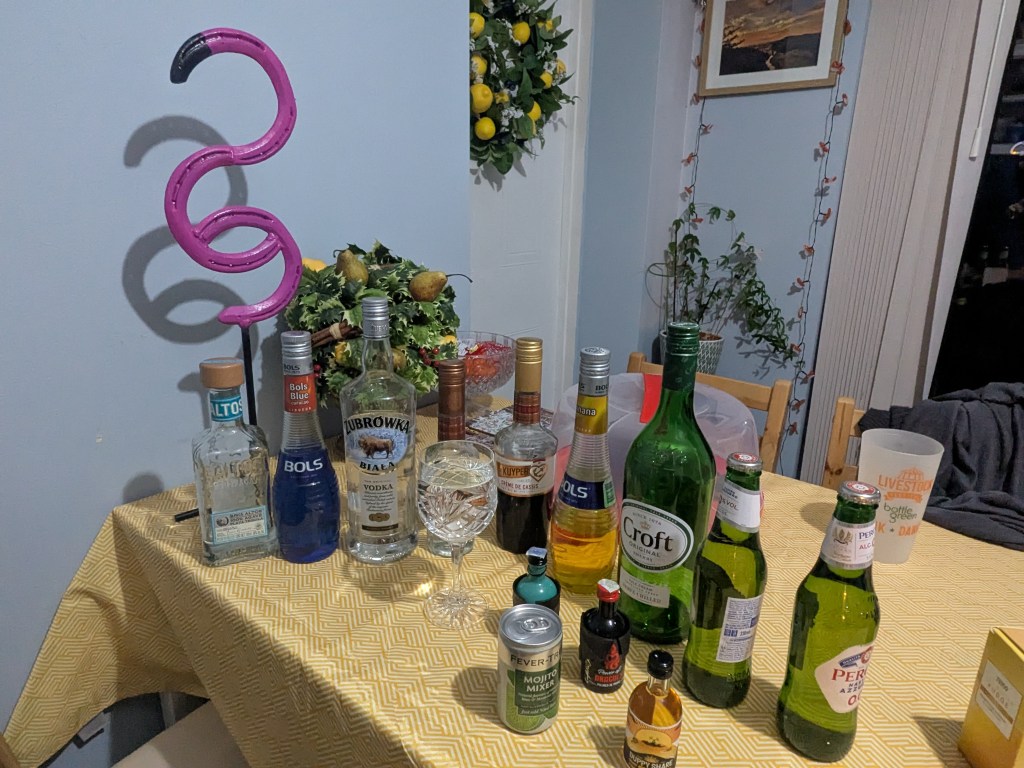
December
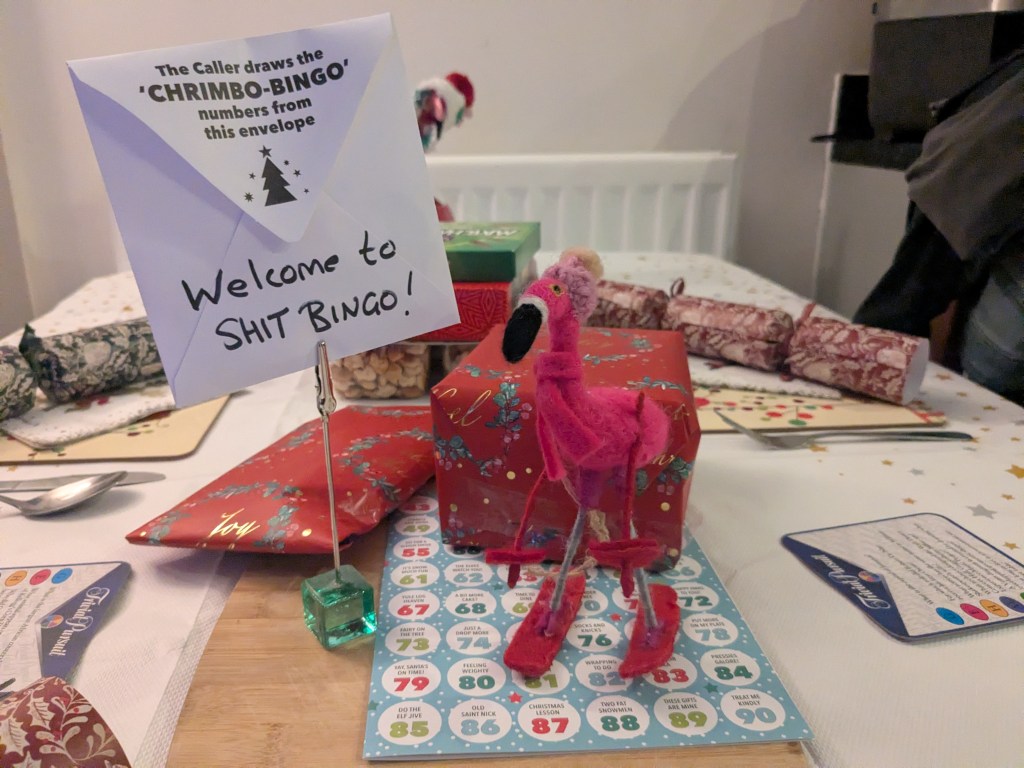
Fake Christmas day with Jonny, Rachel and Riley.
Real Christmas day, very low-key and quiet before making the rounds to see family and friends.

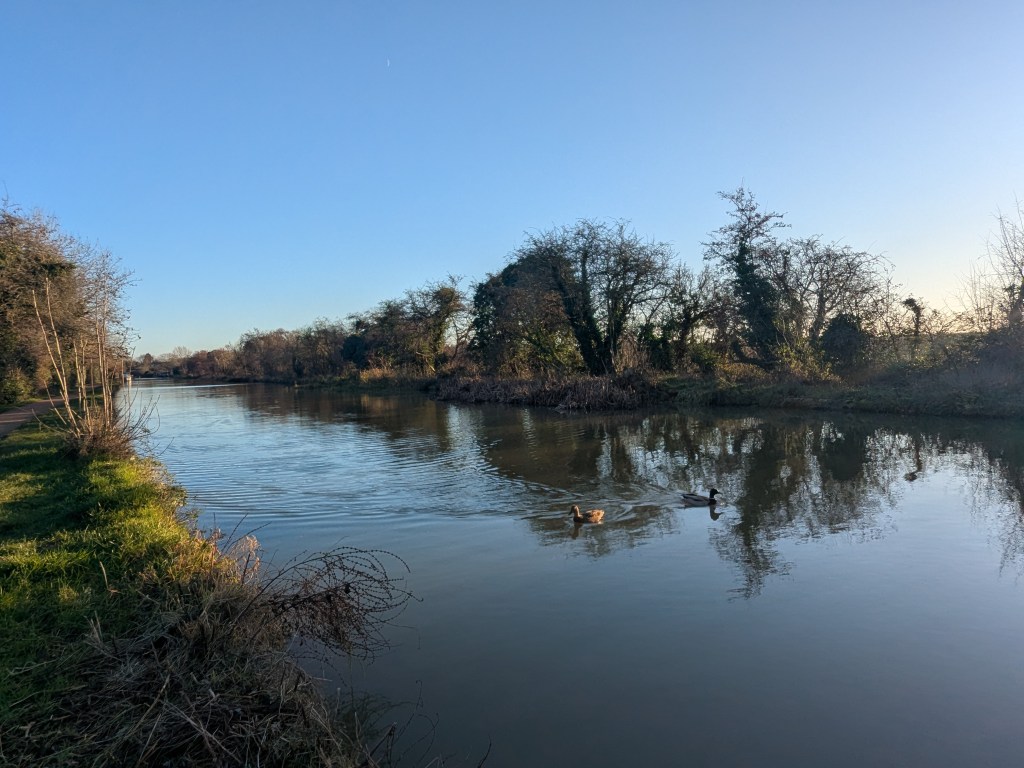
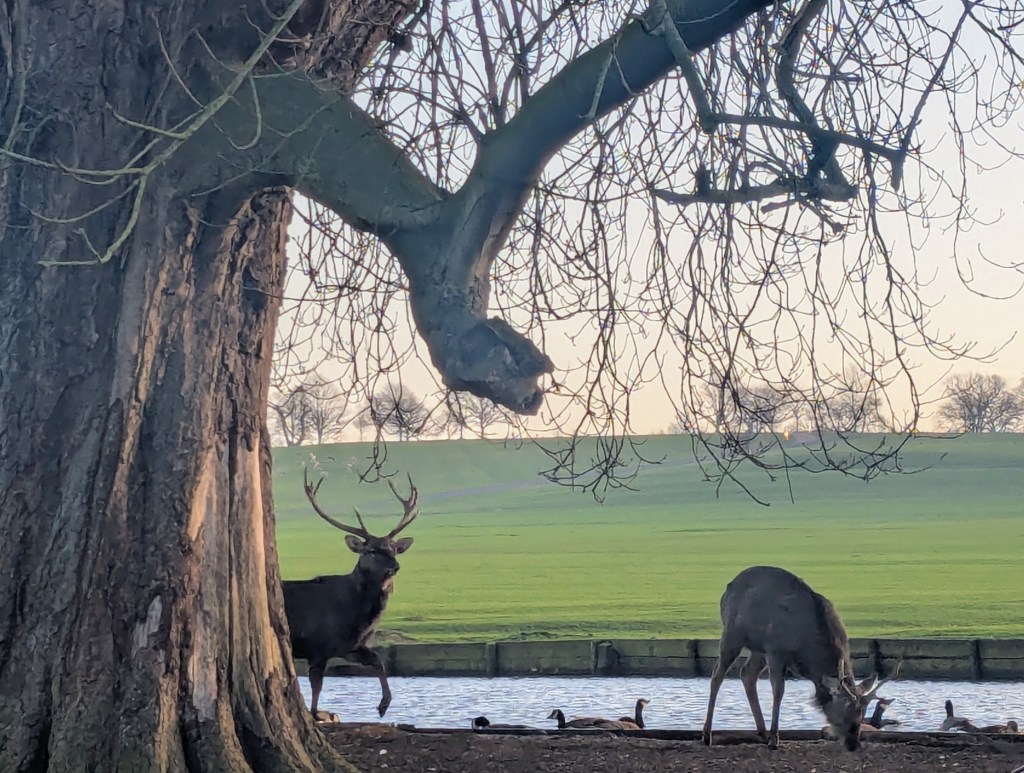
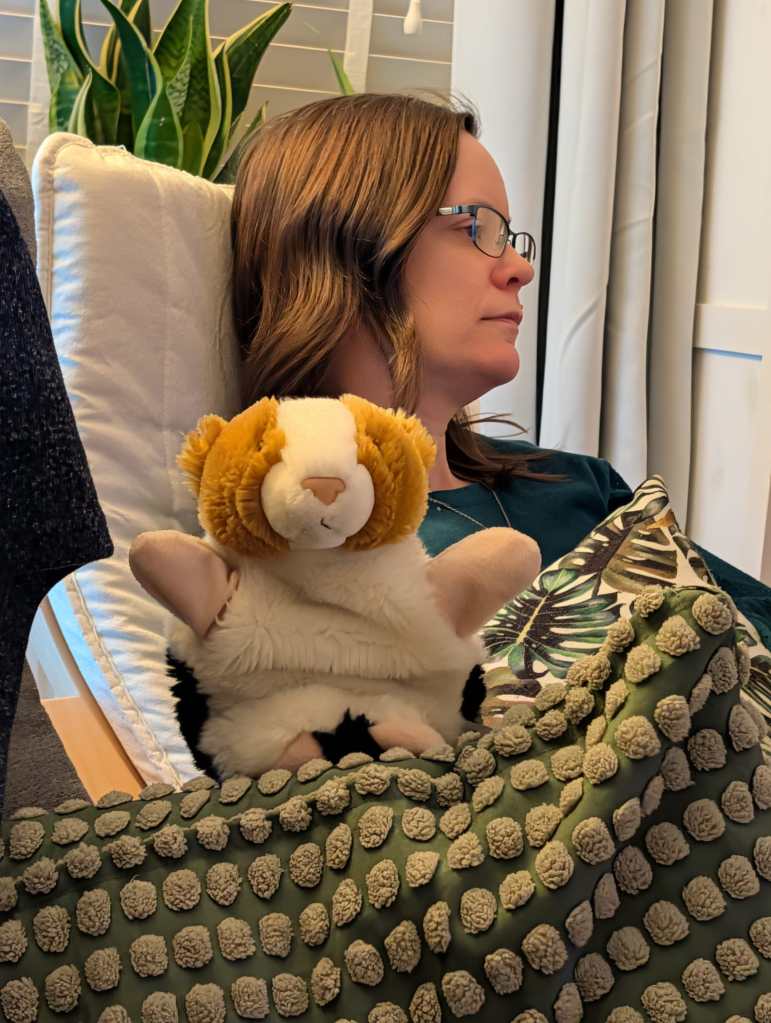
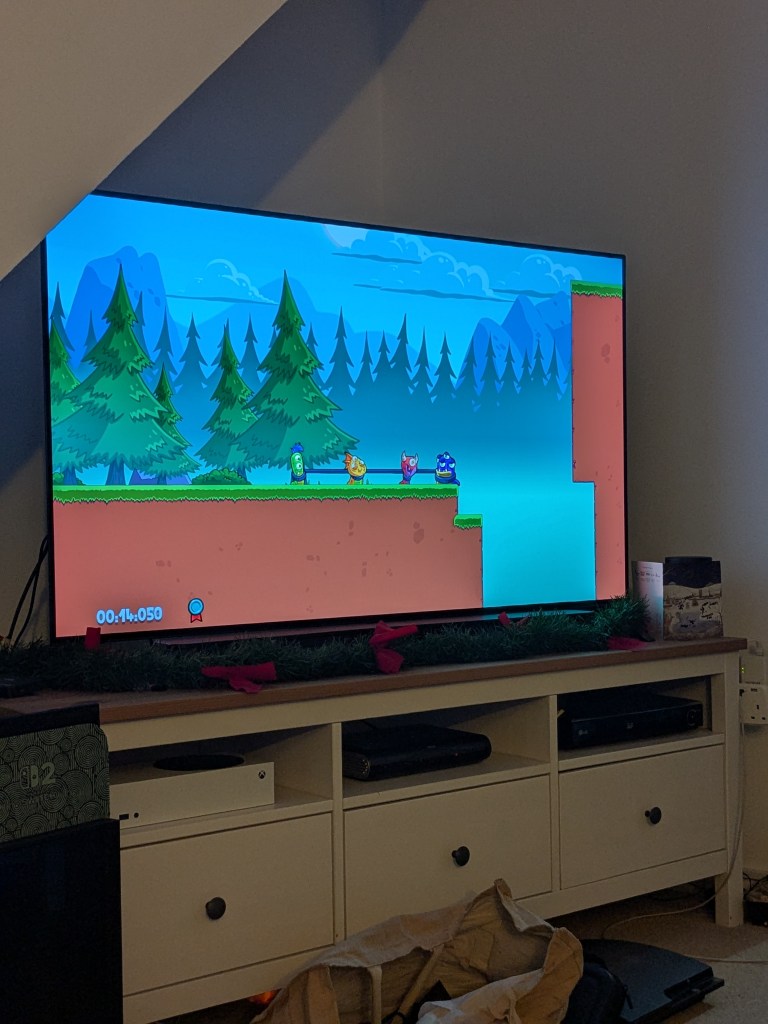
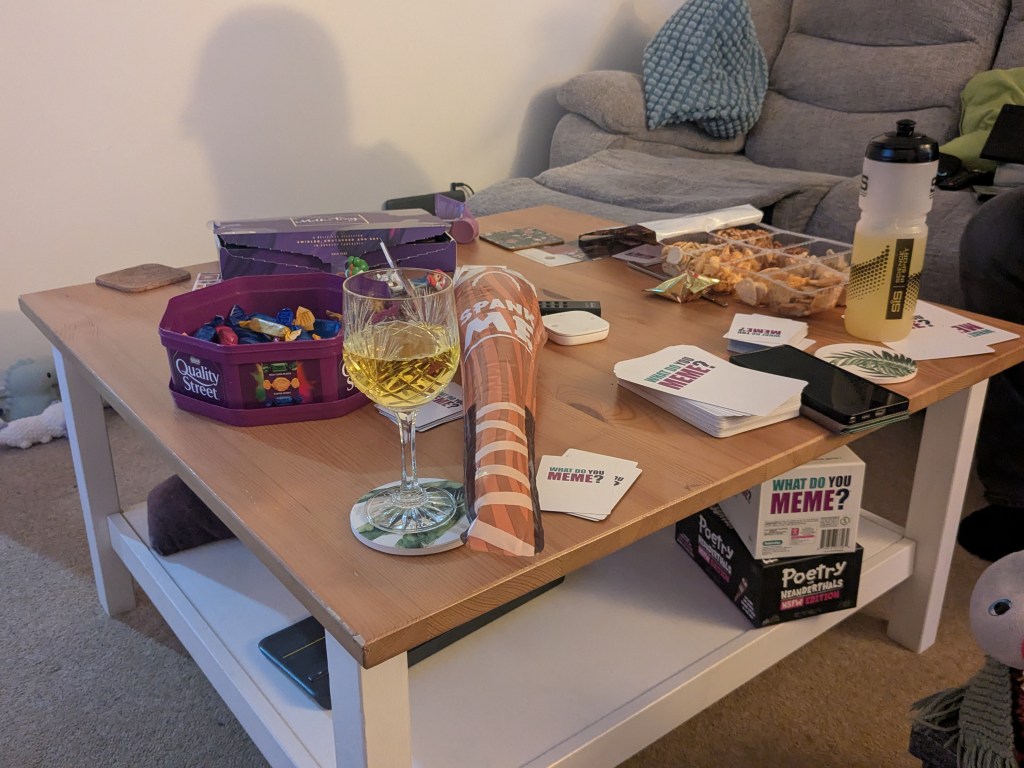
Misc.
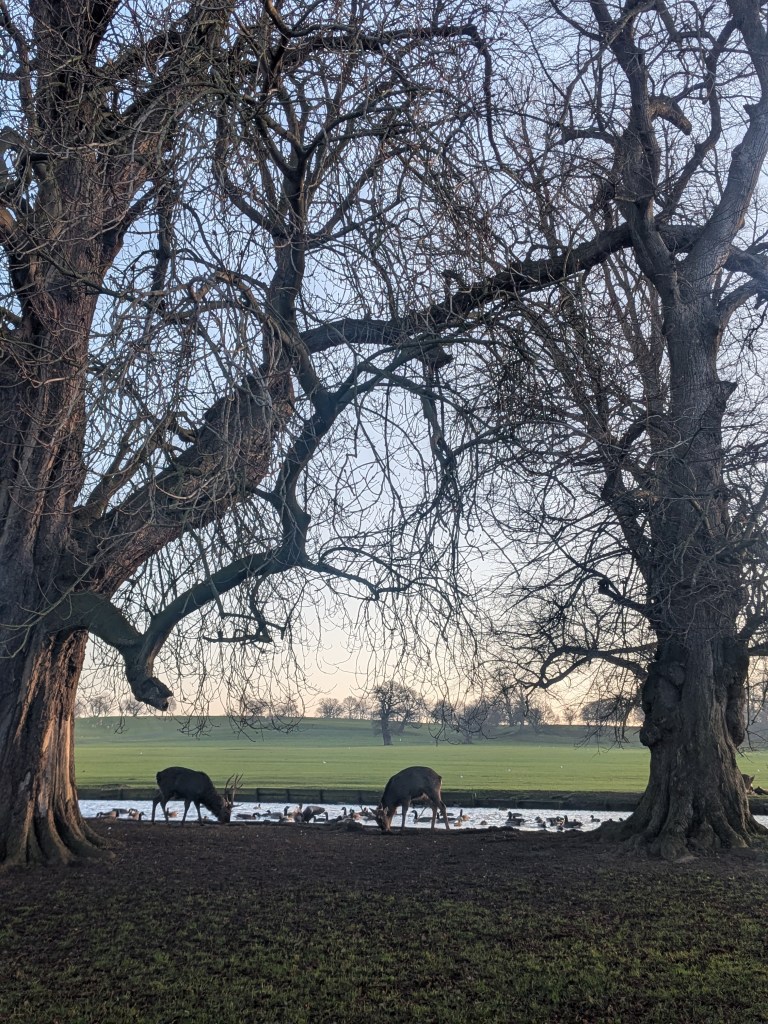
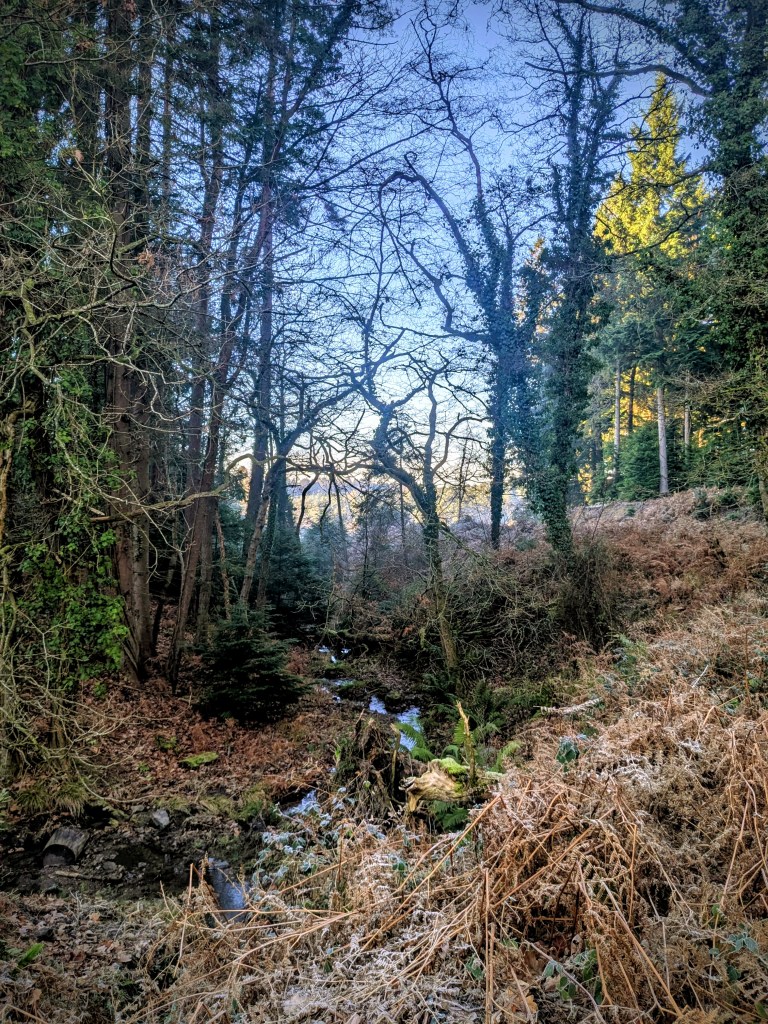
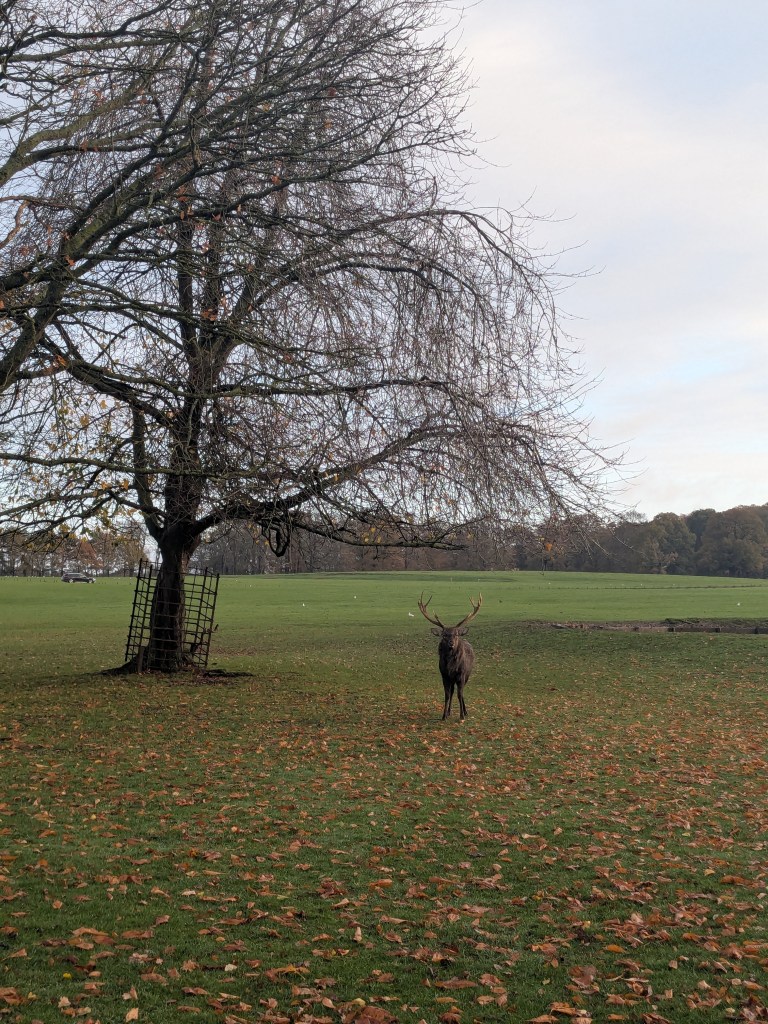
Another thing that stands out for me this year is my walks at Woburn Deer Park. I recognised that I was not spending as much time outside in nature. It has become a Monday morning ritual for me. Gradually I’ve been incorporating jogging into the walking and not worrying about pace etc. Just listening to my body. And it feels so wonderful. There’s a downhill section between two lakes and if I’m lucky, I’ll see formations of geese or swans flying across my path. One of those completely-at-peace, at-one-with-things moments.
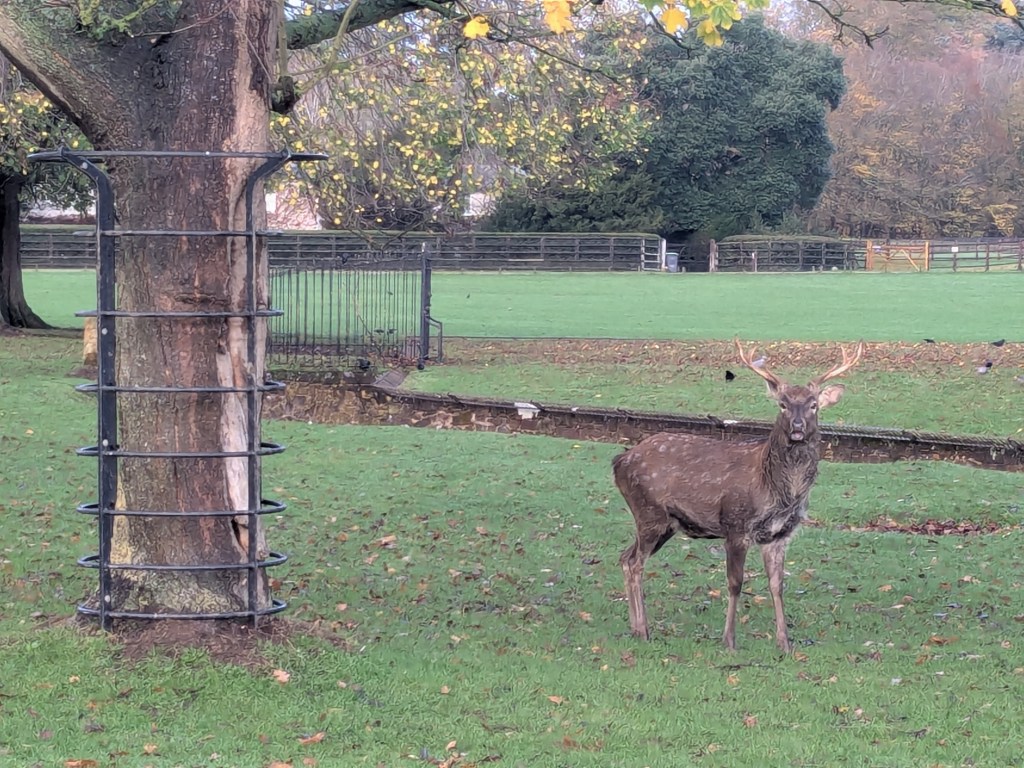
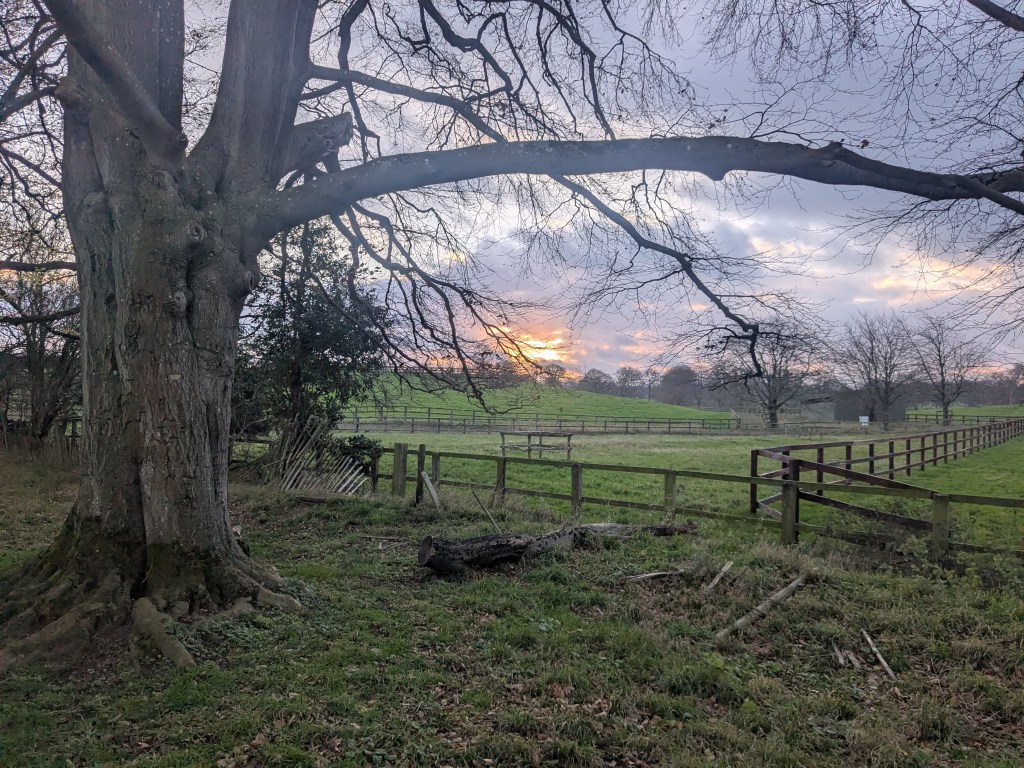
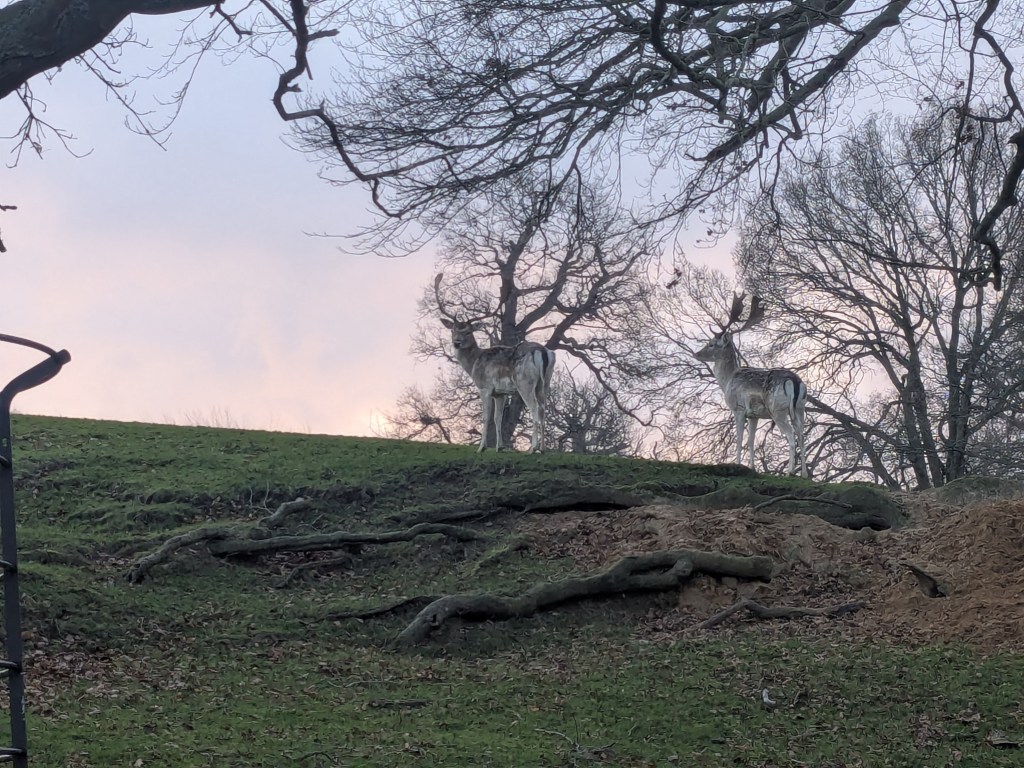
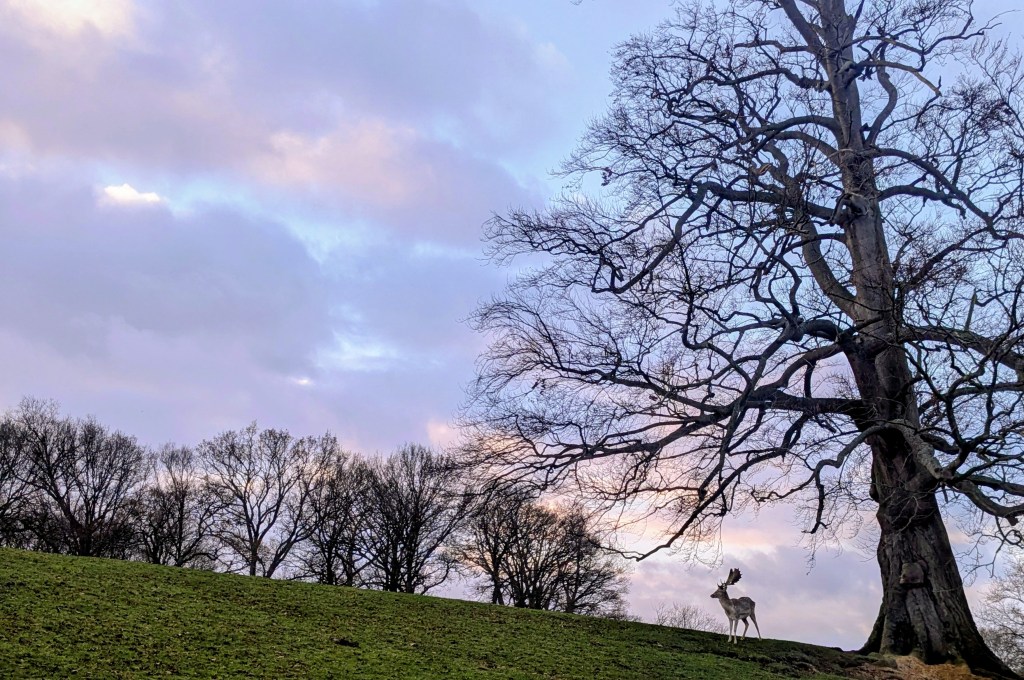
I feel very grateful for such a wonderful year. I hope I’ve got the energy to match this next year! Seeing bands like Moneybrother and Emil Bulls – bands that never play the UK – made us feel rather smug, and were very much bucket list-type events. There’s a lot more I could have included, and I’ve tried to include those ‘smaller’ moments, but to include them all I’d be here all day. My new job has made such a difference to my wellbeing. Colleagues in my other role keep commenting that I look different, and I know I do. I feel it.
Also, I am very proud to be back to good fitness and weight. I feel so much better, like I am treating myself as someone worthy of care.
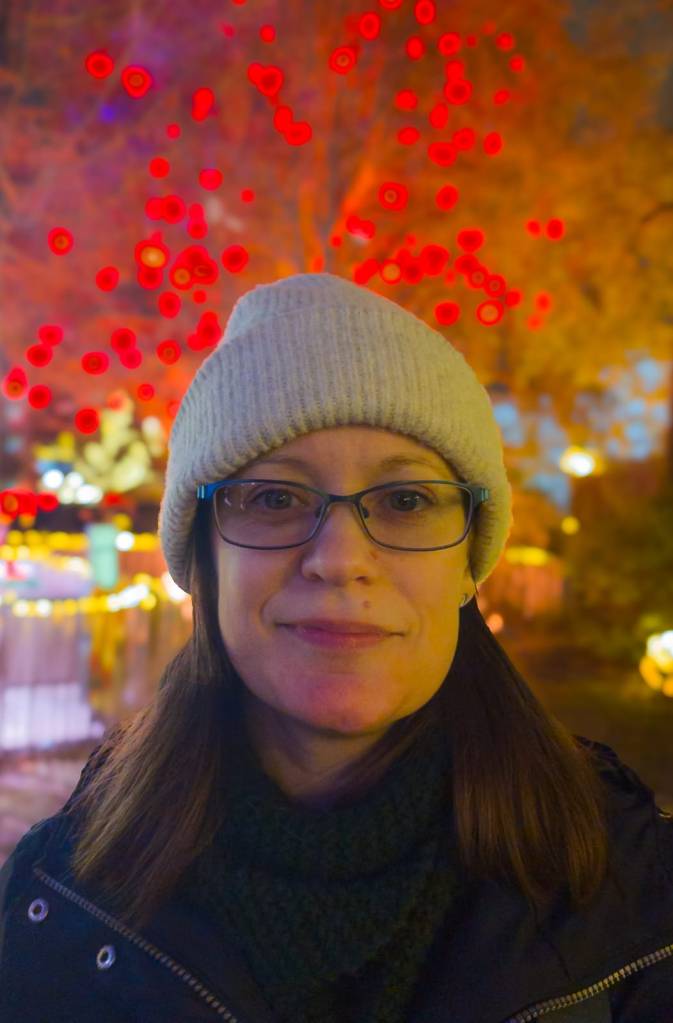
Here’s to 2026. I hope it’s a healthy and happy one for you.
Happy winter solstice 2025
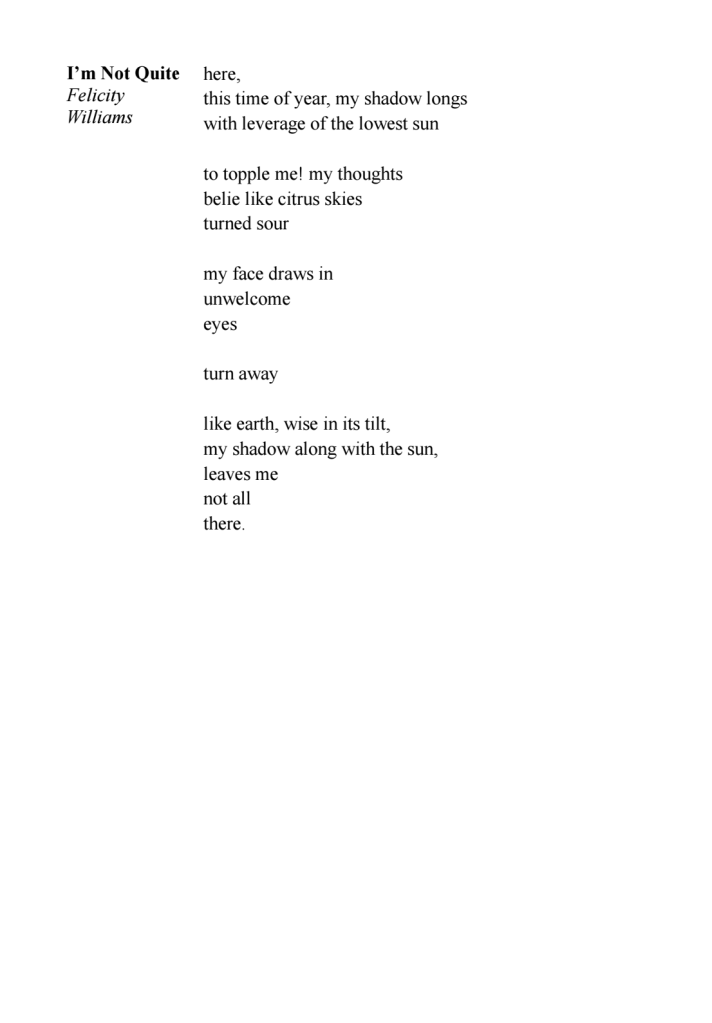
A few years ago I wrote this poem for the MK Lit Fest online event ‘Dreams for midwinter’. I’m quite proud of it, but every time I read the third line of the second stanza … I want the line to break at citrus!
“belie like citrus
skies turned sour”
So much better! 😭
New year resolution 1: aim to have more regular poetry writing time.